All posts by HDLenoble

I am a writer and organizer who is trying to make a positive difference in the world and to make the lives of my fellow human beings slightly better.

Together We Will Beat Trump

I must admit, I was rooting hard for Donald Trump to win the Republican Primaries and become the Party’s presidential nominee. I’m a Liberal Democrat, and I thought that anything that might make it more likely for the Democratic Party’s nominee to win the presidency was worth cheering on. It was clear to me that Trump was (and is) a ridiculous candidate and completely unworthy of winning a major Party’s presidential nomination, let alone deserving of becoming Commander-in-Chief of the United States, but if the Grand Old Party was incapable of realizing the threat Trump posed to it, then I was happy to sit back and watch Trump do as much damage to the Republican Party as possible before it realized the danger it was in. I savored the schadenfreude of the Republican Party’s collapse until very recently, brushing aside Trump’s increasingly offensive and occasionally horrifying remarks because, in my view, each one made his defeat in November more likely; I scoffed at Trump/Adolf Hitler comparisons as alarmist and inaccurate. I viewed the man as a joke, but now that Trump has victory in sight, my eyes have finally been opened and I am not laughing anymore. In fact, I am begging forgiveness for my failure to see the man for how dangerous he truly is, and to properly appreciate the threat he poses to this country and even the world; Trump’s rise started out as a Republican Party problem, but it has now become an American problem. I am therefore asking all Americans, especially my fellow Liberals who have been silently applauding the moral disintegration of the GOP to realize what is at stake right now and come together to stop Trump, because together is the only way to beat him.

One might wonder how we came to this extremely dangerous place, with Trump – after another dominant performance this past Tuesday – on the cusp of winning the Republican nomination. Our country arrived at this cliff because the Republican National Committee, its chief donors, and its chairman Reince Priebus defended Trump even when it became readily apparent early on that Trump was a demagogue running a campaign dedicated to tearing the United States apart along race, class, gender, and religious lines. The Republican Party froze over an inability to decide what to do about Trump’s rise: should the RNC give the billionaire its full support? Should it marshall its considerable resources and use them to defeat him? Should it rally around another candidate and back him to the hilt? The RNC was either unwilling or unable to decide on any of those options, and instead of taking action, the Party seemed to hope that someone else would handle their ‘problem,’ for them. It hoped to rally around a candidate who could beat Trump, but it just never happened, and with the loss Marco Rubio, seemingly the Party’s last real hope against Trump, the Party has reluctantly realized its predicament. It means that, unless the Republican powers that be (if any remain) contrive to steal the nomination from Trump in Cleveland this July, he will be the nominee of a supposedly great national Party.

What can we do to check Trump’s rise and keep him from attaining the presidency? I believe that the first step requires the kind of hard self-analysis that Americans don’t necessarily love. Introspection is necessary – especially for Liberals – because it reveals that the anger driving Trump’s supporters is real, and that it is not some phantom movement that Trump has created. Trump has given voice to a deep anger that was already there among many people in this country; Trump is turning that anger towards the very worst human impulses and thereby enhancing it, but we as Liberals must acknowledge the validity of that anger to combat him going forward. Anger CAN be useful and can lead to positive ends if there is a mature and capable leader to harness it and wield it skillfully: a great example of such a leader is President Lyndon B. Johnson, who was finally able to use the accumulated righteous anger of Americans to end most vestiges of Jim Crow segregation in the South with the Civil Rights Act of 1964 and the Voting Rights Act of 1965. LBJ could easily have turned that anger against African Americans and other minorities by using coded language and saying things like, “We’re locked in a Cold War against the Soviet Union and Communism, which is now spreading like a weed in Vietnam, and nuclear war may be around the corner. Now is NOT the time to be distracted by a divisive issue on the home front, and those who are pushing for civil rights in such a dangerous time are both unpatriotic and selfish.” Instead, LBJ chose a different course and used that anger to make the greatest contributions to civil rights of any president since Abraham Lincoln, and he did it in spite of his conviction – which has proven correct – that his Democratic Party would lose the south, “for a generation.”

If Trump was a real leader like LBJ, he would say (based on some of his campaign’s themes), “I hear your anger and I share it too, because we have had too many hardworking Americans see their paychecks shrink, or their jobs move overseas, and they have watched opportunities for success disappear in front of their eyes. Let us focus that anger toward making changes and giving the average Americans a real chance to make American great again.” But Donald Trump has not only never said any such things, he does not appear to have even thought them. Instead of bending voter discontent and frustration toward useful goals, Trump is using them as an opportunity to gain power, stirring up the already present anger of his supporters through demagoguery. His message may go all over the place, and he changes his ‘positions,’ not only from day to day, but from speech to speech and even sometimes from sentence to sentence (here against free trade and there for it, etc). But Trump has been frighteningly consistent on who is to blame for our problems and for making America ‘great,’ no longer: illegal immigrants, minorities, and Muslims, are those primarily at fault.

It is Trump’s scapegoating some of the poorest and weakest among us that more than anything else led to me giving a second and third look to some of those Hitler comparisons that have been flying around almost from the moment Trump announced his campaign with a disgusting speech calling all illegal immigrants killers, rapists, and drug dealers – although he did allow that he assumed that ‘some’ were good people…something that I used to find funny but no longer do. The comparison to Hitler has taken on new meaning the last few weeks as the anger and violence at Trump’s rallies has been stirred to new heights, resulting in his audience violently assaulting protesters, the removal or ban of groups of African Americans from attending his events, and a level of fear and danger for the journalists who are covering him. I must confess that I did not initially look too closely at the ‘Trump is like Hitler,’ comments because I have seen so many people described as being like Hitler that the meaning of such criticisms began to fade into meaninglessness. I was also rooting for Trump to win the nomination and destroy the GOP, so I did not care too look too closely for what it might say about me. But I have forced myself to look closer, and I have been frightened by what I have seen.

Donald Trump is appealing to a dark and twisted part of the human psyche, and he is feeding on the hate and anger of his audiences and their resentment of whomever has upset Trump that day, the person he designates as the ‘dangerous other,’ to be hated in that moment. The ‘other,’ may be Black, like President Barack Obama, whom Trump has tried to delegitimize by casting doubt on whether the president was born in Hawaii – as the birth certificate says – or in Kenya, which is what the racist ‘Birther’ movement that Trump once connected himself to believes. The ‘other’ may be a Muslim, and Trump has declared that all members of the religion, which has 1.6 billion adherents worldwide, be banned from entering the USA. The ‘other,’ might be someone with a disability, like New York Times reporter Serge Kovaleski, who Trump openly mocked for having the congenital joint disease, Arthrogryposis (a disease that I was born with, and suffer from myself). It goes on and on, as there is literally no one, no group, and no thought that is too small for Trump to attack; he is the kind of person who would boo at the end of Charles Dickens’s A Christmas Carol because Ebenezer Scrooge shares his wealth with the impoverished Cratchit family instead of stealing Tiny Tim’s crutch, mocking him when he falls over, and leaving with the family’s meager meal.

Trump has been able to say and do almost anything without facing any consequences, but he is far from invincible. We must start with acknowledging that the people are angry, then on understanding the root of that anger, and moving to address its cause and not just control its symptoms. We need to resolve to accept the humanity in all other human beings and not to let Trump use superficial differences to tear us apart. In 1932 the German people chose Hitler and the hatred and fear of the Nazi Party to lead them out of the Great Depression, while in the United States of America we chose the hope and optimism of Franklin D. Roosevelt. There was a short time that it seemed that the American system of government could not survive the Depression and that we would eventually turn to Fascism just as Germany, Italy, and Spain had, but we rejected that choice. We chose FDR and hope, and when he died the USA was the most powerful nation on earth, our economy working at full capacity, and our troops came home to build a better world; we chose hope and we raised America to greatness. Trump is running on hatred and fear, and we have a lot of evidence to show that such a candidate would not, ‘make America great again,’ but would instead be like an alternate version of 1932 where we sided with hatred instead of optimism. We must loudly reject Trumpism with one voice – one voice made out of millions of people of different races, genders, religions, and creeds; in English our national motto is rendered, ‘Out of many, One.’ Splitting that one great American voice into many small and angry ones, with each one attacking the other, is not greatness – it is the cowardly action of a man desperate for power at any price. We have the ability to put our differences aside and work together to stop Donald Trump from ever gaining the presidency, and by rejecting that lying, angry, faithless, hateful, bullying, demagogue, we will prove that America was, will be, and still is great.

Bernie the Revolutionary?

I think it is time for Bernie Sanders to stop speaking of a ‘political revolution.’ I have encountered both fear and cynicism – even by some Liberals – in response to Bernie’s call. But none need fear, for when Senator Sanders speaks of a political revolution, what he really means is simply increased participation and engagement in our political system.

The hard truth is that we the people are largely responsible for the widespread anger that led to the rise of a neo-Fascist demagogue like Donald Trump – our failure to participate in the political system made Trump possible. The presidential election of 2008 is considered a high-turnout election, as it saw a popular candidate in Barack Obama combined with the deeply unpopular George W. Bush Administration, and Obama received almost 70 million popular votes to around 60 million for Republican candidate John McCain, but in reality only 63% of eligible voters cast a ballot. In 2012, now President Obama won reelection by defeating Republican Mitt Romney 65 million to 60 million, but turnout declined to just under 58%. Voter turnout in mid-term elections, like those in 2010 and 2014, see even less engagement. Many Republican controlled states (many of which only turned Republican due to the small turnouts of those 2010 and 2014 elections) have engineered highly sophisticated voter-suppression efforts to keep turnout down – and they were aided when the Supreme Court undid much of the Voting Rights Act of 1965 that had been the definitive end to Jim Crow segregation and disenfranchisement of Black voters – but no anti-democratic attempt can fully explain the fact that about 40% of eligible voters stay home every November.

Polls and data have consistently proven that increased voter participation almost always benefits Democratic candidates, and poll after poll has shown that the vast majority of Americans already support most of Bernie’s platform. Americans are with him on getting money out of politics, free public college, universal health care, addressing income inequality, climate change, and a whole host of other issues, and if we can simply get more political participation/engagement, we’ll be able to make the kinds of changes that most of us want to see. Those who stay home are at best passive witnesses of the theft of our democratic republic and at worst accomplices in that theft by a small group of wealthy individuals and corporations who have transformed us into a plutocratic oligarchy. It is perhaps cliché to say that all the people who are fully able to vote and choose not to do so are insulting the Americans who came before us and often died to protect that precious right, but whether the non-voters realize it or not, they are also insulting those who come next, because those future generations must live in the nation and world that we leave them.

When Bernie is talking about a political revolution, he is not speaking of something bloody or new, he is speaking of greater engagement with and participation in the political process of our country. He wants to get as many people involved in our democracy as possible, and any who might say that Bernie’s just being cynical because he knows he would do better if more people were involved should stop to realize what they’re admitting by saying that: that Bernie and his policies are preferred by a majority of Americans, and that the closer to 100% turnout we get, the better Bernie would do.

The real revolution here is to stop thinking of voting as a right and instead view it as our duty as Americans: perhaps the least we can do to show our appreciation for our nation and its past, present, and future.

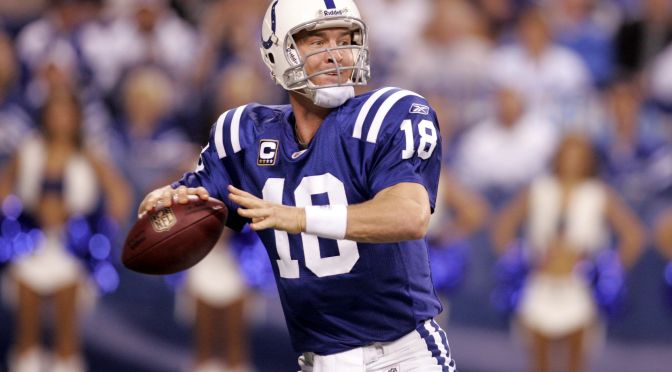
Why Peyton Manning is the Greatest Franchise Quarterback Ever

Tomorrow when Denver Broncos quarterback Peyton Manning steps onto the field for Super Bowl 50 (in what could wind up being the last game in his brilliant career) he will be, at age 39, the oldest starting QB in Super Bowl history. Whether it is his last game as a professional or not, he is leaving a legacy has established himself as maybe the greatest QB to ever play the game, and his legacy will be secure regardless of the result. His longevity and his impact on the game have redefined forever what it means to be a franchise quarterback.

But what is a franchise QB in the first place? My own interpretation has been that it is a starting QB who gives his team 10-15 (or more) years of quality play at the most important position in professional sports. A team with a franchise QB is not guaranteed to win Super Bowls, but for at least a decade the team will have a real chance to win championships because its foundation is built on a strong QB. A few players who fit the bill besides the two Super Bowl QBs in Manning and Carolina Panthers QB and almost certain league MVP Cam Newton* are players like Aaron Rodgers, Ben Roethlisberger, Drew Brees, and Eli Manning, all of whom have won Super Bowls; and of course there is Manning’s great rival Tom Brady, who is the only other current QB who has won multiple regular season MVP awards and play in more than one Super Bowl. * Cam is worth his own column, but as he is still early in his career and tomorrow is likely the last game of Peyton’s, Peyton is the topic today.

But there is a more selective group than mere the quarterbacks of today, and that is the best in football history. Excluding QBs who played most or all of their career before the expansion to the 16-game schedule in 1978 (sorry Johnny Unitas, Terry Bradshaw, and Otto Graham, you miss the cut), such a list would include John Elway, Dan Marino, Brett Favre, Steve Young, Manning, Brady, and – usually number one on such lists –Joe Montana. Yet even on that list, Peyton (and Brady) stand far ahead of the rest. Peyton’s combination of sustained success and longevity exceeds all the others on this list. Let’s take a look at the careers of these all-timers:

John Elway:
16 years for Denver Broncos
MVP in 1987
148-82-1 for 64% (He won 12-games or more in a season 4-times. Missed the playoffs 6 times.)
Led team in AV (Approximate Value, which basically means he was the MVP of the team) 7-times.
5 Super Bowls (2-3), winning the championship for 1997-98 and won MVP of XXXIII in 1998.

Dan Marino:
17 years for Miami Dolphins
MVP in 1984
147-93 for 61% (He won 12-or more 3 times. Missed the playoffs 7 times)
Led team in AV 6-times
1 Super Bowl appearance, losing XIX to the San Francisco 49ers in 1984.

Steve Young:
10-years as a starter (8 for 49ers, 2 for Tampa Bay Buccaneers) QB for the 49ers for 8-years
MVP in 1992 and 1994
94-49 for 66% (91-33 for 74% with the 49ers. Won 12-or more 5-times and finished out of the playoffs 3-times, only once with the 49ers)
Led 49ers in AV 6-times
1 Super Bowl win as a starter (1-0) winning the championship for 1994 and MVP of XXIX.

Brett Favre:
19 seasons (16 with the Green Bay Packers, 2 with Minnesota Vikings, and 1 with New York Jets)
MVP in 1995, 1996, and 1997
186-112 for 62% (12 or more wins 6 times, missed the playoffs 7 times)
Led Packers in AV 7-times
2 Super Bowls (1-1) winning the championship for 1996

Joe Montana:
15 seasons (13 with 49ers/starter for 11, 2 with Chiefs)
MVP in 1989 and 1990
117-47 for 71% (12 or more wins 5 times, 2 seasons out of playoffs)
Led 49ers in AV twice
4 Super Bowls (4-0) winning championships for 1981, 84, 88, and 89, and winning MVP in XVI in ’81, XIX in ’84, and XXIV in ‘89

Now take a look at Tom Brady and Peyton Manning:

Tom Brady:
16 seasons with New England Patriots
MVP in 2007 and 2010
172-51 for 77% (12 or more wins 10 times, 1 season out of playoffs)
Led Pats in AV 8 times
6 Super Bowls (4-2) winning championships for 2001, 03, 04, and 2014, and winning MVP for XXXVI in ’01, XXXVIII in ’03, and XLIX in 2014

Peyton Manning:
17 seasons (13 with Indianapolis Colts, 4 with Broncos)
MVP in 2003, 2004, 2008, 2009, and 2013
186-79 for 70% (12 or more wins 12 times, 2 seasons out of playoffs)
Led team in AV 8 times (7 for Colts, 1 for Broncos)
4 Super Bowls (2-2) winning championshps for 2006 with the Colts and 2015 with the Broncos, and winning the MVP for XLI in ’06.

Joe Montana may be the best QB ever, but looking at those stats, the sheer longevity and success of Manning and Brady is unprecedented. They have given their teams over 15-years of not just elite, but legendary play. Yes, the game has slanted more towards passing over the years, and QBs are far more protected today than they were in Joe Montana’s day, but even amongst their own peers who have enjoyed the same benefits that Brady and Manning have, and count among their ranks future Hall of Famers like Drew Brees and Aaron Rodgers, their success is astounding. Brady has had more success in the playoffs with the Patriots than Manning has had with the Colts and Broncos, but the two have met in the playoffs 5 times, with Peyton’s teams winning the series 3-2.

On Sunday, Peyton Manning will play in what is likely to be the last game of his career, and just by stepping on the field he will make history as, not only (as I said before) is he the oldest QB to ever start a game in the Super Bowl, but he will be playing in his 4th Super Bowl and he has had a different head coach in each appearance. If the Broncos win, Peyton will become the first starting QB to win a Super Bowl with more than one team. But while it would be great for him to win a second championship in his last game like his boss John Elway did with the Broncos in 1998, win or lose he has left his mark on the game and it doesn’t take a lot of imagination to argue that he is the greatest quarterback in NFL history. So tomorrow night, no matter who you root for, take a moment to appreciate that we’ll be watching the GOAT take the field for the last time.

Edit: I am not in the habit of changing or adding to pieces once I have published them, but because Super Bowl 50 was played a day after the publication, I am making an exception. The Broncos won the Super Bowl 24-10 due to a historic defensive performance – especially from MVP Von Miller, who had the most dominant game I have ever seen a defensive player have in the big game – and sent Peyton Manning out as a winner.* I believe that this win certifies that which was probably already true before today’s game, which is that Peyton Manning is the greatest quarterback in NFL history. Even before his team’s victory tonight, Peyton already had the most touchdown passes in both single-season and career history, and the most yards in single-season and career history. His victory gave him 200 career wins in the regular season and playoffs combined (one more than Brett Favre’s 199), a 14-13 playoff record, and a 2-2 record in the Super Bowl. He also became the first starting quarterback to win Super Bowls with 2 different teams, and the oldest to win a Super Bowl. I edited his stats to reflect Super Bowl 50 as well.

* As of this update, Peyton Manning has not officially retired, yet watching his greatly limited performance tonight and for the last season and a half, combined with his injury history and the chance to go out a winner (as so few actually do), make it almost certain that we have seen the last game of #18’s career.


Ranking the Greatness of Barack Obama

I disagree with President Obama on many issues, from the Trans Pacific Partnership and the overreach of the NSA and CIA to his vigorous prosecution of whistle blowers. I have no idea why our military is still in Afghanistan and keeps trying to get involved in a centuries-old civil war in the Muslim world between Sunni and Shia Muslims, and at the beginning of his Administration I thought the President was too quick to attempt to find bipartisan agreement between the Democratic and Republican Parties when the Republicans in congress had declared that their top priority was to guarantee that Barack Obama would be a one-term president, and set about trying to deny him at every turn out of fear that any sort of victory for the Obama would make him more popular and more likely to be re-elected in 2012. He made a big mistake and set a dangerous precedent by allowing the Grand Old Party to effectively hold the full faith and credit of the USA hostage by threatening to default on our national debt; while President Obama has learned from his mistake – when the GOP tried the same tactics in 2013, he called their bluff, and, by daring the Republican Party to shoot their hostage, he forced the Party’s eventual capitulation of the Republicans in congress – his initial mistake has left us with the Sequester that has resulted in lots of pain for the Americans who already have the least. But in spite of all my disagreements with the President, I think it is becoming more apparent by the day that we’re looking at one of the ten greatest presidents in the history of the United States, and the best in at least half a century.

I love to rank things, and as someone who is sort of an amateur historian, one of the many things I try to quantify is the greatness of the 43 men who have served as POTUS. The way I try to gauge our Commanders-in-Chief is to look at the condition of the USA when the president enters office and compare it to the situation on the day the president leaves office, and I primarily use the foreign, economic, and domestic states of affairs to judge the president’s success or failure. It is much harder to do this sort of thing today than it was even in the recent past, because politics has become so divisive that statistics that prove one’s argument are willingly ignored by one who feels differently. That makes it much easier to rank a historical president like Abraham Lincoln (my pick for best ever, by the way) because almost no one is arguing the basic facts that stand in his favor in the categories I mentioned before: only one month into his Administration, there were 11 states in open rebellion against the federal government, yet when he was assassinated one month into his second-term, the rebellion was over, Reconstruction had begun, slavery (its primary cause) had been extinguished first with his Emancipation Proclamation and then for good by Constitutional Amendment. Meanwhile the US economy had increased exponentially to deal with the war, most northern cities/population centers saw their economies and populations skyrocket and the US had decisively shown itself to be one of the world’s Great Powers. The contrast of the state of the United States when Lincoln took office and when he died is proof of how incredible he was.

If we use those same standards and compare the state of American foreign, economic, and domestic affairs on January 20th, 2009, the day that Barack Obama was inaugurated as the 44th president of the United States, and compare it to today, with a year and a half still to go, the result is stunning. When President Obama succeeded President George W. Bush, the USA and the world were mired in the Great Recession (the worst global economic downturn since the Great Depression); the US was stuck in the two longest wars in American history with one of them, the Iraq War, being a completely unnecessary war based on a lie; Osama bin Laden – the mastermind of the terror attacks of 9/11/2001 that had in many ways to come to define Bush’s Presidency –  was still commanding Al Qaeda, having evaded Bush for 7 ½ years;  we had engaged in a torture program under Bush that, exemplified by the Abu Ghraib scandal and the detention center at Guantanamo Bay, badly tarnished America’s global reputation; Bush had driven up a huge deficits by slashing taxes for the rich in spite of the fact that when he succeeded President Bill Clinton in 2001 the government was actually running a surplus; the integrity and legitimacy of our democracy was greatly threatened by the controversial presidential election of 2000; and many things, from the ineptitude of the Bush Administration’s response to Hurricane Katrina to its inability to stop or slow down the recession had discredited government as a whole in the eyes of many Americans.

A lot of those issues are simply due to the fact that George W. Bush was one of the worst presidents of all-time (I have him 3rd worst, and at the bottom for all two-term presidents), but the wreckage W. left behind makes it easier to view the successful Administration of his successor. In January 2009 the unemployment rate was at 7.8 and it quickly grew to 10 % before the 2009 Stimulus fully kicked in, and today it sits at 5.3 %. When President Obama took office we still had 150,000 American troops fighting the unnecessary Iraq War, and when the last US troops left the nation in 2011, over 4,000 Americans had died fighting in that war with tens of thousands more wounded either physically or emotionally, and that does not even touch on the hundreds of thousands of Iraqis killed or wounded or the millions who lost their homes. And it was President Obama who gave the order to kill Osama bin Laden in 2011, doing in under 2 ½ years what Bush could not do in the 7 ½ years he was in office after 9/11. President Obama’s bailout of the American automotive industry was also a huge success, with GM and Chrysler paying back their loans way ahead of expectations. There has been a great leap forward in LGBT rights, which is all the more impressive when one remembers that part of the reason Bush won the 2004 election over John Kerry was by campaigning against gay marriage, with many states across the nation putting gay marriage bans on the ballot that same day, and seeing those bans pass with huge margins. And yet today, only 11-years after that contentious 2004 election, gay marriage is now legal in all 50-states and Don’t Ask, Don’t Tell was repealed, allowing homosexuals to serve openly in the military for the first time.

One of the most amazing features of his Presidency has been that Barack Obama accomplished all the things I mentioned before with a dedicated Republican opposition to him that is one of the most sustained and vehement in US history. The Republicans have even abandoned their own bills when those bills were supported by President Obama, and they have ground Congress to a halt, leaving it incapable of doing almost anything. None of this has been an accident, as it has been the part of an almost nihilistic effort to deprive Obama of anything that might have been perceived as a victory for him, and while this was just as despicable early in Obama’s Administration as it is today, at least then the GOP was doing it as part of a plan to keep Obama from being re-elected in 2012. However, even though President Obama won big in his 2012 re-election bid, the Republican resistance has not weakened at all. Even when the President has gotten strong bi-partisan support for a bill, as he received with is proposal for comprehensive immigration reform (it received 67 votes in Congress), it failed in the House because Speaker John Boehner refused to bring the bill up for a vote in spite of the fact that the vocal support of many Republicans in the House seemed to show that the bill would pass and become law. Congress also killed multiple proposals from the Obama Administration to raise the national minimum wage to at least $10.10 an hour, and left without the help of Congress, President Obama took Executive Action on both issues to try to save as many immigrants from deportation as possible, while raising the minimum wage for all government employees and contractors to $10.10.

Perhaps the most lasting achievement of President Obama will be the Affordable Care and Patient Protection Act, more commonly known as ‘Obamacare,’ a name Republicans had coined in an effort to kill health care reform, just as they had successfully been able to do in 1993-94 when they labeled the Clinton Administration’s proposal ‘Hillarycare,’ and made it so unpopular, it fell apart before it even got a vote. However this time the GOP was unable to kill Obamacare (though it is not for lack of trying), and it is now the law of the land, expanding health care coverage to millions of Americans and ending pre-existing conditions. While many liberals (including myself) were upset that Obama tried to compromise with Republicans by not aiming for single-payer health care or at least propose a public insurance option, especially because his alterations to the plan – which actually made the plan almost identical to the health care reforms the Republican Party had championed in the fight against ‘Hillarycare’ as being the free market solution to universal health care – refused to get a single Republican vote in either House of Congress anyway. The Republicans in Congress desperately tried to kill Obamacare, but were unable to do so and so brought the law to the Supreme Court, which in a surprise 5-4 ruling (a surprise because the Court is currently divided 5-4 in favor of conservative, Republican-appointed justices) declared that the law was constitutional, and they made it a huge focus of the 2012 presidential election, but President Obama won re-election by 5 million votes over Republican nominee and former Massachusetts governor Mitt Romney. And while Healthcare.gov got off to a rocky start and many states with Republican legislatures and governors have actively worked to sabotage the law at the expense of their own people, so far the law has been a huge success, has expanded health care to people who have never before been able to afford it, and has led to the smallest rise in health care costs in decades. However, the obvious success of the law has not led to any more Republican-controlled states expanding Medicaid to make sure that some of their poorest citizens can still get health care, purposefully hurting many of their own citizens, and Republicans tried again to kill the law at the Supreme Court based on a ludicrous technicality, but were again rebuffed, this time 6-3. All of it means that Obamacare is here to stay, and it is likely to be the crowning achievement of the Obama Presidency.

However, it is President Obama’s recent impact on the world stage that led me to write this article, and while his recent climate change agreement with China, and his starting to normalize relations with Cuba – something that a majority of Americans have been in favor since at least the end of the Cold War in 1991 – have been very impressive, the major story has been the initial agreement that his Administration has reached with Iran concerning its nuclear program. There is a lot to the tentative Iran deal, and it still has to make it through congress and past the hardliners in Iran, if the agreement works out, it will cement Obama’s legacy as the greatest president of at least the last half century and one of the best ever. The plain logic of the deal with Iran is hard to ignore, as it acknowledges that American, Israeli, and other leading nation state’s regimes are in nearly entire agreement that Iran possessing nuclear weapons is a threat that we can’t really live with. Once it is accepted as a truth that we will not allow Iran to attain nuclear weapons, the question then is how we stop that from happening, and the only realistic options are diplomacy (such as the deal the Obama Administration just worked out) or war. It is that simple, and the fact of the matter is that it has been true at least since the Bush Administration that we cannot just wipe out Iran’s nuclear capability in one blow, which means they would still retain the knowledge of how to build a bomb and have enough centrifuges and enough enriched uranium to build a bomb. We would then have the choice of either using our own nuclear weapons against Iran OR of waging a conventional war against the country, which would entail fighting a nation with around 80 million people who live in a nation the size of Alaska – which is contrasted to an Iraq we invaded in 2003 that had around 25 million people in a nation the size of California, and that war did NOT go well. There is almost no American support for a war with such a huge nation, as it would entail years and would result in the deaths of tens to hundreds of thousands and maybe even more in a war we would largely be fighting for the benefit of our ally Israel, a nation which has under 7 million people, meaning that if we do not choose to try to wipe the nation of the face of the earth with an instant nuclear strike, we would be doing most of the fighting and the dying in that war. I find it hard to imagine that the American people, upon learning the true size, scope, and difficulty of a war with Iran, would not swiftly turn on both the war and on Israel itself, for how many lives are we willing to sacrifice to support such a small nation? Anyone who peddles a potential third option outside of diplomacy or war is being dishonest, and it is easy to see how serious the opposition to this agreement is by seeing what the opponents are selling; most of them understand that there is no support for a huge war against Iran, so they are instead selling some nebulous ‘better deal,’ without any specifics except that if not for the ‘weak’ Obama Administration, we could get Iran to give up ALL of its nuclear program instead of dismantling almost all of it, agreeing to constant inspections, and making it so that the soonest they can produce a bomb is 10-15 years from now. The options are peace or war and there is no support for war, which means that the Obama Administration just got the best deal we could get, and if it makes it through Congress, it really will be a crowning historical achievement for Barack Obama.

There is still a year and a half to go in President Obama’s term, and anything can happen in that time, but he is on the cusp of locking up the position as the greatest US president of the last half-century, and with all that time left, he has a real chance to even pass Eisenhower and become the best President since Truman. With how divisive our politics are today, I know that there are many conservatives who earnestly believe that Barack Obama has been a horrible president (and some think he is actively working to hurt America, which is ridiculous, but no less of a real belief for being so) and who believe that Ronald Reagan is the single greatest president in American history, but I am not really writing this for them, as they mostly had their minds made up on the Obama Presidency before he even took office. I am not writing it for the person who asked me (with absolute sincerity) if I was ‘ready to admit’ that Obama was the ‘worst president since Jimmy Carter,’ and potentially the worst ever, less than six months into his first term in 2009. Instead, I am writing this for those who did not have their mind made up already, and who can appreciate the historical significance of a national health care plan, a saved economy, the expansion of LGBT rights, and the potential for a real and lasting peace. I am writing this for those who still have faith that government can have a positive role in making peoples’ lives better, and can see that President Obama has done a lot to restore that faith, which is a hell of an achievement when one remembers how little trust in our public institutions was left after a Bush Administration that lied us into a seemingly endless war, could do nothing to help the people devastated by Hurricane Katrina, and left amidst the greatest world-wide recession since the Great Depression. Neither government, nor a president, can do everything, and both governments and presidents can do bad things, but once in a while, when the right person comes along, he or she can restore your faith and make you remember why you had that faith to begin with. Barack Obama has done that, and his legacy will only grow because of it. He truly is one of the greatest of all-time.

The Spread of the Anti-Science Movement in American Politics

Elected officials and politicians have staked out positions that are unsupported by facts, and the reality that the vast majority of scientists have proven those positions to be indefensible does not seem to matter to those who refuse to alter their views regardless of the ample evidence that disproves them. Instead of looking at the mountains of verifiable data, these science deniers choose to cherry pick ‘evidence’ from the microscopic segment of the scientific community that simply reaffirms what they already believe in. In the deniers’ point of view, if just 1% of scientists back up their positions, they have been vindicated and the near unanimity among the rest of the scientific community is cheerfully ignored; they hold that even if 99% of scientists agree that the deniers are wrong, that 99% is entirely comprised of the lying tools of corporations and other rich boogeymen committed to maintaining the status quo at all costs. Any who do not hew to the Party orthodoxy concerning science denial are branded as heretics and viewed with mistrust, and their failure to display rigid obedience can lead to exile from their political Party and even political death. Meanwhile, Americans who believe that the best way to govern is to use evidence-based, scientifically sound data to form the foundation of policy, are learning to steer clear of these anti-science zealots and the Democratic Party that they call home.

After reading that, one might be thinking that I have it wrong and it is Republicans who are spitting in the face of the global scientific consensus because of their Party’s position on climate change and their drive to make decisions on women’s healthcare without even the most basic understanding of the female reproductive system, and one would be right to think that. However, science-denial is now a bipartisan affair. Many of the same Liberals who arrogantly mock conservatives for believing that many policies that impact human lives should be based on blind religious faith rather than hard data are themselves firmly committed to the anti-vaccine and anti-GMO movements. While Liberals have the scientific community on their side on the issue of climate change, they are in the opposite situation concerning both GMOs (genetically modified organisms) and the benefits of certain vaccines. Many Liberals appear unaware of the inconsistency of contending that to question the overwhelming scientific majority on climate change in any way is the mark of a fool, a liar, or a tool of Big Oil, while simultaneously claiming that, when it comes to GMOs and vaccines, the majority of scientists they celebrate concerning climate change are the stooges, liars, and tools of big business. And just as Conservatives claim that the sliver of a minority of scientists are the only ones ‘brave enough’ to stand up to their peers by refusing to accept the mountain of data (or, as the Right sees it, refusing to subscribe to the hoax of climate change that the scientists are trying to force on the world) that proves climate change is real, Liberals hold that the few scientists ‘brave enough,’ to ignore the data on the safety of GMOs and efficacy of vaccines are the ones who have it right. Liberals have long scorned many Conservatives for using whatever facts support their deeply held convictions as validation those beliefs, while willfully choosing to ignore any ‘inconvenient truths’ (thanks Al Gore) that disprove those convictions in order to hold onto their preferred viewpoints, but now the Liberals are doing it too.

A major problem for political discourse about science is that it is not enough for one Party to claim that the scientists who disagree with its views are incorrect, but the ethics, motives, and intelligence of those researchers must be attacked. Again, this troubling trend is unfortunately bipartisan, and while Republicans try to eviscerate the reputations of any economists who show that there are now 35-years of evidence that tax cuts for the rich do not lead to a general prosperity for all, Democrats try to destroy those who favor things like nuclear power as a cleaner alternative to coal and oil-burning power plants. Those who disagree with one side or the other are not honest people who believe that there is a better way to do things, but is a greedy enemy of all that is good and decent. In some ways this is even worse on the Liberal side, as decades of pointing to factual evidence because it has supported Democratic contentions has led to a hyper-arrogance that, long aimed at Conservatives, is now being redirected inward.

One of the best exemplars of this kind of Liberal arrogance is Bill Maher, who spends a large part of his time ripping the religious to shreds, and who now takes time to compare Monsanto to the Nazis, and to tear down any who have the audacity to question whether genetically modified crops are 100% bad. Monsanto does not warrant a vigorous defense, and it is absolutely guilty of most of the same crimes that other gigantic multinational corporations engage in on a regular basis; it is committed to its shareholders and not to the well-being of anyone else, the same as almost all other multinational corporations. That said, Maher’s exaggerated claims that the company is ‘evil’ in ways other corporations are not, or somehow equivalent to Nazis reveals a powerful cognitive dissonance where Maher, a man who has made his living mocking those who choose to believe in something (like religion) without a scrap of evidence, in this case chooses to side with those who are producing the scraps, and he has done so without sacrificing his normal smug self-righteous shtick. Maher casts everything in terms of black and white, good and evil, but he is just the symptom of a political culture that is largely shaped by cable news stations and a media that wants everything to be placed into the box of good or bad because it is more exciting and therefore more likely to attract viewers and readers. Every issue is presented as having two sides that are equal in merit; everything must be presented as black or white, and nothing is gray because gray is boring.

Unfortunately, discussing whether or not the majority of vaccines are beneficial and necessary (and most are) does not make for good TV. The anti-vaccination contingent argues that the pharmaceutical industry or ‘Big Pharma’ is peddling vaccines it knows to be either needless or even harmful, the truth is that Big Pharma would probably make more money if they refused to produce vaccines: if they did not produce vaccines, the industry would then be able to sell the cures for many illnesses (such as mumps, measles, and more) that are largely eradicated, making a huge profit. The anti-vaccine movement is largely the consequence of the work of one man: Doctor Andrew Wakefield of the United Kingdom. In 1998 Wakefield published a paper hypothesizing a link between certain vaccines and autism, and his work was quickly debunked by his peers while his evidence was found to be largely fraudulent. However, by the time it was debunked the idea was unfortunately catching as if Wakefield’s quackery was itself a contagious disease. Celebrities and others who should have known better bought everything Wakefield said, and as a result the USA, the richest nation on earth, is seeing a return of viruses and diseases that have been stamped out even in the most impoverished nations on earth. In 2010 Wakefield even lost his license to practice medicine in the U.K. due to the fact that his irresponsible and unsubstantiated claims led to such a panic, but it was too late. Wakefield’s crackpot theories have refused to die and who knows how many will pay, some no doubt with their lives, for his irresponsible work before the USA and the world at large finally shake off this literally unhealthy skepticism of vaccines.

The movement against genetically modified organisms is another part of the building anti-science wing of the Democratic Party. The anti-GMO movement mostly comes out of a fear of things that are not perceived as ‘natural’ and the corresponding belief that all things that ARE natural are inherently good and anything that anything that is not considered natural is bad. Around 52% of Americans believe that GMOs are bad for them, and this belief persists in spite of the fact that, according to the nonpartisan American Association for the Advancement of Science, 89% of scientists worldwide agree that GMOs are safe for human consumption. Crops like corn (by far the most common genetically modified crop in the USA), are modified to make the corn resistant to certain pests and herbicides, and a majority of scientists not only believe that GMOs are safe, but that genetically modified food may be the solution to potential food shortages and famine. Scientists take the more desirable traits of things like corn and cotton and replicate them to make them better and more plentiful. And yet, the public fear of GMOs is very real, and it is why supermarkets like Trader Joes and Whole Foods are moving away from GMO foods and why the restaurant chain Chipotle recently announced that it would be doing the same. These actions and the reputation of Monsanto and others have made the job of scientists speaking the truth harder and harder, and they are left without their usual allies – Liberals and Liberal intellectuals – and therefore they have struggled to convince the public of the truth.

The strain of science denial that has become so prevalent on the Left these days is just as pronounced as that on the Right, but it comes from a very different place. While much of the anti-science part of the Republican Party comes from the most religious members of the Party, the Liberal fear of vaccines and GMOs comes from an ingrained belief that everything that comes from nature is inherently superior and better for human beings than anything that has been shaped by human beings. To this group ‘organic’ is synonymous for ‘good’ and non-organic food is ‘bad.’ Of course, this view ignores the countless ‘natural’ things on earth that are dangerous or even deadly to humanity, or that laboratories have produced medicines and food that have saved millions and millions of lives. It is a black and white view that fails to realize that these particular issues are too complex to fit into that narrative, and It is the kind of fear that had led to things like the gluten-free movement in spite of the fact that unless a person has a specific allergy to gluten, there is no harm at all in eating it. The main beneficiaries to the anti-gluten movement have been many of those same multinational corporations that so many Liberals hate, as an uninformed American public rushed to spend millions of dollars for over-priced and utterly unnecessary gluten-free food. And now we see big businesses rushing to exploit the anti-GMO fad, charging consumers more money for many products that are considered by 89% of scientists to be no healthier than their cheaper and ‘evil’ GMO counterparts.

While it may seem cynical to say so, experience seems to show that the raw data on the efficacy of vaccines and the safety of GM crops won’t matter much to the anti-science wing of the Democratic Party any more than the unanimity of the scientific community regarding climate change has mattered to the Republican Party. But it is the Democratic Party that will likely be more damaged by the growth of the science-denial among its ranks because a fact-fueled arrogance long ago infected the Liberal community and has remained even in the face of growing anti-science sentiment. It is the kind of arrogance that Bill Maher says only exists in religion, a certainty whereby someone believes in something so strongly that there are no numbers or facts that can possibly impact the person’s world view. And while the Liberal confidence regarding its opposition to vaccines and genetically modified food does not have religion at its roots, it may be every bit as resistant to facts as the religion-driven certainty of the Conservatives. And yet, if there was some vaccine that could cure the Democratic Party of its slide toward an unhealthy skepticism of science, how could one get the infected Liberals to take it?

The Greatest Dynasties in Sports History Part II

Which Sports dynasty is the greatest of all-time? I listed the first half of the top 10 a few days ago, and now will list the five greatest of them all.

To refresh your memory, to be on this list a team must win at least four championships in a 10-year period. Also, one of the key tools used to rate the best seasons of these teams is the Simple Rating System (or SRS) used by Sports-Reference.com. If a basketball team has an SRS of six it means that they would beat the average team in the league that season by six points.

10-6 were:
10.) 1981-89 San Francisco 49ers

9.) 1980-88 Los Angeles Lakers

8.) 1984-90 Edmonton Oilers

7.) 1961-67 Green Bay Packers

6.) 1980-83 New York Islanders

And now, the top Five Dynasties in Pro Sports history:

5.) Chicago Bulls (1991-1998): Michael Jordan. If I just left Jordan’s name there next to the years of his Chicago Bulls’ dynasty, people would still get the idea. Jordan is the greatest player in NBA history, and his excellence propelled the Bulls to win six championships in eight-years between 1991 and 1998.Sure, Jordan had a Hall of Fame head coach in Phil Jackson, hall of fame teammate and fellow Dream Team member Scottie Pippen, and for three of the six championships, hall of famer Dennis Rodman, but it was absolutely MJ’s team. Before the 1990-91 season even began, Jordan had already won one regular season MVP (1988), had become the game’s best statistical player, and had quickly eclipsed Magic Johnson and Larry Bird as the game’s most popular star, but unlike Magic and Bird, Jordan’s team had not yet won the championship. Jordan and Pippen had been getting closer to achieving that goal with each succeeding season, and during the 1989-90 season, they pushed the defending champion Detroit Pistons to a seventh game in the Eastern Conference Final, but the Pistons won game seven in Detroit before winning their second consecutive championship. However all the Pistons had done was delay the Bulls by a year, and when Chicago entered training camp before the ’90-91 season, they started a run in which they would win the NBA championship EVERY year that Jordan was in camp with them. The Bulls cruised to 62 wins and the best record in the Eastern Conference as Jordan won his 2nd regular season MVP and in the playoffs the Bulls left absolutely no doubt about which team was the best when they eviscerated the two-time defending champion Pistons in a sweep in an Eastern Conference Finals rematch, and then they slammed the door shut on the Magic Johnson era for the Lakers in a convincing five-game Finals victory after which Jordan won his first Finals MVP. Jordan had finally accomplished his goal by winning the championship, so in 1992 he set his sights on making history and had arguably the single greatest year any athlete has ever had. MJ began the run by leading an all-time great Bulls team to the best record in the sport at 67-15 and winning his second straight MVP award. Returning to the Finals, a dominant MJ won his second consecutive Finals MVP in a six-game victory over the Portland Trail Blazers. Then in the 1992 Summer Olympics in Barcelona, Spain – the first in which professional athletes were allowed to compete instead of just amateurs – he led the 1992 U.S. Men’s Olympic basketball ‘Dream Team,’ to a gold medal (Scottie Pippen was also on the Dream Team and surprised many people, including the team’s Hall of Fame head coach Chuck Daly, with his incredible play. Because he was always overshadowed by MJ in Chicago, not everyone had realized how truly great Pippen was too, but they realized it in the summer of ‘92); Jordan ended the year with a regular season MVP, his Bulls having the best record in the sport and one of the best in NBA history, a second consecutive World Championship, a second consecutive Finals MVP, and a Gold Medal in the Olympics that was actually MJ’s SECOND Olympic Gold medal as he had been on the ’84 Men’s Team because he had not yet played in the NBA. In ‘93 the Bulls became the first team since the ’59-’66 Celtics to win at least three consecutive championships in a six-game series victory over the Phoenix Suns in which Jordan decisively outplayed fellow Dream Teamer Charles Barkley, who had won the regular season MVP in spite of Jordan’s far superior numbers, and MJ became the first player to win three straight Finals MVPs.

With Jordan on top of the entire sporting world, his life changed forever when his father James was murdered in a carjacking less than a month after the Bulls defeated the Suns for the title. Jordan soon after retired from the NBA, saying that his father’s favorite sport had always been baseball and that he had always wanted to see Michael play in the Majors. With MJ playing in the minors trying to make the Big Leagues for the Chicago White Sox – a team also owned by Bulls owner Jerry Reinsdorf, who kept paying MJ his basketball salary – Scottie Pippen and Phil Jackson kept the Bulls among the best teams in the NBA during the ’93-’94 season. While a deserving Hakeem Olajuwon would win the MVP that year, Pippen had an MVP-level campaign of his own, but the Bulls lost a controversial seven-game series to the New York Knicks (who were the Bulls’ chief rival in the Eastern Conference in ’92 and ‘93). Then in the summer of ’94, with Jordan starting to show significant progress in the minors, the MLB Players’ Association went on strike and Jordan – himself a member of the players’ union in the NBA – refused to break the strike. The uncertainty of the strike led MJ to return to the Bulls very late in the ’95 season – after sending out a fax that read simply ‘I’m back.’ With Jordan wearing the number 45, his body still in baseball shape, and the Bulls having lost some of their key players from the ’91-’93 three-peat including power forward Horace Grant, the Bulls fell to Shaquille O’Neal’s Magic (a team that also included Grant) in second round of the playoffs to Shaquille O’Neal’s Magic.

Angered by the loss, Jordan spent the offseason rebuilding his body for basketball while the Bulls added Dennis Rodman to the team to replace Grant while providing the interior defense, rebounding, and attitude that the Bulls needed. MJ, again the best player in the sport, put back on his world famous #23 jersey and, with Pippen and Rodman in their primes, the Bulls were primed for a special season in ’95-’96, but no one really knew how special it would be. In fact, the Bulls put together the greatest team in NBA history and one of the greatest in sports history, going a ridiculous 72-10 as MJ easily won his fourth regular season MVP award. The team romped through the playoffs to win the Finals in six games over the Seattle Super Sonics and MJ won a record fourth Finals MVP award in the process; in a coincidence the Bulls had won the championship on Father’s Day and Jordan was overwhelmed with emotion and sobbed on the floor of the victorious Bulls’ locker room. In ‘97 the Bulls were again the NBA’s best team, winning 69 games and taking the championship for the fifth time in seven-seasons, beating the Utah Jazz in six games. In game five, Jordan had what became known as the ‘flu game,’ and he played while violently ill and dehydrated Jordan scored 38 points and made the game-winning shot. Although the Bulls just kept on winning in ’98, it gradually became known that Chicago was going to be broken up after the year, mainly because Bulls GM Jerry Krause loathed Phil Jackson and refused to pay Scottie Pippen fair market value for his talent (the Bulls had been underpaying the excellent Pippen for his whole career, even insulting him by paying more money to the far less great and important Toni Kukoc).Jordan, who won his 5th and final MVP award during the season, had to shoulder even more of the burden than usual because Pippen badly injured his back late in the season and Rodman was well past his prime. All those issues did not stop the Bulls from making a Finals rematch with the Jazz, again winning in six games as Jordan won his sixth Finals MVP award and made the game-winning basket in game six to give the Bulls their second three-peat sixth title in eight seasons.

The Jordan/Pippen/Jackson Bulls were absolutely dominant and they not only never lost in the Finals, they never even faced a game seven, as if Jordan refused to allow it. Jordan’s six championships have also become the modern standard by which all great players across the Big Four measure themselves, and it is why Derek Jeter and Kobe Bryant, who have both won five championships, pushed themselves so hard in pursuit of a sixth. 17-years after he last put on number 23 for the Bulls, Jordan remains the gold standard not just in terms of his greatness on the court but for a brilliant ability to market himself that turned him arguably the biggest star on the planet. Even ignoring how successful he has been off the court, we need to realize that we will never witness another athlete that great again and, in that way, Jordan’s legacy may actually become more impressive with time.

Key figures:

Phil Jackson (HC)

Michael Jordan

Scottie Pippen

Dennis Rodman

Best season during the run: 1995-96 – Were you paying attention? Those Bulls went 72-10 and their SRS is 11.8 (the best of all-time). They lost only a single game in the playoffs before they made it to the Finals vs. the Sonics, quickly went up 3-0, and then after relaxing a bit in two losses, closed it out in game six for the first championship of the second three-peat.

Most Memorable Moment: There are almost too many to count, from Jordan’s famous shrug during his destruction of the Blazers in the 1992 Finals, his flu game in the 1997 Finals against the Jazz, and his final shot to beat the Jazz again in 1998. However, it was Jordan’s win in 1996 that stands out. With their game six, series-clinching victory coming on Father’s Day, Jordan, who until that moment had been able to celebrate every single sports championship with his father, broke down and cried on the locker room floor. It was a stunning display of emotion and humanity for a man who tried hard to never let us see him as vulnerable or human until that time.

4.) Pittsburgh Steelers (1974-79): When the 16-team National Football League merged with the upstart American Football League and its 10 franchises in 1970, the new entity kept the NFL’s name and history, but in order to be an even league with two conferences (the National and American Football Conferences, respectively), three teams were selected to leave the NFC for the AFC. The first and most desirable franchise was the perennial contender Baltimore Colts, who would win Super Bowl V, the first one played after the leagues had fully merged; the second team was the Cleveland Browns, who had won three NFL championships in the 1950s and another in 1964. By far the least desirable team to move into the AFC was the Pittsburgh Steelers, and if Pete Rozelle and the NFL had known what was coming, perhaps they’d have kept the Steelers and handed over the Detroit Lions.

The Steelers began play in the NFL in 1933, and in the 35-seasons they played before the merger, the team had won more games than it lost only six-times, only made the playoffs once, and never made it to the championship game; the next time the team made the postseason was 1972. Widely viewed as an irrelevant laughingstock, few took notice when the Steelers began accumulating good, young talent in the late 1960s and early 1970s, adding a cast of future Hall of Famers on both offense and defense who would be coached by another future Hall of Famer, Chuck Noll. In ’72 the Steelers finally returned to the playoffs and even won their first playoff game in history, defeating the Oakland Raiders with the help of one of the most famous plays in NFL history: “The Immaculate Reception.” The Steelers lost in the AFC Title game to the undefeated ’72 Miami Dolphins, but they had announced their arrival as serious contenders. By ’74 the Steelers defense, full of hall of famers like ‘Mean’ Joe Greene, Jack Ham, Jack Lambert, and Mel Blount, became known as the ‘Steel Curtain,’ and led the team to its first ever championship by winning Super Bowl IX over the Minnesota Vikings 16-6. In ’75 the Steel Curtain was even more dominant and the team finished with a 12-2 record and won Super Bowl X over the ‘America’s Team’ Dallas Cowboys of Tom Landry and Roger Staubach 21-17. In 1976 the Steelers’ defense was perhaps at its best, but the Raiders finally broke through and beat the Steelers in the AFC Title game. The Steelers would fall short again in ’77, but the league had decided that the Steel Curtain defense was bad for the game ecause there was too little scoring. They passed new rules to limit the defense, with one of them becoming known as the ‘Mel Blount rule’ after the Steelers’ hall of fame corner back. It was then that the Chuck Noll’s Steelers dynasty would do one of the most impressive things in sports history: it did not lament the rules made to weaken its legendary defense, it just switched the emphasis to its offense, which was ALSO filled with hall of famers from quarterback Terry Bradshaw to wide receivers Lynn Swan and John Stallworth, running back Franco Harris, and center Mike Webster. Bradshaw won the 1978 regular season MVP as the Steelers finished with a league best 14-2 record and advanced to Super Bowl XIII for a rematch with the now defending champion Cowboys. It was a huge matchup because whichever team won would have the most Super Bowl victories in NFL history; the Steelers took the prize again, winning 35-31 as Bradshaw added a Super Bowl MVP to his regular season one. In ’79 the Steelers returned to another Super Bowl, Bradshaw won his second straight SB MVP award, and Pittsburgh defeated the Los Angeles Rams 31-19 to win SB XIV for their fourth championship in six-seasons. A team that had started the ‘70s as a laughingstock ended the decade with more Super Bowl wins than any franchise in the league. The Steelers organization also earned a reputation for consistent excellence over the decades since, and with Super Bowl wins after the 2005 and 2008 seasons, the team again has the most Super Bowl championships of any team in the league with six.

Key Figures:

Chuck Noll (Head Coach)

Terry Bradshaw

Mean Joe Greene

Mike Webster

Jack Ham

Jack Lambert

Mel Blount

Franco Harris

Lynn Swann

Best season during the run: 1975 – the Steelers went 12-2, led the league with an SRS of 14.2 and won a 21-17 victory over the Cowboys in Super Bowl X for their second straight Super Bowl win.

Most Memorable Moment: Although it took place outside the six-year title run that featured many, many memorable moments (such as Lynn Swan’s acrobatic catch in SB X and Dallas tight end Jackie Smith dropping what would have been a game tying touchdown in SB XIII), the choice is obviously the Immaculate Reception. It is tough to top what just might be the most famous play in the history of the league.

3.) Montreal Canadiens (1976-79): The Montreal Canadiens have won the Stanley Cup an NHL record 24-times, and many of those 24 have been won in multiple periods of excellence, but it is harder to rank some of Montreal’s dynasties because the majority of those championships came in a league with only six teams. It was during that ‘Original Six’ era when the Habs (a nickname for the Canadiens) set the NHL record by winning five straight Stanley Cups from 1956 to ’60. But in 1967 the league began the first of several expansions, making sustained success far more difficult, however the Habs won Cups in 1968, ’69 with much of the core they had built during that Original Six era. In ’71, won again, this time pushed forward by the late season arrival of goaltender Ken Dryden (who may be the greatest goalie in NHL history). The team won again in ’73, but after that the Habs suddenly seemed like a team of the past in comparison the hard-hitting and physical Philadelphia Flyers team that became known as the ‘Broad Street Bullies,’ won back-to-back Cups in ’74-’75. In 1976 the Flyers had a better record than they had had in ’74 and ’75, earning 118 points and Bobby Clarke won the Hart Trophy as league MVP, and the Broad Street Bullies advanced to their third consecutive Stanley Cup Finals. However, the problem was that as great as they were, the Canadiens were better, leading the NHL with 127 points of their own, and when the two teams met in the Finals, the Habs swept the Bullies to win the Cup and the greatest dynasty in NHL history was off and running. With Hall of Fame head coach Scotty Bowman – probably the greatest HC in NHL history – calling the shots and a core built around future Hall of Famers Dryden, Guy LaFleur and the great defenseman Larry Robinson, the Habs followed up their terrific ’75-76 season with what is likely the greatest team in NHL history in ’76-77. Those Habs led the NHL with a remarkable 132 points and a record of 60-8-12, led by League MVP LaFleur, and going a combined 12-2 in the three rounds of the playoffs, culminating with a sweep over the Boston Bruins.  The Canadiens destroyed the league in 1978 as well, with LaFleur winning his second straight Hart Trophy, the team earning a league-leading 129 points, and beating the Bruins in a Stanley Cup Finals rematch four games to two. In 1979 the Canadiens failed to lead the league in points for the first time during their run, finishing with 115 points to the New York Islanders 116, and they were more vulnerable in the playoffs than in the previous years. They met the Bruins again in the playoffs, this time in the semi-finals, and beat them in a hard fought seven game series when, in game seven in Montreal, the Bruins got caught with too many men on the ice and the Habs scored on their ensuing power play to tie the game and bring it into overtime, where the Canadiens won to advance to their fourth consecutive Finals, this time defeating the New York Rangers (who in the previous round had knocked out the league-leading Isles, which would end up being the last playoff series the Islanders would lose until the 1984 Stanley Cup Finals against the Oilers) in five games.

The ’79 season had shown that the NHL had finally caught up to Montreal, but with Bowman and their legendary core, it was far from certain that their reign would come to an end, which is why it stunned the hockey world when Ken Dryden abruptly retired after the season at the age of 31 and after only nine seasons in the league (nine seasons in which Dryden’s Habs had won the Cup six times) in order to go to law school. Dryden became a successful lawyer and politician who eventually served in Canadian Parliament, but hockey fans interested in the game’s history were left wondering how things would have played out if Dryden had remained in net for the Canadiens. The dynasty might have been over regardless of Dryden’s decision as the Islanders outstanding club was ready to initiate a dynasty of their own, but Dryden’s retirement meant that hockey fans would never get to see one of those clashes of old and new the way there was when the Habs beat the Flyers in 1976 and would happen again when the Islanders dynasty ran into the rising Edmonton Oilers in both the 1983 and ’84 Stanley Cup Finals. The fourth championship would be the Canadiens’ 22nd Stanley Cup, but it was the end of their dominance of the league. Montreal would win the Cup again in 1986 and 1993 (led by another all-time goalie in Patrick Roy), but they have not returned to the Finals since then. However, none of that changes the fact that the ’76-’79 Canadiens had the most utterly dominant run in NHL history, and it is very unlikely we’ll ever see any teams that great ever again.

Key figures:

Scotty Bowman (head coach)

Guy Lafleur

Ken Dryden

Larry Robinson

Guy LaPointe

Steve Schutt

Best year of the run: 1976-77 – This was the team that went 60-8-12, wound up with 132 points, won the Cup in a sweep over the Boston Bruins, and finished with an SRS of 2.54. They are almost certainly the greatest team in NHL history.

Most Memorable Moment: How often does the hall of fame centerpiece of a dominant dynasty just walk (or skate) off at 31-years-old and in great health? But the most memorable moment may have come in the 1979 semi-finals against the Bruins. During the dynasty the Habs had defeated the Bruins in both the ’77 and ’78 Stanley Cup Finals and each time the Bruins had creeped a little closer to Montreal, losing in a sweep in ’77 and in six in ’78. In ’79 when they met in the semi-finals, the Bruins took them to game seven and even led late in the third period in the Montreal Forum when they were called for a ‘too many men on the ice’ penalty, and the Canadiens scored during their ensuing power play.

2.)  Boston Celtics (1957-69): In the autumn of 1956, rookie Bill Russell played the first game of a legendary career in which he played 13-seasons for the Boston Celtics and the Celtics won the NBA championship in 11 of those seasons, and Russell would earn his legacy as the greatest winner in the history of team sports. Along the way the Celtics would set the record among the Big Four sports leagues by winning eight-consecutive championships between 1959 and 1966.

It is hard to overstate just how incredible Russell’s Celtics were or how big an impact he and Hall of Fame head coach Red Auerbach had on the entire NBA. After winning consecutive NCAA championships in his last two-years at college, Russell joined a Celtics franchise that had never won anything in spite of already having future Hall of Fame players like Bill Sharman, Tommy Heinsohn, and the great Bob Cousy. Russell changed that in just his first season in the NBA, leading the team to its first championship in 1957 (in its first ever Finals appearance). When a late injury to Russell kept the Celtics from repeating in the ’58 Finals in a rematch from ’57, it would mark the last time a team other than the Celtics would win the NBA Championship until 1967. In 1959 the Celtics met the Minneapolis Lakers in the Finals and won in four games; in retrospect it was a historic meeting between the teams because it was the first time the Lakers ever lost in the Finals after five earlier championships, was their last Finals appearance before they moved to Los Angeles, and was the first of a record 12 NBA Finals between the Celtics and Lakers (the Celtics have won nine of those meetings). After beating the Hawks again in the Finals in both 1960 and ’61, the Celtics would have their best season of the Auerbach/Russell era by going 60-20 before beating the Philadelphia Warriors of Russell’s great rival, Wilt Chamberlain, in seven games in the Eastern Division Finals, Boston returned to the Finals for the sixth straight season before beating the now LA Lakers in seven games for their fourth-straight championship. The Celtics were so consistent that you could have set your calendar by them: if it was spring they’d be in the playoffs, advance to the finals (usually against the Lakers) and win the championship. In ’63 it played out that way, in ’64, with Chamberlain’s Warriors moving across the country to San Francisco, the Celtics took the opportunity to beat them in the Finals instead of in the semi-finals as they previously had. In ’65 Chamberlain was traded to Philadelphia’s new team, the 76ers, and the Celtics responded with their best season of the run, going 62-18 before meeting Wilt’s 76ers in the Eastern Finals and beating them in seven games before beating the Lakers (who, led by the incredible Elgin Baylor and Jerry West, became a sort of shadow dynasty of their own) again in five games. In ’66 they beat Chamberlain’s team and outlasted the Lakers in a classic seven-game series to win an almost inconceivable eighth straight championship.

After winning an eighth-straight title and the ninth in 10-seasons, Red Auerbach retired as the head coach of the Celtics and moved into the team’s front office and he promoted Russell to HC (he would be a player-coach), making him the first Black head coach in any of the Big Four sports leagues. In his first season as head coach, Russell’s Celtics (who during the run had been replacing retiring hall of famers like Cousy with future hall of famers like Sam Jones and John Havlicek) ran into the best team Wilt ever had with the Sixers, and they beat the Celtics in five games in the Eastern Finals and went on to win the NBA championship; it ended the Celtics’ streak at eight and stands as the only time in Russell’s career that Boston did not make the NBA Finals. Although the 76ers were great again in ’68 and built a large three games to one lead in the Eastern Finals, the Celtics came all the way back to knock off the defending champions before another matchup (and another victory) over the Lakers. By 1969 the NBA was changing and Lew Alcindor (soon to change his name to Kareem Abdul-Jabbar) was on the horizon, but the Celtics were not through winning. The Lakers had acquired Wilt during the season to give them a ridiculous roster featuring Chamberlain, West, and Baylor, and the Celtics again advanced to meet them in the Finals, although this time the Lakers had home court advantage. A closely contested series went to yet another game seven and Bill Russell, who never lost a game seven in his entire career, was not intimidated. He and Havlicek led the Celtics to another win over the Lakers; it was the seventh-time Boston had beaten the Lakers during the Russell era, his second championship as the team’s head coach, and the 11th in his remarkable 13-year career.

After the game, Russell retired, leaving the game as the greatest winner in its history and, along with Auerbach, turning the Celtics into NBA royalty (they still have the most NBA championships in history with 17 to the Lakers 16). To try and understand just how much of a winner Russell was during his career, just take a look at the other two NBA dynasties on this list and consider that if Michael Jordan (six championships) and Magic Johnson (five) put their rings together, they would still only equal the 11 of Russell. Yes: he is the greatest winner in the history of team sports.

Key figures of the dynasty:

Red Auerbach (Head coach)

Bill Russell (player during the whole dynasty, HC from 67-69)

Bob Cousy

John Havlicek

Sam Jones

Bill Sharman

Tommy Heinsohn

Best year of the run: 1964-65 – the Celts went 62-18, finished with a 7.46 SRS, defeated Wilt’s 76ers in a classic seven game series in the Eastern Finals, and beat the Lakers in five games to win their seventh consecutive championship.

Most Memorable Moment: Russell becoming the first Black head coach was a big moment, but because Russell was a silent, thoughtful person who was not very popular in his day in heavily segregated Boston, the best on court basketball moment might be a better choice, and John Havlicek’s steal during the 1965 Eastern Conference playoffs against the 76ers, as one of the most famous plays in NBA history, will serve nicely.

Note: There are three reasons that these Celtics are listed 2nd and not first in spite of winning more championships. Those reasons are that Boston won most of its championships in an NBA of only nine franchises, never had a single-season team that is considered to be one of the best ever (no single Russell team is even listed on top five all-time NBA teams, and rarely is one of the teams even listed among the top 10), and Boston never had a moment that equaled the one chosen for the top dynasty, which might have THE most famous and poignant moment in sports history.

1.)  New York Yankees (1936-41): The Yankees are the most successful franchise in the history of the Big Four, having won 27 World Championships from 1923 to today, more than any team in any sport. The Yanks won 20 of those 27 championships in a 40-year period between their first championship in 1923 and their 1962 victory over the San Francisco Giants. However, the Yankees did not have one, uniform 40-year dynasty, but several distinct periods of greatness. In terms of the most fruitful period of the dynasty, it was between 1947 – 1962, when the Yanks won 10 World Series in 16-seasons, highlighted by the ’49-’53 squad that set the MLB record with five-consecutive World Championships. However, as great as those teams were, the true heart of the Yankee dynasty was the 1936-41 bunch that won four-straight championships between ’36-’39 and won another in 1941 for five in six-years.

When Babe Ruth was traded by the Yankees after the 1934-season, critics could be forgiven for believing the Yankees would return to the bottom of the standings and the irrelevancy that had defined them before the arrival of the greatest player in baseball history. Sure, Lou Gehrig was the best player in the game, but the Yanks did poorly in 1934 and ’35 in spite of his excellence – he even won the triple crown for all of baseball in ’34 by leading in batting average, home runs, and runs batted in, but he didn’t even win the American League MVP that year and the Yanks didn’t win anything either. In 1936 Gehrig, already surrounded by future Hall of Famers like Bill Dickey, Red Ruffing, and Lefty Gomez, got some real help in the form of rookie centerfielder Joe DiMaggio. Managed by one of the all-time greats (Joseph McCarthy), the 1936 Yanks won 102 games (out of 154) and met their cross-river rivals the New York Giants in the World Series, beating the Giants in six-games. ’37 was the same story as Gehrig and DiMaggio drove the Yanks to another 102 wins and another World Series victory over the Giants, this time in five games. However, things started to look bad for the Yankees in ’38 when their captain and leader, Lou Gehrig, started struggling to produce – he was already suffering from the Amyotrophic Lateral Sclerosis that would force his retirement less than a month into the ’39 season and lead to his death by the summer of 1941 – but DiMaggio picked up the slack and the Yankees won their third straight AL Pennant by winning 99 games before sweeping the Chicago Cubs in the World Series for their third consecutive Championship, setting the MLB record in the process.

1939 would be a special season for the Yankees in many ways. Although Gehrig took himself out of the lineup only weeks into the season due to the progress of the ALS, he remained on the bench and inspiring his teammates. DiMaggio had also established himself as the best player in the game and was well on his way to his first MVP award. The Yankees would win 106-games and sweep a great Cincinnati Reds team to win their fourth-straight World Series championship (and that Reds team that would win the World Series the following season) and are today considered arguably the greatest team in the long history of Major League Baseball, but neither DiMaggio’s MVP, the all-time excellence of the team, or the fourth-straight championship is what stands out most in history from the 1939 season. Today what stands out most about the 1939 season is what happened on July 4th, 1939. The Yankees declared the day ‘Lou Gehrig Appreciation Day,’ and invited back Babe Ruth and the legendary roster of the 1927 ‘Murderer’s Row,’ of which Gehrig had been so large a part. Between the two games of a double-header, the Yankees had a ceremony to honor Gehrig, who was so emotional and nervous that he decided he would be unable to speak to the fans who had come to honor him. Pressed to speak, he gave the most famous speech in sports history as he spoke of how lucky he felt to be honored and respected by the fans, his teammates, the Yankees, and even opposing teams, and mentioned to the crowd, “Today I consider myself the luckiest man on the face of the earth.”

In 1940 the Yanks failed to win the AL Pennant for the first time in five-years, but they were not done. In ’41 as World War II raged across the globe (although America wouldn’t enter the war officially until the Japanese attacked Pearl Harbor on December 7th, several months after the baseball season ended), Joe DiMaggio captured the national attention and turned it away from war when he got at least one base hit in 56-consecutive games, setting a record that still stands today. During his hitting streak in the summer of ’41, Lou Gehrig succumbed to the disease which today carries his name, and the Yankees mourned but kept winning while DiMaggio kept hitting en route to a second AL MVP and leading the Yanks to 101 wins and their fifth Pennant in six-seasons. In the World Series the Yanks would meet the Brooklyn Dodgers for the first time in history (and between ’41 and ’56 the teams would meet in seven Fall Classics and the Yanks would win six of them). The Yanks would win the Pennant again in ’42 and ’43 and the World Series again in ’43, but by 1943 many of the Yankees’ biggest stars, including DiMaggio, had joined the military for WWII. The Yanks would continue winning after the War and bring in new legends like Yogi Berra, manager Casey Stengel, and the great Mickey Mantle, but the heart of their dynasty was the run from 1936 to ’41 that proved they were not going to fade after Babe Ruth was gone, but would go on to become the winningest franchise in the history of the Big Four.

Key Figures:

Joseph McCarthy (Manager)

Lou Gehrig

Joe DiMaggio

Bill Dickey

Red Ruffing

Lefty Gomez

Best year of the run: 1939 – The Yanks went 106 – 45 and swept the Cincinnati Reds in the World Series. The team is considered to be maybe the greatest in baseball history, and their 2.4 SRS (For reference, the 1927 Murderer’s Row Yanks, who are widely held to be the greatest baseball team in history, finished with an SRS of 2.1) is the best ever.

Most Memorable Moment: Under normal circumstances, DiMaggio’s 56-game hitting streak would be the choice due to how big it was for the Yanks and the entire country, but it could not come close to the power of Gehrig’s famous speech. That speech may indeed be the most iconic and heartbreaking moment in sports history.

The Greatest Dynasties in Professional Sports History Part I

When the San Francisco Giants won their third World Series in five-seasons in 2014, immediately the, “D” word started floating around: were the Giants a dynasty? In sports, only the greatest of the great are considered to attain dynasty-status; with one championship the team will be remembered as being the best of that year, with two, the team is truly special, but it is at three and above when the team truly places itself on a level where it can only be measured against history, and not against its peers. But how does one separate the greatest sports dynasties from the Big Four North American professional sports leagues (Major League Baseball, the National Football League, National Basketball Association, and National Hockey League)? Which dynasty is truly the greatest of all?

To make this list, a team must have won at least four championships in ten-years or less. Franchises that have had multiple periods of greatness, like the Yankees, Canadiens, Celtics, and Lakers are only listed once, with the best of their best. One of the primary tools that aids in the evaluation of these dynasties is the Simple Rating System – or SRS – that is used by Sports-Reference.com in order to more effectively evaluate teams; it creates a league baseline for a particular season and each positive number represents how much more often the team scores points/runs/and goals than the average team in the league in that season. So in baseball a team that has an SRS of one scores one more run on average than any team in the league.

10.) San Francisco 49ers (1981-1989): The San Francisco 49ers were the first professional team from the Big four in the San Francisco Bay Area, but they were also the black sheep of the large metro areas teams, being the only franchise in the area that had neither won a championship nor even made it to the championship game/series. That all changed in 1981 when the team that Bill Walsh had been building around young QB Joe Montana went 13-3 and the Niners advanced to host the Dallas Cowboys in the NFC Championship Game. With the Niners trailing Tom Landry’s team, and the clock running out, Montana fired a pass to Dwight Clark in the back of the end zone to win the game that became known as simply ‘the catch,’ the 49ers would defeat the Cincinnati Bengals to win Super Bowl XVI, and the dynasty was off and running. Walsh instituted his version of the West Coast Offense, which was based around Montana throwing short, accurate passes that allowed the wide receivers lots of room to gain yards after the catch, but while everyone knew about the 49er offense early on, the secret to their greatness was a massively underrated defense – led by future hall of fame great Ronnie Lott at safety – and after contending but falling short for a few years, San Francisco answered back with their incredible 1984 season. Walsh and Montana lead the league’s top rated offense offense, Lott and defensive coordinator George Seifert commanded the league’s top rated defense, and the team went 15-1 in the regular season and returned to the Super Bowl after beating a great Chicago Bears team in the NFC Title game (in 1985 that Bears team would go 15-1, do the ‘Super Bowl Shuffle,’ and achieve their own immortality) before facing the 14-2 Miami Dolphins in Super Bowl XIX. The Dolphins were the talk of the league due to second-year quarterback Dan Marino having maybe the greatest regular season a QB has ever had and winning the MVP. What was supposed to be a close match with Walsh and Montana on one side and Dolphins’ Hall of Fame head coach Don Shula and Marino on the other, turned into an easy 38-16 victory for the Niners and Montana answered any critics by winning his second SB MVP award.

A football fan might have noticed that I haven’t mentioned Jerry Rice yet, a man who is considered to be not only the greatest wide receiver in league history, but perhaps the single greatest PLAYER of all-time; the reason for leaving off number 80 is that the 49ers actually won those two Super Bowls BEFORE the team drafted Rice in 1985. While the Niners continued to make the playoffs in 85-87, they couldn’t make it through the NFC playoffs (the Conference entered a period of dominance that saw an NFC team win the Super Bowl each season from 1984-1996), and in 1988 the Niners actually had a less impressive regular season than in previous years, but they made it back to the Super Bowl for a rematch with the Bengals, and the already legendary Montana cemented his status as maybe the greatest QB ever when the Niners got the ball took the ball at their eight yard line down 16-13 with 3:04 left on the clock. Montana led the Niners down the field in a text book example of Walsh’s West Coast offense, making short, accurate passes that gave his receivers plenty of room for yards after the catch and fired a TD to John Taylor that gave the Niners a 20-16 victory. Montana’s reputation for coming through in the clutch was also aided by the fact that, in order to relax his teammates at the start of the drive, he pointed out actor John Candy in the stands. Rice won the game MVP, but the team was shook up when Bill Walsh announced his decision to retire from the game, handing the team off to Seifert. The Niners through the league in ’89 with 14-2 record, and Joe Montana won his first regular season MVP award. In the playoffs, the ’89 Niners were the most dominant team in league history, cruising into a second consecutive Super Bowl and then destroying the Denver Broncos in 55-10, the greatest blowout in SB history; Montana won his third SB MVP after throwing five TD passes. In 1990 Montana rolled to his second consecutive league MVP and the team again finished the league’s best record at 14-2. No team in NFL history has ever won three consecutive Super Bowls, but those ’90 Niners came the closest, hosting the NFC title game against the rival New York Giants before losing on a 15-13 on a last second field goal. The dynasty had come to an end not just because of the loss, but because Montana was badly injured during that NFC title game and would miss almost all of the next two seasons. During his injury, fellow hall of famer Steve Young had won the starting job, and while the team remained consistently great and won a fifth Super Bowl in 1994, without Walsh, Montana, and Lott, it was no longer the same team, but the team had established a reputation for excellence that meant they would never be the black sheep in the Bay Area, or anywhere else, ever again.

Key Figures:

Eddie DeBartolo (Owner and President)

Bill Walsh (Head Coach for 1981, ’84, and ’88 Championship teams. Retired after ’88 win.)

George Seifert (Defensive coach in 1981, Defensive Coordinator for ’84 and ’88 champions, HC in ’89)

Joe Montana

Ronnie Lott

Jerry Rice

Best season during the run: 1989 – Some people might say 1984 and that team had a Simple Rating System score of 12.7, but I’m picking the 1989 team that, while having a less impressive SRS of 10.7, went 14-2, and won their first two playoff games by scores 41-13 over the Minnesota Vikings and 30-3 over the Los Angeles Rams on the way to a 55-10 demolition of the Broncos in SB XXIV. Also, unlike the 1984 team, the ’89 team included Jerry Rice and featured Montana’s first MVP season. The 1989 San Francisco 49ers are actually my personal pick for the greatest team in NFL history.

Most Memorable Moment: ‘The Catch,’ which won the 1981 NFC Title game for the young 49ers and beat the Dallas Cowboys (NFL royalty at the time), is one of the most famous plays in NFL history, so it earns the spot here. In second place is Montana’s drive to win Super Bowl XXIII over the Bengals 20-16 following his pointing out John Candy in the stands.

9.) Los Angeles Lakers (1980-88): It may be hard for NBA fans to imagine now, but before the Lakers drafted Magic Johnson in 1979, the franchise was mostly known for coming up short in the biggest games. Between the 1961-62 season and ’72-73 the Lakers made the NBA Finals nine times, but had only won the championship once (in 1972). Six of those losses came at the hands of the Bill Russell Celtics (more on them later) between ’62 and ’69, and then even after Russell retired the Lakers fell to the Knicks in humiliating fashion in ’70 (when Wilt Chamberlain could not take advantage of a horribly injured Willis Reed in game seven). In ’75 the Lakers acquired the best player in the league, 27-year-old future Hall of Famer Kareem Abdul-Jabbar from the Milwaukee Bucks, but in spite of Kareem’s singular dominance, the Lakers still couldn’t win a championship in what had become a watered down league. Everything changed when Earvin ‘Magic’ Johnson joined the team. Besides himself being a great player from the very first game, Magic also made Kareem and his teammates better. In his rookie year the Lakers made it to the NBA Finals for the first time since 1973, and they defeated Julius Erving’s great Philadelphia 76ers in spite of their best player, Kareem, going down with an injury in game 5. With Kareem unable to go in game six in Philadelphia, Magic filled in with one of the greatest games in NBA history: Magic started the game at center in spite of being a point guard (although he was 6’9”) and he went on to play all five positions on the court, score 42 points, grab 15 rebounds, and dish out 7 assists to lead the Lakers to a game and series victory that earned him the Finals MVP award. After a down year in ’81 the Lakers promoted assistant coach Pat Riley to head coach and with Magic and Kareem leading the way, they again beat Dr. J’s 76ers in the Finals. In ’83 the Lakers returned to the finals and again played the 76ers, but they had added Moses Malone from Houston, who had always given Kareem trouble, and the 76ers crushed the Lakers in a sweep. However, the NBA was still not extremely popular, and in 1984 Magic’s Lakers would meet the Boston Celtics in the Finals, reigniting the Lakers-Celtics rivalry that suddenly had new blood because the Celtics were led by Magic’s college rival Larry Bird (Magic’s Michigan State had defeated Bird’s Indiana State in the 1979 NCAA Championship), and the league would never look back. Boston had won the championship in 1981 and in ’84 Bird won MVP and was the game’s best player. Bird’s Celtics prevailed in a classic seven game series (and he won Finals MVP too), but that was the only time Bird’s team would get the better of Magic’s in the Finals. In ’85 the two teams returned to the Finals but after a dominating Celtics win in game one, the Lakers railed back to win the championship in six games, with Kareem winning Finals MVP; it was the first time the Lakers had ever defeated the Celtics in the NBA Finals.

However, Kareem was past his prime and was exposed as such in the 1986 playoffs as the young Houston Rockets knocked off the Lakers before themselves losing to an all-time great Celtics team led by Bird, who won his third-straight league MVP. Riley’s response to Kareem’s aging was to give total control of the team to Magic, and he did not disappoint as he led the Lakers to their OWN all-time great season in 1987, won league MVP for the first time, and then faced the Celtics again in the Finals. Magic’s Lakers would win the series in six games (and it was the rubber match for the Bird-Magic Finals series, with Magic’s team beating Bird’s two to one), win Finals MVP, and clearly show that now HE was the best player in the NBA, and not Magic or Bird. In ’88 the Lakers returned to the Finals and bested a young, determined Pistons team in seven tough games, becoming the first team to win back-to-back championships since the ’68-’69 Celtics. Having won five championships in his first nine seasons in the league, Magic, who won his second MVP in ’89, was the heart of an aging team and, while the Lakers again won the Western Conference, the Pistons were just too much for an old and battered Lakers team to handle and they were swept. Big changes faced the dynasty in 1990 when Kareem retired and Pat Riley left the team too, but Magic had another MVP season, leading a Lakers team that fell short in the Western Conference playoffs for only the third time in Magic’s career. Magic was still playing great basketball in 1991, but the league had changed around him and when he helped drag the Lakers into the Finals, Magic was no match for the game’s new unquestioned master, Michael Jordan, and the Bulls won in five easy games. However in spite of the fact that Magic’s rival and friend Bird’s career was nearly over due to a horribly injured back, Johnson was still only 31-years-old and in good health. That was why the sports world was turned upside down when in October 1991, Magic announced that he had contracted HIV and would therefore have to retire from the NBA. At the time, it seemed a death sentence for Magic, but while it thankfully turned out not to be the case, his career was over. In 12-seasons the Lakers had made it to the NBA Finals nine times and gone five and four, and had won all five between 1980-88. Magic won three MVPs and three Finals MVPs during the run, and completely changed the culture of the Lakers, going from the team that always came up short to a team that could win the biggest games. Even now, with Kobe Bryant at the end of his career and the team in bad shape, it is still a prime destination for free agents and that is not just because the team plays in Los Angeles, it is because Magic, Kareem, and Riley helped to change the franchise.

Key Figures:

Jerry Buss (Owner and President)

Jerry West (General Manager)

Pat Riley (Head Coach from 1981-89)

Magic Johnson

Kareem Abdul-Jabbar

James Worthy

Best season during the run: 1986-87 – 65-17, 8.32 SRS, victory in NBA Finals in six over the defending champion Celtics.

Most Memorable Moment: Rookie Magic Johnson jumps center for the Lakers in place of the injured Kareem, plays every position and scores 47 points. Hell of a way to end your rookie season in the NBA. Two other big moments would be Magic’s baby skyhook that pretty much sealed the 1987 Finals for the Lakers – a huge feat because it meant the Showtime Lakers would be the Team of the ‘80s and not the rival Celtics, and it meant Magic would be the player of the decade instead of Bird. In third place is the terrible moment when Magic had to prematurely retire due to HIV.

8.) Edmonton Oilers (1983-90): The 1980s Oilers’ dynasty may be the greatest assemblage of talent in sports history, as their roster reads not only like an all-star team for the era in which it played, but an all-star team made up of Hall of Famers and starring ‘The Great One’ Wayne Gretzky, the greatest player in hockey history. In 1983 the Oilers made it to the Stanley Cup Finals but was crushed by a battle-tested Islanders dynasty (more on them later) that swept Edmonton to win its fourth-consecutive Stanley Cup Championship. Gretzky had already proven he was the best player in the league, had won the Hart Trophy for NHL MVP four-straight times, and was still only 23-years-old, and the team finally started playing up to his skills, winning the President’s Trophy as the top team in the NHL regular season, and made it back to the Cup Finals for a rematch with the Islanders, and this time the Oilers steamrolled the Isles to end their ‘drive for five’ beating the four-time defending champions and announcing their arrival to the league. The Oilers had accumulated an almost unbelievable collection of talent in a league of 21-teams, surrounding Gretzky with Hall of Famers Jari Kurri, Paul Coffey, and Grant Fuhr and fellow top-ten all-time player Mark Messier, and from the ’84 season through ’88 the Gretzky’s Oilers won four Stanley Cups in five-seasons, with only an upset at the hands of a great Calgary Flames team in the second round of 1986 playoffs stopping them from winning five-consecutive titles; instead they had to settle with a pair of back-to-back championships in ’84-’85, and ’87-’88. However, the dynasty – which had a higher ceiling than almost every dynasty on this list – was running into the kind of trouble that did not face the others, and that was a cheapskate owner in Peter Pocklington. After the ’87 season, the cracks started to show when Pocklington got into a dispute with Coffey, and then traded the star defenseman (who is in the discussion for who is the second best defenseman ever behind Bobby Orr) to Pittsburgh. The trade did not stop the Oilers from winning it all again the following year, and running through the playoffs with an incredible record of 16-2, meaning that the Oilers did not even lose enough games through four rounds to have even been eliminated in one round. In the ’88 Stanley Cup Finals the Oilers swept the Boston Bruins and Gretzky hoisted the Cup for the fourth time in five-seasons; it was the last he’d ever win, and his last game as an Oiler.

Pocklington had decided that he did not save enough money with the Coffey trade, and he therefore could not afford to sign the Great One to a new contract after his current one expired after the ’89 season, and he shocked the world by trading could not afford to keep the Great One, shocking the hockey world by trading hockey’s biggest star to the Los Angeles Kings at the age of only 27. In 1989 the Oilers, now led by Messier, who had succeeded Gretzky as team captain, were upset in the playoffs by Gretzky’s Kings. But incredibly, the Oilers’ dynasty was still not done and in 1990 Messier won his first Hart Trophy and led the Oilers to their fifth Stanley Cup in seven-seasons. After that win, through a series of trades and free agent departures, the Oilers eventually dismembered the entire dynasty, Messier left for the New York Rangers, and Kurri joined Gretzky in LA.

There are other teams on the list that might have one more championships if or two things went differently, but the Oilers are unique in that they were broken up by their owner and while it may seem silly to say that four championships in five-years and five in seven stand as a failure to live up to the team’s potential, it is the truth nonetheless. If Pocklington had not been so cheap or if the Oilers played in a bigger market and could have been kept together, it is hard to believe that they would not have just kept winning title after title. If the team was great enough and had enough skill that it could win without Coffey and then without him and the greatest player in history, how could it have been stopped if it could KEEP those players together? It is why this dynasty is not ranked higher, because by all rights this should have been the single greatest dynasty in sports history, but Pocklington’s decision to break up the team not only kept it from attaining that status and made it so the Oilers’ dynasty is ranked behind two NHL dynasties that directly preceded their run.

Key Figures:
Glen Sather (Head coach for first 4 Cup wins, General Manager for the whole run.)

Wayne Gretzky

Mark Messier

Paul Coffey

Grant Fuhr

Jari Kurri

Glen Anderson

Best season during the run: 1983-84 – The Oilers went 57-18-5, led the league with 119 points (the next closest team had 104) and finished with an SRS of 1.51. In the Stanley Cup Finals they met the Islanders in a rematch of the ’83 finals that ended in an Islanders’ sweep, and defeated the four-time defending champion Islanders four games to one.

Most Memorable Moment: John Pocklington’s decision to trade the 27-year-old Wayne Gretzky to the Los Angeles Kings and the tearful press conference that followed it is sadly the most memorable moment for a dynasty that was cut short by a cheap owner and a small market when it might have been the greatest in sports history.

7.) Green Bay Packers (1961-67): There is a reason the Super Bowl winning team is handed a trophy named for Vince Lombardi. Before Lombardi took the helm of the Packers in 1959, the team had been terrible every year after winning the 1944 NFL Championship. Green Bay was the most successful franchise in the early years of the NFL, winning six NFL titles between 1929 and ’44. After that win though, the franchise fell on hard times, and watched from afar as the 1950s were dominated by upstarts like the Cleveland Browns and Baltimore Colts, two teams that had only come into the league in 1950 from the All-American Football Conference. But that all changed when Vince Lombardi arrived in 1959 after serving as the offensive coordinator for the perennial contender New York Giants (on a staff that amazingly had Lombardi in charge of the offense and Tom Landry as defensive coordinator) and instantly turned the team’s culture around. In 1960, only his second season ever as a head coach in the NFL, Lombardi had the Packers in the NFL Title game for the first time in over a decade, losing 17-13 in Philadelphia to the Eagles. The Packers’ loss to the Eagles was only the beginning for Lombardi squad that would own the decade, and in 1961 the Packers finished with the league’s best record at 11-3 to return to the NFL Championship game before smoking Lombardi’s former team (the Giants) 37-0. The Pack followed up their success in ’61 by having arguably the greatest season in NFL history, going 13-1 and defeating the Giants again (though, with the game in NY, the Giants kept it closer before losing 16-7). After the Packers came up short of the playoffs in ’63 and ’64, some critics wrote off the Packers as an old team past its prime, but Green Bay was far from done, and still relying primarily on the power sweep that Lombardi had invented, the Packers returned to the NFL Championship game in ’65 and defeated the defending champion Cleveland Browns 23-12.

Professional football changed forever in 1966 though, when the competing American Football League formed an agreement with the NFL for its champion to play the NFL champion in a new title game that would eventually be called the Super Bowl, and the new game would lead to the greatest coaching not just of Lombardi’s career, but perhaps in NFL history. The coaching was amazing for one simple reason: once the Packers defeated the Dallas Cowboys in the NFL Title game (which, prior to this season would have made them the champions of football), Lombardi somehow successfully kept his team of veterans mentally sharp and hungry to play in a Super Bowl that seemed anti-climactic and even a bit like an exhibition to some of the players. Lombardi was under an amazing amount of stress too, because the NFL believed that its brand of football was far superior to that of the AFL and many of the NFL’s most powerful owners were pressuring Lombardi and telling him that he represented the NFL and had to win. Then once the game began, the Packers showed up to play and decimated the AFL champ Kansas City Chiefs 35-10 in Super Bowl I. In ’67 the Packers started to show their age, but once again they found themselves back in the NFL Championship game, again playing the Dallas Cowboys in a game that, due to the sub-zero temperatures in Green Bay, came to be known as the ‘Ice Bowl.’ Trailing 17-14 with the time running down and the ball at the one, it was expected that the Packers would kick a field goal to tie the game at 17 and head to overtime, but Lombardi, saying he wanted to get everyone out of the cold, called a QB sneak and Hall of Famer Bart Starr plunged ahead for the score that gave the Packers a 21-17 victory. In Super Bowl II the Packers again smoked the AFL Champion, this time the Oakland Raiders, by the score of 33-14.

Winning Super Bowl II made the Packers became the first – and still only – team in NFL history to win three consecutive championships (the 1929-31 Packers technically did too, but back then there was no championship game at all and the league champion was just the team with the best record). However, after the game not only was the team now truly past its prime, Lombardi was burned out too, and after he was carried off the field by his victorious players, he retired from the Packers; his team had won five championships in seven-years with the last two doubling as the first two Super Bowls. Like I said: there is a reason it is called the Lombardi Trophy.

Key Figures:

Vince Lombardi (HC and team President)

Bart Starr

Ray Nitschke

Paul Hornung

Jerry Kramer

Max Magee

Best season during the run: 1962 – The Pack went 13-1,and won the NFL Championship 16-7 over the Giants. Their SRS of 19.1 is the second greatest in history, trailing only the 2007 New England Patriots 20.7. Of course, those Patriots lost in the Super Bowl to the Giants, which means that this Green Bay team may in fact be the greatest single-season team in league history.

Most Memorable Moment: Winning Super Bowl I is up near the top, but the prize needs to go to the QB Sneak by Bart Starr that ended the Ice Bowl with a victory for the Packers. It was the last game Lombardi ever coached at Lambeau Field, as the Packers won go on to win Super Bowl II in Los Angeles and then he would retire.

6.) New York Islanders (1980-83): When the Montreal Canadiens dynasty (more on them to come) ended after their fourth-consecutive Stanley Cup Championship in 1979, the New York Islanders were eager to replace that dynasty with one of their own. Coming into the league in the 1972 expansion, the Islanders had begun accumulating one of the greatest collections of talent in NHL history: it honestly was not that far behind the roster the Oilers had put together. As the ‘70s progressed the Isles and their eventual Hall of Fame head coach Al Arbour built a remarkable team with a foundation of Hall of Famers led by defenseman and captain Denis Potvin, center and ’79 NHL MVP Bryan Trottier, goalie Billy Smith, and rightwing Mike Bossy, who is perhaps the greatest pure goal scorer in NHL history. The Islanders were poised to replace Montreal in the ’79-’80 season, but new rules had expanded the playoffs to four rounds, which made it more difficult to win one championship, let alone more than one. Still, the Isles made it to the Stanley Cup Finals for the first time in their history, where they faced the Philadelphia Flyers, a team that had won back-to-back championships in ’74-’75 before being shoved aside by the Habs’ dynasty and was trying to return to greatness. The Islanders would not be denied, however, and they defeated the Flyers in six games to become only the second expansion franchise (after those Flyers) to win the Cup. The Isles had pushed themselves very hard to win the Stanley Cup, but somehow the team did not lose focus after their victory, but instead found new purpose in a desire to surpass the preceding Montreal dynasty. In ’81 the Isles showed their commitment to excellence by finishing with the best record in the sport, driven in large part by Bossy’s league-leading 68 goals, and they then defended their championship in the playoffs, defeating the Minnesota North Stars in five games. In ’82 the Isles again earned the best record in the sport, and once in the playoffs and, after a scare against the Pittsburgh Penguins in round one, rolled through the next three rounds with 12 victories and only two losses, sweeping the overmatched Vancouver Canucks in the Finals to win their third consecutive Stanley Cup. In ’83 the Isles did not finish with the best record in the league, but once the playoffs started they were just as deadly as ever, advancing to the Finals for the fourth straight time, this time against the young Wayne Gretzky Oilers who were gunning for the Isles just as the Isles had once chased the Habs, but the Oilers proved no match for the Isles and were swept by New York as the team won its fourth-consecutive Stanley Cup championship.

However, unbeknownst to the Islanders until later, they had inadvertently helped the Oilers to overtake them when Wayne Gretzky passed by the Isles locker room after the game and saw the bruised and battered Islanders have a very low-key celebration. The Great One later said that it was seeing those Islanders, and recognizing the price that they had paid (not just in the ’83 playoffs but through their incredible run) to win that showed him what it truly took to be a champion. When the Islanders returned to the Finals in ’84 for the fifth-straight season, they again ran into the Edmonton, but this time the Oilers were ready, and they beat the Isles in five-games to end their ‘drive for five,’ and announce the start of their own dynasty. By that point, the Islanders had set a record that is likely to stand forever by winning a ludicrous 19 consecutive playoff series from 1980-84. The Canadiens had won their titles when there were less rounds of the playoffs, while the Isles won 16-consecutive playoff series during their four-straight Cup wins, and then won three more to return to the Finals in ’84, ending at an almost unfathomable 19.

For some reason, this dynasty usually doesn’t receive the acclaim that it should, and I believe that may be because it took place in the time between the Canadiens’ run and that of the Oilers, and the Isles did not have the gaudy team stats of the Canadiens, who set records for the amount of points a team had won in one season, while they did not have the individual stars to equal the Oilers collection of Gretzky, Mark Messier, Paul Coffey, and Jari Kurri. Bossy, Bryan Trottier, and Denis Potvin are three of the greatest players in NHL history, but the Oilers’ stars were all better at the things that those Isles were best at. Bossy may be the greatest pure goal scorer in NHL history, but not only did Gretzky outscore him, he also had an all-around game that Bossy couldn’t match. Trottier was an incredibly well-rounded center, but was he as good as Messier? Probably not. And Potvin is one of the best defensemen ever, but Coffey produced far more points and won three Norris trophies just as Potvin did. Had the amazing Bossy come along in almost any other era he would have won multiple MVPs, he just had the misfortune to play at the same time as Gretzky. For example, Alex Ovechkin won the MVP in 2008 when he led the league with 65 goals and 112 points, while in ’82 Bossy scored 64 goals and earned 147 points, but that year Gretzky set the single-season record for goals with 92 and accumulated 212 points.

The Islanders may not have been the match of those Habs and they didn’t have The Great One, but for a while there they won like no one ever had before and none have since, are the last team in any of the Big Four Sports leagues to win four-straight championships, and strung together 19-consecutive playoff series victories; there’s nothing unfortunate about that.

Key Figures:

Al Arbour (HC)

Dennis Potvin

Mike Bossy

Bryan Trottier

Billy Smith

Best season in the run: 1981-82 – The Isles went 54 – 16 – 10, and led the league with 118 points, and a 1.63 SRS. They swept the Vancouver Canucks in the Cup Finals to win the team’s third-straight Stanley Cup.

Most Memorable Moment: The Isles steam-rolled the league for so long that they actually had few moments that truly stand out. Just before the dynasty, Bossy had scored 50 goals in 50 games, but Gretzky soon bettered that. They invented the playoff beard, but in the absence of one specific moment I’ll again highlight the facts that they won 19-consecutive playoff series and are the last Big Four team to win a title in four consecutive seasons.

The top five dynasties in sports history will be listed tomorrow in Part II.

Playing with Fire: Israeli PM Benjamin Netanyahu is Risking the Future of Israel and the Jewish People

Israeli Prime Minister Benjamin Netanyahu is playing with fire by imploring Jews all over the world to leave their homes and move to Israel. His recent statement that he speaks for ALL worldwide Jewry is not only arrogant, but absolutely untrue, and regardless of whether or not Netanyahu and Likud win re-election in two weeks, the fact that many Israelis – both Jewish and otherwise – will vote against Bibi (as Netanyahu is also known) shows that a good many Israeli Jews don’t want him to speak for them either. Anti-Semitism is nothing new, and it has existed as long as there has been a Jewish people, but the most dangerous threats to the Jewish people have mostly come about since the rise of the modern conception of the nation-state during the 19th century. The birth of nationalism (which, throughout the 19th century and into the 20th, became increasingly fanatical) led to dark questions about whether the Jewish people were truly loyal to the nations that they called home, or if they had extra-national ties to other Jews that trumped any true national devotion. Desperate and failing regimes had an easy scapegoat to explain any societal ills, and whether the populace was poor, starving, or angry about a corrupt government, the response was often the same: ‘Blame the Jews! Those dangerous and untrustworthy others are the cause of all of our problems!’ I believe there are three major historical examples where the loyalty of the Jews of different nations was questioned and where it led to dangerous consequences for the Jewish people: those are the Dreyfus Affair in France, the publication of the “Protocols of the Elders of Zion’ in Tsarist Russia, and perhaps worst of all, the ‘stabbed in the back’ legend that planted dark seeds in the soil of Germany after its loss in World War I that grew into the Holocaust under one of the infamous fallacy’s true believers: Adolf Hitler.

The Dreyfus Affair that would soon expose a deep, calcified anti-Semitism that lay at the heart of French society, began in France in 1894 when Jewish French Army Captain Alfred Dreyfus was arrested (and rapidly tried and convicted by a military court and sentenced to life in prison) on the charge of treason for selling state secrets to Germany; the only problem was he was absolutely innocent of all the charges. The complete and utter lack of proof did not matter to the French officer corps that decided Dreyfus’s fate: it had simply decided that because Dreyfus was Jewish, his allegiance to France was tenuous and he must be guilty. The Officer Corps even refused to alter its opinion when it discovered in 1896 that Dreyfus was innocent and that the real traitor was Major Ferdinand Esterhazy; the resulting attempt by the army to cover up the exculpatory evidence exploded in the French press, as famous writers like Emile Zola lined up behind Dreyfus and accused the Officer Corps of blatant anti-Semitism for its attempt to hide the evidence which proved his innocence. France was split between liberals who rallied to defend Dreyfus and conservatives who either were members of the Catholic, traditional officer class or who sympathized with them, but the pressure grew to the point that the French President pardoned Dreyfus in 1899 even though it would take seven more years before the anti-Semitic officers would finally clear Dreyfus’s name and withdraw the conviction and all the charges. However in spite of Dreyfus’s vindication, the reflexive reaction of the elements of society who sought to bury him and tar his name laid bare the dark and powerful vein of anti-Semitism that lay in the heart of France and that has never truly disappeared even to the present day.

Published in Russia in 1903, “The Protocols of the Elders of Zion” may be the most infamous forgery in history. Purporting to reveal a secret meeting of powerful Jews in which they discussed plans for Jewish global domination, the book was popular among anti-Semitics all over the world, including among Americans like Henry Ford, who helped expose the book to a wider audience in the US. While the book was revealed as a forgery as early as 1921 – when it was proven to have plagiarized many of its passages directly from Maurice Joly’s “Dialogue in Hell between Machiavelli and Montesquieu,” – the fact that it was a lie did not lessen its popularity in anti-Semitic circles, and even today the translated book is still a bible of sorts for Jew haters everywhere. The lies put forward in “Protocols,” have remained fruitful into the present and whenever one hears comments (either serious or joking) that the Jews dominate the world through secret control of finance, the media, manufacturing, and more, he or she is feeling the continuing ripples of this century-old canard. In its day, “Protocols” helped spark many Russian pogroms in the final decade and a half of the Tsar’s rule and led  to violence, death, and destruction for Jews all over Eastern Europe; needless to say, it was also quite popular with Hitler and the Nazis

The ‘Stabbed in the Back’ legend in post-World War I Germany is perhaps the most deadly lie about Jewish disloyalty in history. Because of the brutal effects that Germany endured as a result of losing World War I and signing the Treaty of Versailles, many angry and ashamed Germans needed to come up with a reason to explain their hardships, and they found one in the lie that the ‘undefeated’ German Army was on the brink of winning the war in 1918 when Jewish traitors in Berlin betrayed Germany and sold it out to the Allies. Since the German army was still on French soil when the war ended and no Allied forces had set foot in Germany, the people chose to ignore the myriad causes of Germany’s loss and convinced themselves that the only reason that they lost the war was because they had been ‘stabbed in the back’ by traitors at home; specifically, they were betrayed by Germany’s Jews. For angry veterans like Corporal Hitler, it was far more convenient to blame the Jews than to look inwardly and admit the failures of the Kaiser, the generals, and themselves. Hitler bought into the ‘stabbed in the back’ lie without reservation and it confirmed for him the belief that Jews were not and never would be true Germans, but rather an internal enemy of the state itself, which caused Hitler to resolve to remove the Jews from all phases of German life.

Now we have Benjamin Netanyahu claiming to speak for all of the world’s Jews and calling for the Jews of Europe and elsewhere to undermine their home governments by recognizing his status as the true voice of the Jewish people and then moving to Israel. What reason could he possibly have for suggesting that non-Israeli Jews basically become the insurgent element that the anti-Semites of the recent past have vilified us as? I believe it is all for his immediate political survival and that he either does not notice or does not care that his short-sighted actions – and short-sighted actions have been a hallmark of Netanyahu’s rule – are bringing back many of those old lies about the lack of patriotism and loyalty of Jews. Bibi seems to be saying, “You Jews may live in the USA, Europe, or elsewhere, but in truth you’re all Israelis and your first loyalty must be to us,” which is untrue, subversive, and dangerous. He is pumping life into the old myths that were so catastrophic for the Jewish people, and forcing every Jew to make a choice by basically asking: “Are you an American Jew are a Jewish American?” The order of the words may not matter to some, but there is actually a difference between being an American (or European, or anywhere outside of Israel) Jew and a Jewish American. An American Jew is someone who is an American above all, in spite of his or her religious or cultural identification as Jewish, views Israel as a foreign country that takes a backseat to the United States; he or she may support Israel, but the USA comes first. A Jewish American is someone who is Jewish first and, and while he or she may not necessarily support Israel over the USA (or at all), their loyalties might indeed be tested if the alliance between the United States and Israel was dissolved. A Jewish American may agree with Bibi and feel that a preemptive strike against Iran is preferable to peace talks, and that the USA must be involved in such a military action from the start. An American Jew is more likely to side with President Barack Obama than Bibi, and to feel that going to war as a first option against a nation with almost 80 million people in order to aid the war-mongering Administration of a nation of just over 8 million people (not all of them Jewish) is a terrible idea.

If the peace talks with Iran fail – which, based on his speech to Congress last Tuesday and all his past statements and deeds, is what Bibi is aiming for – it would mean that a military ‘solution’ to dealing with Iran’s nuclear program would become far more likely, and Israel simply cannot fight that battle alone and win. Due to that fact, it means peace is by far the best option here, because the only way Israel even might win a war with Iran without active U.S. involvement would be to use nuclear weapons against Iran, and if Israel were to launch first strike nuclear warheads against Iran, it would completely end American support of Israel while simultaneously turning it into a universally despised rogue state trailing even North Korea in the eyes of the international community. However, as long as Bibi believes that all Jews are in favor of every action that his regime takes, he will continue to act as if there will be no negative repercussions to trying to destroy any legitimate chance at peace, undermining President Obama’s attempt to negotiate a peaceful settlement, and encouraging Jews to leave their homes for Israel. Netanyahu seems to believe that his political future, the future of Israel, and the fate of the Jewish people as a whole are the same thing and that only his victory can secure them.

I am Jewish, I support Israel, and I have many friends there; I believe its survival is as vital today as it was in 1948, but I am an American, my brothers serve in the American military, and regardless of how much I care for Israel, I believe that heading into war with a nation of 80 million on Israel’s behalf would be catastrophic. I think the best course for the USA is to make it absolutely clear to Netanyahu that we are not giving him a blank check of support and that if he chooses to initiate a war with Iran, he’ll be on his own; maybe if we make that clear to him, he might think twice before pursuing aggressively pro-war policies. Israel cannot go to war with a nation as large as Iran without U.S. help and, unless Iran strikes first, we must deny Bibi that help if we are to have a legitimate chance for peace. If Iran strikes first then Israel should be able to count on vigorous U.S. support, but not only would a U.S.-Iranian war be a disaster for Americans, such a war would be far worse for Israel because it would devastate the nation in the short-term and threaten the long-term U.S.-Israeli alliance since, once the bodies start to pile up, how long will it be before Americans turn against the war and then against Israel entirely? How long after that will it be before Americans start looking for a scapegoat and find one in the millions of Jewish people who live here? Bibi is playing a very dangerous game here, and if he’s not careful it will be the Jewish people, whether Israeli or not, who are going to get hurt.

Free From Neither Want nor Fear

John Adams said some brilliant things in his long and celebrated career of public service, but my personal favorite is the following quote (which comes from one of the many letters he wrote to his incredible wife Abigail, and which I’ll just paraphrase here): “I must study politics and war so that our sons can have the liberty to study mathematics and philosophy. Our sons must study those things as well as geography, science, business, and agriculture so that their sons can have the freedom to study painting, poetry, music, and architecture.”

One reason I love that particular quote so much is that it is the simplest way to describe what our society is risking by having far too many children in poverty and worrying over whether or not they are going to get to eat today and each day after this one. The most conservative estimates on childhood hunger pegged one-in-six American children as not knowing where their next meal is coming from, while some other sources had as high a figure as one-in-four. I personally never had to worry about if I was going to get enough food, as I grew up in a comfortable middle/upper-middle class family with four younger brothers, and yet in spite of our numbers, we never needed to worry about food – it just wasn’t a concern for us. My parents provided me and my brothers with a safe, warm, and supportive environment that allowed us the freedom ponder the great questions in life – or to just enjoy watching and playing sports and video games – instead of stressing about hunger. It seems today however that far too many children are not growing up in a similar environment to that in which I was raised.

Politicians love to talk about how much they care for our children because it makes them more relatable, but when it comes to actually doing things to improve the lives of those children, too many politicians seem to follow the cynical wisdom of one of the political hacks from the amazing HBO show, “The Wire,” and feel that children should be ignored when it comes to actual policy because “kids don’t vote.” One of the main features of our broken political system has been the almost unbelievable levels of short-term thinking, and it is this kind of thinking that has marginalized the public school system and created a version of ‘separate and unequal,’ for the 21st century. In a good number of cases the rich have abandoned the public school system, and left many schools filled only with children too poor to go anywhere else. And even if the students DO somehow rise above a system seemingly designed to marginalize them and limit their chances to succeed (and more often than not, if those children succeed it is in large part due not only to their parents, but to the heroic actions of teachers) it will be in spite of having to contend with hunger and the fear of hunger on a daily basis. If any children somehow make it through that gauntlet, they often still can’t go to college unless they can get government grants or a scholarship.

How can someone who is legitimately terrified of starvation study mathematics, geography, and science, let alone philosophy, art, poetry, literature, and music? How can someone battling with hunger give as much time or thought to less pressing matters (for what is more pressing than the fear of starvation?) like whether “Hamlet,” or “Richard III” is a better play or how things might have played out if Hitler had been stopped at Munich as his or her fellow classmates? We need to seriously address this problem in our country, from President Obama on down, and the only way to find a real solution is to look at our nation for what it really is and not just what we wish it was; we have the power to make it into the nation we want it to be, but the only way to move towards such a lofty goal is to first address the basic necessities of life. Franklin D. Roosevelt once said that there were four essential freedoms that all human beings on earth should enjoy, and that they are: freedom from fear, freedom of worship, freedom of speech, and freedom from want, and I imagine that those who contend with true want and hunger must also deal with fear.

So can we really expect someone who is staring fear and want in the face every day to compete for grades, scholarships, and eventually jobs with those who have known only comfort and have never once dealt with desperate hunger and fear? I don’t really have the answers on how to fix a fundamental problem that threatens the entire world and not just the United States, but the only way to address hunger both worldwide and here at home is to face it head on and not be afraid to improvise and try new things, and the scary thing is that if we don’t improvise and fix things, we may soon wind up with a generation incapable of addressing such needs and tackling such a tremendous issue.

A Legacy on Fire

I hate the New England Patriots and their organization, and the only National Football League franchises that I loathe more than the Patriots are the divisional rivals of my beloved New York Giants, and I root for the Pats to lose every game they play except for the three games every four-years when they play the Dallas Cowboys, Philadelphia Eagles, and Washington Redskins. However with all of that said, I have always respected the dynasty that Bill Belichick and Tom Brady have built in New England, and I hate this scandal about New England deflating the footballs to give them an advantage in the AFC Title Game vs. the Indianapolis Colts even more than I do the team that is seemingly responsible for the scandal.

As someone who loves and respects sports history, the last things I want to think about are cheating and related scandals. I enjoy some of the more nerdy aspects of sports (and history in general), and one of them is compiling lists of which teams, players, coaches, and dynasties are the best. I devote more time to these things than I probably should, and I hate thinking of cheating because it gets in the way of my rankings. How should I rate Barry Bonds and Roger Clemens when there is clear evidence that they used performance enhancing drugs? How should we view the Baltimore Ravens 2012 Super Bowl-winning team when Terrell Suggs and Ray Lewis both suffered injuries that should have cost them the entire season (a torn Achilles tendon for Suggs, who was the reigning Defensive Player of the Year at the time of his injury, and a torn bicep for Lewis) and both came back with almost superhuman quickness and playing better than they had when they were initially hurt? I hate having to answer these questions rather than just trying to place Bonds, Clemens, and the 2012 Ravens in some historical context.

However there is one element to the Patriots’ role in what’s being called “Deflategate,” that makes it easier to be morally outraged about the Pats’ alleged behavior than the other scandals I mentioned, and that is that the act – which seems small and was almost certainly neither the cause of nor necessary for the Patriots 45-7 thrashing of the overmatched Colts – seems par for the course with the image that the public has of Bill Belichick as an arrogant cheater who views himself and his team as being above the petty rules that must govern the other 31-franchises in the NFL. Most of this perception is the fault of Belichick’s own administration and the fact that he was caught back in 2007 recording the defensive signals of other teams during games, a practice that was and is banned by the NFL, in a scandal that became known as “Spygate.” It has not helped the case of the Patriots and their fans that before Belichick was busted for spying in 2007, the Patriots routinely won big games as heavy underdogs, as they did on the way to the franchise’s first championship in the 2001 season, and that since Spygate the Patriots have not won the Super Bowl and have lost some big games as heavy favorites; most famously, they went into Super Bowl XLII as the first team in league history to win its first 18-games of the season, only to lose that Super Bowl to the Giants and finish 18-1, costing them what would have been prime position in the ‘best single-season team ever’ conversation.

Spygate has slightly tarnished the Patriots’ legacy as the first true NFL dynasty of the post-free agency era, but until now Patriots defenders could brush off criticism from players like Marshall Faulk and Kurt Warner (the two most prominent members of a 2001 St. Louis Rams team that came into Super Bowl XXXVI against the Patriots as 14-point favorites before losing 20-17 to those Patriots, and who have both accused the Patriots of secretly taping a closed practice session for those Rams in the days before the Super Bowl and using the ill-gotten knowledge to upset the Rams) as mere sour grapes. However, the existence of Inflategate means that Spygate is news again because it all seems just as much a part of the Belichick/Brady years as the usual 12-13 win season and accompanying first round bye. Patriots’ fans are nervously hoping that the scandal doesn’t somehow get worse and that the penalties the franchise will likely have to pay for this latest shady scandal doesn’t get in the way of the fourth Super Bowl trophy they have been chasing since the 2004 season, and that they all expected long before now.

The historical implications of Super Bowl XLIX are what I’d much rather be writing about today; we have a game where the last NFL team to repeat as champions is trying to keep the Seattle Seahawks from being the first team since them to win back-to-back Super Bowls; a game where the two teams that were the best in their conferences for most of the season made it to the Super Bowl for the second year in a row. The Patriots come in having played in four-consecutive AFC Championship games, and with a win they would join the 5 teams in NFL history to win at least 4 Super Bowls, a club led by the Pittsburgh Steelers with 6, the San Francisco 49ers and Cowboys with 5, and the Green Bay Packers and Giants with 4; with a loss they would tie the Broncos (who were also dispatched there, as the Pats will be if they lose, by the Seahawks) for the most losses in SB history with 5. Tom Brady is making his third attempt to equal the record 4 Rings won by Steelers’ hall of famer Terry Bradshaw and 49ers legend Joe Montana, and it his fourth attempt to equal Montana – Brady’s boyhood idol, by the way – with 3 Super Bowl MVP awards. This is what I want to talk about, but instead we’re left trying to determine where to rank one more scandal for the man Patriots’ haters can resume happily calling “Belicheat.” Belichick, in his arrogance, has sullied his own name, but he has also made the history of the NFL a little foggier, and for a sports nerd like me, that’s only slightly less distasteful than the thought of Belichick standing atop the podium after winning his fourth Super Bowl and sporting his familiar smug grin, secure in the belief that he’s gotten the best of us once more…and us knowing that he’s probably right.