Category Archives: History

Those who Organize Putsches Must Face Consequences. Will Trump?

The Republicans Have a Chance at a Historical Coup Over. Will They Take It?

There was a moment in time when the German Weimar Republic could have kept the world from ever learning about Adolf Hitler. After Hitler’s November 8th 1923 ‘Beer Hall Putsch,’ (Putsch is the German word for a violent coup d’état) failed, the Weimar government captured him and charged him with treason. Had the government dealt firmly with Hitler, it is very unlikely that the world would ever have learned his name, but the Weimar government took a different approach: they vacillated between a need to enforce the law, and the knowledge that Hitler had damaging information on them and fear of what would happen if he used it. He faced almost no real consequences for his violent attempted coup d’état, and came out more popular and powerful than ever. Today in our own country, we sit at a similar crossroads as we consider how to judge Donald Trump for his own violent, illegal attempted coup. It is the Republican Party in the Senate that is caught between the desire to enforce and honor the law, and a fear of what Trump and his followers will do to them. If just 17 Republican Senators remember what happened to Germany almost a century ago, they will vote to convict Trump and bar him from ever legitimately attaining power again. Unfortunately, the signs are that most Republican Senators have forgotten history (if they ever knew it to begin with), and they’re most likely going to let Trump off the hook, further emboldening him and strengthening his hold on their Party. They are likely to let this golden opportunity slip through their fingers due to a toxic cocktail of fear, tribalism, and blinkered self-interest. We must help them remember…before it is too late.

The Historical Lesson: A ‘Struggle,’ Against Democracy

On November 8th 1923, in the Bürgerbraükeller Beer Hall in Munich, Hitler and his Nazis announced that a revolution had begun in Bavaria that would soon sweep on to Berlin and overthrow the Weimar Republic. Hitler’s plan was to follow the example of Italian dictator Benito Mussolini’s ‘March on Rome,’ from October of the previous year, and at this early state sought to put Erich Ludendorff – who was for all intents and purposes the military dictator of Germany during the last 2-years of World War One – at the head of a new, right wing dictatorship. But the heads of the Bavarian government who had signaled support for the coup got cold feet and bailed on the Nazis, leading the putsch to collapse and the death of 20 people and the capture of Hitler and the other high-ranking Nazis. The Weimar government quickly realized that Hitler had a lot of embarrassing information that he could reveal at a real trial, especially as regarded the fact that key Bavarian officials had shown favor to his attempt, and that Ludendorff (still a hero to many in the country) was involved. They therefore allowed the trial to descend into a farce where Hitler was in complete control due to his damaging leverage over them, and made sure that the focus was not on WHAT he did and the fact that he was an egomaniacal, rage-filled, fundamentally broken monster, but on WHY he did it. Hitler was therefore allowed to air his grievances against the Weimar government (which he primarily equated with Communists and Jews) and he blamed them for losing the Great War and all the outrages of the Treaty of Versailles.

The Weimar government wasn’t done helping set the stage for Hitler’s later horrifying rise. He was convicted of high treason, but instead of being deported to his native Austria (as he should have been), or given a long sentence in prison, he was instead sentenced to only 5-years for his crime at Landsberg Prison in accommodations noted Hitler biographer Ian Kershaw called, ‘more akin to those of a hotel than a penitentiary.’ There Hitler dictated his infamous book ‘Mein Kampf,’ (German for ‘My Struggle’) to fellow Nazi prisoners, making him more popular than he had ever been before when he was released only 8-months into his already lenient 5-year-sentence. Hitler didn’t come out chastened or repentant, but a celebrity who was now recognized as the leader of the Nazi Party and the most powerful figure of the ultra-nationalist, uber-right wing; the only ‘lesson’ he learned was to use more legitimate-seeming levers to gain power when he had his next chance to destroy the German republic and set up his own Fascist autocracy.  

Profiles in Cowardice

Donald Trump’s attempted coup culminated in the violent insurrection at the Capitol Building on January 6th, but it didn’t begin then. Trump began laying the groundwork for his attempt by spending years saying that the only possible legitimate outcome of the 2020 Presidential Election would be his victory and reelection; a defeat for Trump could only be the result of election fraud and not because more voters supported his opponent (who would eventually become now-president Joe Biden). When it became increasingly clear that Joe Biden had won the election and networks called it for him on November 7th, the GOP response was unprecedented, as the vast majority of Republicans in Congress refused to call Biden the President-elect and their mood was best articulated by an anonymous Republican Senator, who admitted that Biden won the election, but then rhetorically asked what the ‘harm’ would be for ‘humoring,’ Trump and not contradicting his false claims that he was the real winner. But as Trump kept going further down the rabbit hole and indicating that he would not agree to a peaceful transfer of power, no Republicans in power were brave enough to contradict what had become an openly telegraphed coup attempt.

The establishment GOP (the non-true believers) had followed Kentucky Senator and now Minority Leader Mitch McConnell’s lead during the entire Trump Presidency, and spent almost 4-years ignoring the most awful things that Trump did and said in order to achieve their 3 main goals of packing the courts with young Conservative ideologues (regardless of their qualifications), getting a large tax cut for the wealthy, and cutting regulations. They were prepared to do whatever it took to defend Trump regardless of his actions in order to achieve those deep goals. They even defended Trump when he illegally used Congressionally-mandated aid for Ukraine as leverage to get the Ukrainian government to help him win reelection by telling lies about President Biden. The House impeached Trump for his extortion attempt, but only one Senator, Mitt Romney of Utah, voted to convict him in the Senate; the rest, regardless of whether they had a reputation as being political moderates, hung together and made sure that Trump was not held accountable for his actions. When explaining her decision not to vote to convict Trump, Maine Senator Susan Collins (a supposed moderate), claimed that no conviction was necessary because Trump had ‘learned his lesson,’ by being impeached. The most charitable view of Collins’s stance is that she was naïve as to who Trump is as a human being, but it is more likely that she was actually cynically lying and her real reasons not to convict were that she was running for a 5th term in November and she couldn’t win without Trump’s base coming out for her.

Even after it became clear that Joe Biden had won the election, receiving 7 million more popular votes than Trump, and winning 306-232 in the Electoral College, the GOP kept humoring him. They spoke platitudes about Trump being within his rights to challenge the election results in court, and even when court after court threw out his specious charges, they never contradicted his lies when he told his supporters that he not only won the election, but won in a ‘sacred landslide,’ or when he openly sought to influence Republican state legislators across the country by inviting them to the White House and heavily leaning on them to get them to ignore what the voters in those states had done and back him instead. Trump’s supporters in Congress didn’t even say anything when he was caught calling Georgia Secretary of State Brad Raffensperger (a Republican) to demand that Raffensperger ‘find’ him the 11,780 votes he needed to steal Georgia’s 16-electoral votes. It is hard to believe that Trump was not doing the same thing to other ‘Battle Ground,’ Republican Secretaries of State and Governors at the time, because just flipping Georgia’s 16-votes would not have swung the election to Trump: he needed several states to flip because he lost by a fairly comfortable margin in the Electoral College of 306-232.

From the moment the networks called the race for Joe Biden on November 7th until the January 6th insurrection forced their hands, the transparent hope of Republican non-believers, like McConnell and others like Representative Liz Cheney, the House Minority Whip, was clearly that they could just ride out the storm to January 20th without having the Party split over dealing with Trump.  

The Mad Mob’s March

Once the Electoral College certified Biden’s 306-232 victory in December, Trump became increasingly desperate. He threw his considerable weight behind 2 legal challenges he tried to have heard in the Supreme Court, where he felt that personally appointing 3 of the 9 Justices would guarantee that the court would have a second term that would find a way to give him a second term. After the Trump team’s failure in courts across the country, he and his closest followers began to talk of a last stand of sorts on January 6th, when Congress would meet to do the (normally perfunctory) job of reading out and accepting the Electoral Votes as submitted and certified by each state. Some of Trump’s most devoted followers, like disgraced former Lt. General Michael Flynn, urged him to invoke martial law, but Trump instead sided with those, like his personal lawyer and former New York Mayor, Rudy Giuliani, who proposed the idea that Vice President Mike Pence – in his role as President of the Senate – would be able to do more than just announce the results (which is all he’s really able to do in that role) and could simply ignore the results from enough states to keep Trump in power. Pence publicly and privately poured cold water on this theory, but Republican members of the House lined up behind disputing the results of the Battle Ground States that Trump lost on January 6th. Their plan was always quixotic and doomed to fail, because the Democrats have a majority in the House and there were too few Republicans in the Senate who were open to the idea of stealing the election to actually get any votes thrown out, which is why McConnell told his caucus not to object because it had no chance of success and would only force members to either take a vote against Trump and anger their base, OR to back a coup that would destroy the government if it actually succeeded. But Josh Hawley of Missouri said that he would object to the counting of Pennsylvania’s electoral votes, and he was followed by several Senators, led by Texas Senator Ted Cruz, agreeing to object to the other Battle Grounds as well, meaning that the January 6th certification of the results would take longer and be more combative than ever before in our history. All the while, Trump, Conservative media, most Republicans in the House, and many in the Senate kept lying to their supporters by saying that Trump was the real winner and that they could help ‘stop the steal,’ on January 6th. Instead of telling the truth, they said that their meritless objections could actually keep Trump in power, repeatedly saying that their supporters need only march to the Capitol to pressure Congress and stop the certification of Biden’s win,   

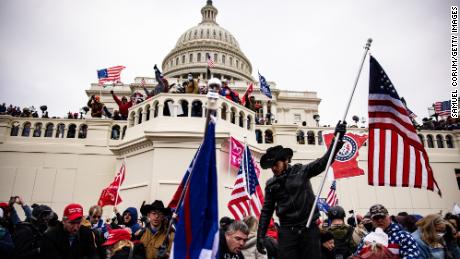
The rest is, of course, what Trump was impeached for a 2nd time. He told the mob to march to the Capitol, where they arrived after the counting had begun and most Republicans in the House and 11 in the Senate were in the process of objecting to the votes of Arizona. The Capitol was evacuated while the rioters violently rampaging through the Capitol, their actions leading to the deaths of 4 rioters and a Capitol Police Officer, Brian Sicknick, was murdered while trying to protect Congress. While this was ongoing and members of Congress were being held in a secure location away from the mob, Giuliani was busy calling supporters like Alabama Senator Tommy Tuberville and imploring them to object to as many states as possible as soon as Congress resumed its Constitutionally mandated duty, in order to drag the proceedings into the next day (the 7th). We know Giuliani did this because he left a message on what he thought was Tuberville’s phone, but was actually that of Utah Senator Mike Lee – a Republican but one who wasn’t challenging the results or aiding Trump’s undemocratic coup. Giuliani claimed on the call that a delay into the 7th would give Trump’s team the time to present new evidence of wide-spread voter fraud. Giuliani was lying about the evidence (which he has never produced in court or anywhere else), meaning that the real reason is far darker: Giuliani and Trump wanted to give the insurrectionists more time to (in the best light) loudly intimidate Pence and Congress into illegally letting Trump stay in power, but could honestly have  been about giving the rioters more time to capture Pence and/or other key leaders and compel them at threats to their lives to keep Trump in power.

Republican Senators Have a Last Chance to Make it Right

All of these things happened and cannot be covered up or sacrificed in the name of superficial, self-interested ‘unity.’ Donald Trump tried to overturn a free and fair democratic election because he didn’t like the result, and most of the Republican Party was either complicit in his effort, or silently standing by and letting it happen. What originally started as a stupid, angry, pathetic man’s attempt to cope with losing turned into a psychotic and increasingly autocratic attempt to forcibly hold onto power at any cost. It is hard to believe that Trump ever truly believed he won the election, but it is hard to tell because for literally his entire life he has been able to ignore what he doesn’t like, and has had enough money to get people to accept his world view. He could say that he ‘won,’ even when he made terrible business decisions or his marriages blew up due to his narcissism and infidelity, and he could always find people to say that he was right. But here was finally a situation where he could say, ‘I won,’ as often as he wants to, but aside from a small and shrinking circle of sycophantic cultists, a majority of those in government refused to let him warp reality, declare himself a winner, and stay in power.

The reason that Trump’s coup is so incredibly dangerous for our democracy is that it revealed that the majority of the Republican Party in Congress and in state Republican Parties across the nation were willing to go along with it regardless of the fact that he so clearly lost the election. And some of those Republicans who did stand up for democracy at the very end once it became clear that Trump was not going to accept his defeat no matter what would likely not have acted as they did if the election was actually close. As we just saw, Biden won by 7 million popular votes and 306-232 in the Electoral College and people like McConnell still wouldn’t publicly acknowledge his win for over a month, Trump appointees made the transition as difficult as possible, and Republicans supported Trump filing garbage lawsuit after garbage lawsuit. How would they have reacted if Biden won by the same margin as George W. Bush’s victory over Vice President Al Gore in 2000, when Gore received over 500,000 more popular votes, but Bush won in the electoral college 271-266? We know that Trump would declare a huge victory in that case (heck, he did the same thing this time even though Biden won by 7 million votes and the same electoral college victory that Trump called a landslide when he defeated Secretary of State Hillary Clinton in 2016), so how would he react if more Americans voted for him, but Biden won the Electoral College, and only by 537 votes in one state? There is no chance he’d leave willingly, and little chance anyone in the Republican Party would defy him in favor of Biden.

Because of all those facts, Trump needs to be convicted and barred from office ever again because far too many Republicans have proven that they no longer believe in democracy when it doesn’t go their way. Instead of coming up with a platform that a majority of Americans can support, all Republicans do now is tell people to hate Democrats and terrify them of Liberals so much that even a Trumpian lifetime dictatorship is preferable. We have seen that they will bend language enough so that they will continue to use the language of ‘liberty,’ ‘freedom,’ ‘independence,’ ‘justice,’ and ‘democracy,’ while they work to extinguish the real meanings of those words forever.

Republicans have the chance, though, to make sure Trump doesn’t run ever again, and give us the space to try to save our democratic republic. They need to look to the Weimar Republic to see what happens when coups go unpunished, and to their own history to realize that Trump didn’t, ‘learn his lesson,’ as Collins said last year during Trump’s first impeachment. Hitler had never been in power, so while the Weimar government failed horribly with him and the entire world paid for that mistake, there is even less excuse for Republican Senators in terms of dealing with Trump, because he was just in power for four-years. They know who he is: he does not learn lessons, grow as a human being, or get better. Just like Hitler he is empty inside except for hatred and narcissism. Our system truly cannot survive another Trump term, nor can it survive if the legal principle that presidents are fully above the law becomes precedent. Like Hitler, Trump attempted a coup, and like Hitler his coup failed and led to bloodshed. Weimar let Hitler use the aftermath of his failed Beer Hall Putsch as a springboard to total power over Germany in under a decade.

Republican Senators have the chance to forge ahead and to not repeat history. I just wish I could be optimistic that at least 17 of them will actually take it.  

The Shallow State

There has been a lot of consternation amongst the conspiracy-theory-obsessed Trump world that their hero is standing against an unseen and unknown ‘Deep State,’ conspiracy. This fear turns non-partisan civil servants into the boogeymen foot soldiers of a national or even global conspiracy headed either by wealthy Jews (like George Soros and the Rothschilds), educated elites like Bill Gates, or Democratic politicians like Hillary Clinton. Trump thrives on this fear, and everything he does, from throwing human beings in concentration camps to fighting to take away millions of Americans’ health care during a pandemic is seen through that lens. Regardless of how short-sighted, cruel, racist, or idiotic Trump is, it is always declared to be justified after the fact, and even science is perverted to make him look good. Yet, while Trump’s followers dissect the footage of old Clinton speeches searching for secret handshakes and nods, and examine their Xboxes for proof that Gates wants to microchip them, Trump has shown that the power of the Shallow State is real and dangerous. And if you take the man at his word (usually a losing proposition), he may be sending that Shallow State – in the form of his un-identified, armed, and armored private Department of Homeland Security/Justice Department Army – to your hometown very soon.

The real Shallow State is far scarier than the fake ‘deep’ one. The Shallow State sizes someone up by their appearance, and the farther away from a Caucasian a person is, the less ‘American’ they are judged to be. The Shallow State is concerned with how and where you pray, and who you sleep with. The Shallow State wants to protect statues and monuments because it is terrified of change, and monuments and statues don’t change. The Shallow State doesn’t look beyond the surface, which is why Don is unable to comprehend that forts named after Confederate officers like Fort Bragg and Fort Hood would still have played the roles that they did in American history – like in winning World War II, which he often brings up, and just called a ‘beautiful World War,’ – regardless of what they were named. We didn’t defeat the Nazis and the Japanese Empire because we named our forts after traitors and murderers: it’s just a coincidence that dishonors the Black, Indigenous and People of Color who fought and died fighting in America’s wars.

A lot more damage has been done in world history by those who vowed to unmask alleged conspiracies than by the groups alleged to be conspiring. And many of the supposed unmaskers were cowards too frightened to act without a mask themselves. They are people who are too afraid to admit mistakes, because their entire claim to power is based on appearing strong and infallible. Imagine if Hitler took power in Germany in 1933, had a few days to ‘look over the books,’ and declared that actually Jews and Communists weren’t responsible for Germany’s defeat in World War I? Or if Joseph McCarthy admitted that there wasn’t a Communist conspiracy in the US government? Or if Trump admitted that there is no ‘Deep State,’ that global warming is not a hoax, or even simply acknowledged that he altered the map of Hurricane Dorian’s projected path? But even getting Trump to admit that he was wrong in not wearing a mask or asking other Americans to wear them took several months during which countless more people were exposed to Covid-19 than otherwise would have been. Don is currently not doing things – like calling on the Defense Production Act – that experts have been begging him to do for months because if he does them now it will look like he’s admitting to having made a mistake in NOT doing them sooner. People are literally dying because Trump believes his chance at re-election in November would be hurt more by admitting he made a mistake and using every tool at his disposal to fight the pandemic than by letting people get sick and die.

The notion of the ‘Deep State,’ may animate Trump’s followers and has led to a purge of civil servants from throughout the government who are viewed as insufficiently loyal to Don. But the Shallow State is scarier, and it has no time for subtlety. People thrown into unmarked vans or terrorized with tear gas and violence so that Don could have a photo-op in front of a church are the victims of the Shallow State. The Shallow State doesn’t exist in fever dreams as a way to defend Trump from being attacked as the worst president in American history. It is very real, and we need to fight against it. This Shallow State and its tainted pool of hateful, racist, conspiracy-minded fascists is the swamp we need to drain in November.  

Can the USA Survive Trump?

The United States is facing the largest threat to its continued existence as one nation-state since the Civil War. This is not hyperbole or exaggeration: I have extensively studied the Civil War and American history as a whole, and we are in dangerous waters. As I see it, the threat is a massive leadership vacuum coming from the Washington and Donald Trump.

The problem with the vacuum is that far too many states, cities, and people are not content to just twist in the wind regarding health care, global warming, and immigration. The American people and their state and city representatives are going to step up and fill that vacuum, leading to a potential clash between state and national power the likes of which have not been seen for well over a century.

Even some Liberals are skeptical of the Trump-Russia connection, but if Vladimir Putin made a wish for the United States when he blew out his birthday candles last October, he’s already gotten most of what he wanted. There has been a massive erosion of faith in the American government, the media and even factual, objective reality as a whole; the USA has largely relinquished the leadership role it has held since the end of World War II and is more isolated than any time since just before the War. Now, with the recent G-20 Summit and Trump’s decision to quit the Paris Climate Accords, the rest of the free world openly mocks us. And most troubling of all going forward, our nation is splitting at the seams as the political, cultural, ideological, and economic ties that have bound our nation together for so long are ripped apart.

And the end of our nation may be coming sooner than later. Donald Trump has less legitimacy and political capital than any president in American history, and it isn’t even that close. We already see individuals, states, and cities rising to fill the leadership vacuum, but I believe the real problem will come to a head soon as a result of 2 potential sequences of events, both involving Trump’s role as Commander-in-chief.

1.) Trump grows angrier and angrier over the increased resistance to his rule and to approval ratings lower than intestinal parasites and he and his advisers decide that military action will cause the American people to line up behind him out of patriotic duty. Now, recent history (Iraq) should show him and his advisers that this approach is flawed in the extreme, but Trump neither knows nor cares about recent history. In 2002, President George W. Bush labeled Iraq, North Korea, and Iran an ‘axis of evil,’ and Iraq, the ‘easiest’ target of the 3 is no longer on the list. That leaves the nuclear-armed North Koreans, and Iran, a nation of 80 million people (for comparison, Iraq had 26 million when we attacked in 2003) that will achieve nuclear arms pretty quickly once we tear up the deal that we – along with the UK, France, China, Russia, and Germany – made with them in 2015. Not only will any pre-emptive US attack on those nations devastate our allies and further isolate us more than Trump already has, but there will be many in our armed forces who will not risk their lives for an aggressive war that will be transparently political. For maybe the first time in American history, those who protest the war at the start or who refuse to fight will be those celebrated as patriots.

2.) The more likely scenario as I see it. Trump grows angrier and angrier over the increased resistance to his rule and to approval ratings lower than genital warts, and he finally decides he can’t ‘allow’ protests anymore (First Amendment be damned), and he orders either the National Guard or regular military to disperse the most high-profile and disruptive protests; he does not order them to use deadly force but to use all force short of lethal. It is again easy to see many refusing to follow such orders, which is the very type of situation at the start of many revolutions throughout history.

When the US faced the greatest crisis in our history, we had an almost perfectly designed leader to handle it in Abraham Lincoln. When the Great Depression threatened to end our democratic republic, we had an almost perfectly designed leader to handle it in Franklin D. Roosevelt. We are now at the precipice of national disaster just as we were in 1860 and 1932, but instead of having Lincoln or FDR, we have an erratic, petty, angry, ignorant, short-sighted, dishonest, and probably mentally ill man standing where those two giants once stood. There is no easy answer for this type of situation in the Constitution: we have to find it our selves, and we must identify, elect, and follow leaders in our states, cities, and towns, because there is a vacuum in Washington right now, and we have to recognize it, and decide whether or not it is fatal to the United States as we know and understand it.

Trump the Bad Neighbor and Fighting His Lies

Allow me to present a metaphor that I feel may help explain the way I look at the situation Americans currently face in a Trump Administration that lies more often, more frequently, and about more things than any Administration in US history.

You leave your house and walk down your driveway where your neighbor stops you and begins to talk. He tells you that the tree in your yard is not really a tree, but is actually a crashed alien escape pod that will open any day to reveal alien monsters who will kill and eat your family. You calmly point out that this is not true. You walk him over to the tree and inspect it with him. You show him pictures of other trees of the same species and type, and present detailed facts to prove that, it is indeed a tree. Your neighbor is not very convinced, and walks away. The next day, your neighbor is back, and he again says that the tree is a crashed alien escape pod. You are puzzled and exasperated, and while you don’t have the same enthusiasm, you again walk him through the overwhelming evidence that yes, it is just a tree. Your neighbor presents you with information that describes why your evidence doesn’t convince him. Your neighbor angrily stomps off, while you sigh and go to work; while at work, you read the information he presented you with and find that it is nonsensical ramblings that might even make you laugh if you did not know how serious your neighbor took it, or hear the echoes of fear-driven hatred and violence behind it.

The next day your neighbor’s back at the foot of your driveway. He again says that your tree is a crashed alien escape pod that will open any day to reveal alien monsters who will kill and eat your family. You are annoyed, and explain to him that the arguments he shared with you have no basis in fact and you feel he should discard them. He says that you are either a naïve tool who cannot detect that you are being lied to and hypnotized by some vague frightening entity (maybe it is a world-wide conspiracy, maybe it is ‘the media,’ maybe it is scientists, maybe it is minorities, maybe it is ‘elitists.’) or that you are actively in on ‘it,’ and you’re simply a liar. This is too much for you after the last few days; you explode and tell him off for being a hateful, stupid, disgusting bigot. He then smiles in triumph, “That’s how it is with you and people like you: you don’t have facts on your side, so you simply call me a racist or a bigot. You can’t beat me by argument, you sink to attacking me!” The debate you had been having has now become about name-calling and whether or not you crossed the line, and your initial point about your neighbor’s conspiratorial paranoia has been obscured; your neighbor leave and you head to work fuming and at the end of your patience with this person.

The next day, your neighbor is back at the foot of your driveway and ready to resume the fight, but you have no more stomach for this debate; you know that nothing you will say can possibly convince him, and that you will likely wind up screaming at him again, and that you’ll get nowhere. “Whatever,” you say, “Just leave me the hell alone,” and you go off to work. You don’t want to keep having these confrontations because they are negatively impacting your quality of life: you are angry and stressed all the time and you dread simply walking to the edge of your driveway because you expect that if you do, you’ll wind up in an endless, un-winnable argument. You become withdrawn and you cede more and more ground to your neighbor because you don’t want to have constant fights about what you consider to be simple good sense and objective reality. You and your neighbor were actually friends before he began spouting nonsensical lies, and you enjoyed talking about sports, movies, and pop culture, and you both genuinely care for each other’s families. Now you don’t even want to be in your yard if he’s outside because you don’t want to be around him; there are no more ‘safe’ topics because your neighbor thinks that you are stupid, naïve, and blind to reality while you think that he is being dangerously misled, believes in crackpot conspiracy theories, and that he has become a mean bully. You feel that the less you see him and have to deal with him, the better.

Other neighbors who are your friends and know that your tree is just a tree are puzzled because they no longer see you standing up for what they know is common sense and sanity. They know your tree is a tree, but now that you’ve ceded the argument to your neighbor, they’re not going to contradict your neighbor either. Your neighbor has convinced almost no one, but he has succeeded in muddying the water in the eyes of many in the neighborhood. People still don’t believe your neighbor when he comes out a few days later and tells the person who lives across-the-street that her swimming pool is filled with water poisoned by the government to turn swimmers homosexual, but you have already decided to stay away from your neighbor, and each day and with each ridiculous new assertion, fewer people are fighting back even against things that they know are demonstrably untrue. Objective reality in the neighborhood is no longer agreed upon, and people start to avoid one another because it is as if the neighborhood has been littered with invisible landmines, that will explode if someone walks over them. The neighborhood is now less safe, less civil, less sane, less kind, and tension is lurking everywhere, as people struggle daily in a figurative fight to keep from having a literal fight.

Forgive me for perhaps stretching this metaphor a bit far, but if Donald Trump is our bad neighbor, how do we fix that situation? How do we save our own national neighborhood from his lies and his hate? How do we stand up for objective reality, and build a safer, happier place for ourselves, our children, and their children?

Donald Trump has been president for just over three weeks, but he has already bombarded the nation with an avalanche of dishonesty and disinformation so thick and powerful that he has actually weakened the idea of objective reality! Even for someone such as myself who always looks to history for precedent to make sense of current events, Trump is moving in a direction that is unprecedented in our nation’s history. His assault on the truth and reality itself has grown out of a massive explosion of hyper-polarization unlike anything the nation has seen since directly before the American Civil War. Until relatively recently Republicans and Democrats agreed on many issues but disagreed and debated the ways to deal with those issues, but that all changed during the Barack Obama Administration. Under President Obama the two Parties no longer debated about what was the best plan to deal with problems like how to fix our health care system, our immigration system, or to counter global warming, instead Democrats continued to propose solutions to what they believed were serious problems, while Republicans offered no competing proposal because they denied that there was anything wrong with health care and immigration in the first place, and they claimed that global warming was a hoax. Conservatism and Republicanism became defined not by adherence to an ideology – not even to the old ‘small government,’ orthodoxy that was at the heart of Republicanism from 1980 to 2008 – but by opposition to President Obama and the Democratic Party.

The new Grand Old Party’s disdain for President Obama led to an atmosphere where literally nothing the President said or did – not even the legitimacy of the President himself – would be accepted at face value. This was seen in a Republican Party that refused to believe falling unemployment numbers in 2012 because those numbers were bad for Republican presidential nominee Mitt Romney’s campaign, refused to believe numbers that violent crime was down, refused to give any credit to Barack Obama for approving the operation that resulted in the death of Osama bin Laden, and refused to believe that neither the President nor Secretary of State Hillary Clinton was not personally to blame over the terrorist attack in Benghazi, Libya in 2012 that resulted in the death of 4 Americans. Republicans were so certain that Obama or Clinton did something wrong in Benghazi that they conducted 7-tax-payer-funded investigations into the event that cleared both President Obama and Secretary Clinton; when the GOP disliked that result, they refused to believe the findings of their own Congressional investigations.

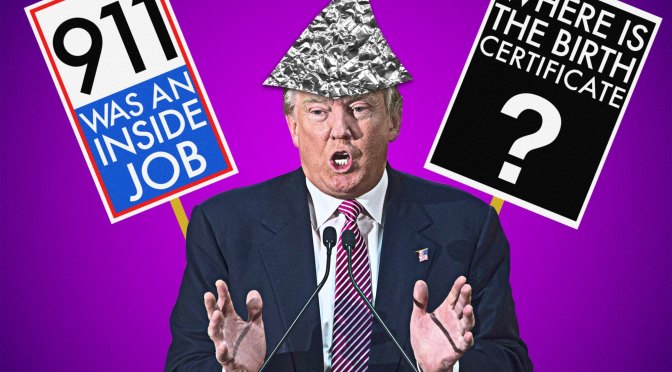
But the real seed of the legendarily dishonest Trump Administration was in the racist ‘Birther’ lie that held that Barack Obama was not really the president of the United States because he was not born in Hawaii, in the USA, but in Kenya. While much of ‘Establishment’ Republicans, from Speaker of the House John Boehner to Mitt Romney and Republican 2008 presidential nominee John McCain loudly distanced themselves from the myth, a large part of the Republican and Conservative base refused to believe that Barack Obama was the legitimate president of the USA. One of the public faces of this racist lie was Donald Trump, who flirted with a presidential campaign in 2011-12 based almost entirely on the issue of ‘Birtherism.’ Trump publicly proclaimed that Obama was not born in Hawaii and that he had hired a team of investigators that was producing irrefutable evidence that Barack Obama was not an American. President Obama believed that he had successfully answered this nonsensical claim in 2008, and reluctantly released his ‘long form,’ birth certificate in 2011 to shut down the myth for good. Trump’s burgeoning campaign fell apart when his lie was exposed, but he never admitted that he had lied and that he was wrong. It was the first of the many lies of Donald Trump the politician, which have included lying about personally witnessing ‘thousands’ of Muslims celebrate the 9/11/2001 terror attacks, lying about why he would not release his tax returns, lying about his admission that the Birther Lie was a lie, lying about having publicly come out against the Iraq War, lying about his business career, and on and on and on.

Of course, President and President-Elect Trump did not abandon his lies when he won the election last November. Trump lost the popular vote to Hillary Clinton by 3 million votes, 66 million to 63 million, Trump is unable to accept that he received 3 million fewer votes than Clinton, so he lied (and continues to lie) that he actually won the popular vote because ‘3-5’ million people voted ‘illegally.’ He lied about the crowd at his inauguration and the weather that day; he lied about stepping down as the head of the Trump Organization and putting his assets in a blind trust. He lied that he would release his tax returns after the election, and that Mexico would pay for the wall. He has lied about his Muslim travel-ban. Donald Trump now represents the United States of America both at home and abroad, and not even a month into his Presidency there appears nothing too big or too small for him to lie about. It can be overwhelming to try to contend with an Administration that is spreading new falsehoods every day. Trump is using the strategy of the bad neighbor in the metaphor above: muddying the water around every single issue and challenging the validity of everything that he dislikes or disagrees with. This is so that the resistance to his authoritarian regime is disorganized and divided, and so that each group or individual trying to sift through the river of bullshit that Trump’s Administration spews 24 hours a day, 7 days a week cannot possibly keep up. Trying to address single lies, whether the biggest or the smallest, means that some are getting through every day because it just isn’t possible for any one person to stop them all.

But there is hope for those who will fight for truth and objective fact – there is a way forward. We have tools that the victims of past authoritarian regimes did not possess, and thanks to the Internet, we are more connected than ever before. If we work together we can stand against hatred, ignorance, dishonesty, fear mongering, cowardice, greed, and short-sightedness. Just because the task before us is difficult, and the way is unclear does not mean we will fail. The first thing we have to do is organize ourselves. It is almost impossible for one person, regardless of his or her intellect, to combat every one of Trump’s lies, so what we need to do is work together and organize strike teams. One team can fight his lies about the popular vote and push back his naked attempt at voter disenfranchisement; another team can fight back on lies about crime and criminal justice reform; another can work on his lies about immigration and anti-Muslim lies; another on digging up his tax returns and keeping track of his ties to foreign governments. Maybe we can’t fight Trump’s lies as individuals, but we have the advantage if we can organize together.

Besides mobilizing together, there are some other things that we can do that will help us save our democratic republic from an authoritarian coup.

1.) No matter how warranted it may be, we must never shout names and allow Trump and his lying followers to try to get us to act out, because the facts, evidence, and morality are all on our side. We should say ‘here’s proof that Trump lied’ to Trump’s followers instead of saying, ‘Trump and his orders are racist and stupid, so you are racist and stupid too!’ which will just lead to the old Conservative standby of ‘you called me a racist! That is just what Liberals do when they can’t win an argument!’ Fighting even the most egregious lies or hate speech by attacking someone who believes the lies will get us nowhere, since it will turn the debate into an argument about racism itself, leaving the initial topic completely forgotten in the dirt. You are now arguing about insults and not about Trump or his actions.

2.) Don’t take the bait if/when a Trump supporter says that you are biased and that you believe that President Obama, Hillary Clinton, Bernie Sanders, or some other Democrat or Liberal was/is perfect. This is another trick, and the Trump supporter is trying to bait you into listing your own (likely legitimate and fact-based) reservations about a Liberal politician, and whether it be Obama, Sanders, or anyone else, the topic will no longer be what Trump has done or said and why it is wrong; it is now about the flaws of Obama/Bernie/whomever. And if you think that the Trump supporter is reasonable and he/she will then say, ‘Well, I have reservations about Trump, too, and here they are,’ then you’re likely going to be disappointed with the result. You are now arguing about Obama/Bernie/a Liberal politician and not about Trump or his actions.

3.) We cannot have any more arguments about hypocrisy or alternate realities where we say things like ‘If Obama was as cozy with Russia, as Trump is, the Republicans in Congress would move to impeach him,’ because they don’t matter. Many of the biggest Trump supporters and Trump himself are hypocrites – in one of the alternate scenarios we should cease to use going forward, try to imagine Trump and his supporters’s reactions if Hillary Clinton had been the one who received 3 million fewer votes than Trump did, yet she won by the exact same numbers in the Electoral College – but it doesn’t matter. How the Republicans may have reacted to Obama or to Hillary doesn’t change the fact that now Trump and the GOP hold the power, and many of the highest-ranking Republicans, like Senate Majority Leader Mitch McConnell (as seen in his recent comments about how shocked and upset he is about Democratic obstruction in the Senate of late), either have a complete and total lack of self-awareness or have no shame or integrity. McConnell in particular is responsible for creating a new Senate operating procedure where the Senate Majority Party will no longer allow the president who is of the opposing Party to fulfill his/her Constitutional duty to appoint Justices to the Supreme Court. The new reality apparently is that Democratic presidents will be denied that duty if the Republicans hold the Senate and if he/she does not nominate the identical person that a Republican president would nominate. McConnell has done unprecedented and as yet unquantifiable damage to the Judicial Branch of government and in particular to the highest court in the land, and we’ll have to wait and see if that damage is fatal or not to the Judicial Branch as it currently exists. The point, however, is that the fact that McConnell is a hypocrite is not important right now, all that is important is stopping him and Donald Trump from stealing our democracy out from under us.

4.) No lie, no matter how big or small, can go unchallenged. We need to be organized well enough that we have people able to respond to any and all lies – if Donald Trump says it is 68 degrees outside and it is really 66, we need to counter it and share the truth.

5.) No more politeness. We must follow rule one and never engage in ad hominem attacks (no matter how justified we may be), but it is vital that we stand up and argue for what we believe in. We need to publicly respond to every Trump lie, but we also need to call out lies in our own lives, too. If a friend says that Trump actually won the popular vote, explain why that is untrue and wrong. If you hear a total stranger in the supermarket say that Barack Obama is a Muslim from Kenya, do not let it go unchallenged. Pointing out the lies of strangers is both uncomfortable and impolite, but we need to fight for the truth and for objective reality. I have always hated the phrase ‘history is written by the victor,’ because the Confederacy lost the Civil War but, after the period of Reconstruction ended in 1876, the North stood aside even as the South taught its students the ‘Lost Cause’ Mythology that lied about the War and its causes and helped perpetuate Jim Crow segregation for almost another century. We cannot allow history to be written by the person who yells the loudest simply because we find it too inconvenient to argue even when we know we are right.

6.) We must seek the acceptance of potential moderate Republicans who either did not vote for Trump or who voted for him just because he was not Hillary Clinton. The idea that moderate Republicans are going to support Democratic candidates or Liberal policies/ideas is unrealistic, but only the most committed Trump supporters believe in his core lies, like that 3-5 million people did vote illegally and that Trump is the true winner of the popular vote. Only the most committed Trump supporters agree with every word of Trump’s Executive Order on immigration. To protect the very idea of objective reality and honest governance, we are going to have to work alongside people who we disagree with on about 7 issues in 10, and even though we fought against them in November and will fight against them tomorrow to defend Medicare and Social Security, right now the overriding concern must be the marginalization and removal from power of a regime that does not view George Orwell’s masterpiece Nineteen Eighty-Four as a cautionary tale of the nightmare of unchecked authoritarianism, but as a blueprint from which to operate. We will never give up our desire to expand Medicare, achieve single-payer health care for all Americans, and fighting for a more Progressive, open, free, and inclusive society, but right now the most important battle is the one against a Trump White House that says 2 + 2 = 5.

I may come off as preachy or hyperbolic, but I assure you that I am sincere and I believe this is an incredibly important moment for the state of California, the nation, and even the world, and it is not the time to do nothing. Fortunately I am not the only one who has been motivated to act, and I have been humbled to watch and work alongside some of the most capable, empathetic, intelligent, generous, hard-working, dedicated, tireless, and just all-around incredible people that I have ever met or hope to meet. I am inspired every time I see the level of commitment from these people, the vast majority of whom are unpaid volunteers, and who have jobs and families, yet somehow find spare time that they use to fight to make the lives of others better. The majority of people in just my town, let alone the county, city, state, or nation will probably never know the sacrifices that are made every single day in their names.

Whether in my metaphorical neighborhood or in the real world, by encouraging people to stand up to this government, I know that I am asking them to take on potential risks in their personal and professional lives, and even asking people to do very uncomfortable or unnatural things like arguing with strangers if we hear them spreading lies. However, I vow to you that I will never, suggest that other people should risk anything if I am not also willing to pay the same price myself. I was born with the joint disease Arthrogryposis (which is coincidentally the New York Times reporter Serge Kovaleski was mocked by Trump for having in December 2015), having in December 2015) and the spinal condition Scoliosis, and I have had several major spinal surgeries and spinal fusions throughout my life. I have not spent even one solid hour out of intense back pain since September 1998, and as such I must always weigh the impact any particular action might have on my back, but I will endure extreme agony to fight for our nation, for the truth, and for freedom. My most recent surgery took place during Barack Obama’s campaign for the Presidency in 2008, and I did phone banking for the then-Senator from my hospital bed. I am ready and willing to pay this price, and I hope many are willing to join me in this uncomfortable, inconvenient cause. And know that I will gladly stand and march and fight even for those who will do the same against me, and I’ll endure days of recovery time and of bitter pain for you, too. This is about more than Republicans and Democrats, and more than Right and Left. This is about right and wrong, and if you choose to defend and propagate lies and tyranny, history will not look at you very kindly, and if I live long enough, I’ll be the one to write it down so our children and their children will mark down those who stay seated and silent alongside those who fought to propagate dishonesty, corruption, and meanness, and not with those who stood against an autocrat and risked the consequences.

Trump’s Moral Price

I was speaking to my cousin John about the most recent New York Giants game the other day when their kicker, Josh Brown, missed a 53-yard field goal attempt. Brown had just returned from serving a one-game suspension for domestic violence charges against his wife, and I expressed dismay when he missed the field goal. John correctly pointed out that 53-yards is far away for any kicker, and that Brown’s miss was understandable. However, while I acknowledged that kicking from such a distance is difficult, I explained that the Giants are paying a high moral price to employ someone as ethically questionable as Brown is, and that because of that cost, Brown does not have the luxury to be held to the same standards as the average kicker. For the Giants to justify Brown’s spot on the roster, he has to be a great kicker, and great kickers make 53-yard field goals, and while I personally do not believe that any performance, no matter how great, excuses domestic violence or other crimes, professional sports teams obviously disagree with me. The Giants are keeping Brown because he is good at what he does, the Pittsburgh Steelers have kept quarterback Ben Roethlisberger in spite of being accused of multiple rapes, and the Los Angeles Lakers kept building their team around now-retired superstar Kobe Bryant for a decade despite rape charges of his own. It seems that there are few crimes and moral outrages that will compel a sports team or a business to cut ties with its best players/employees as long as those players produce at a high level or make their businesses lots of money.

After the conversation, it occurred to me that such a standard could be applied to other aspects of life, and I immediately thought of Republican presidential candidate Donald Trump. Trump has spent 70-years as an ignorant, lying, bullying, xenophobic, sexist, bigoted, racist, narcissistic, anti-semitic, buffoon, and has amply demonstrated his utter unfitness to become the President of the United States of America. For someone to cast his or her ballot for Trump in November, he or she must love other things about Trump so much that he or she is willing to shrug off all those other horrible things about the man. So I am asking Trump supporters (literally, this is not a rhetorical exercise): what is it that you like about Trump so much that you can suppor him in spite of all the frightening things he has done, said, stands for, and plans to do in the future? Is it Trump’s proposed economic plans? How about his stated environmental plans? Do you believe that his ‘wall,’ between the United States and Mexico will make things so much better here in America that his other flaws do not matter to you? Are you willing to put up with his past attitudes towards women, minorities, and people with disabilities (and pretty much everyone else on earth who does not share his last name, or is not Vladimir Putin) because you feel that he will make America stronger and more respected abroad?  What about him personally do you like so much that you want to vote for him in spite of all I mentioned before?

Trump on Economics

When President Ronald Reagan was elected in 1980, he made America’s rapidly growing national debt a major campaign issue, but even at the time economists and critics, including his leading opponent for the Republican nomination in ’80, George H. W. Bush, (who would be Reagan’s Vice President, and eventually his successor as president) who famously called Reagan’s supply-side economic theory, ‘voodoo economics,’ during the campaign, correctly protected it would greatly expand the national debt. Of course, Reagan’s policies did explode the debt at unprecedented rates  due to the not-so-shocking problem that if you take in $10 and spend  $15, you wind up deeply in debt, and his policies devastated American manufacturing by making it easier than ever before to outsource jobs overseas. We have now had over 35-years of evidence to suggest that former President George H. W. Bush and other critics were correct: ‘trickle down’, ‘Reaganomics,’ were horrendous for all but the ultra rich.

As a whole, the American public has been paying atention to the real cost of trickle down, which is part of the reason that the Democratic Party’s nominee for president has defeated the Republican candidate in the popular vote in five of the last six presidential elections. Trump seems to understand the widespread distrust of the efficacy of huge tax cuts for the rich benefitting the middle class and the poorest Americans, and he has responded by speaking like a populist who is for bringing back American manufacturing jobs and undoing the free trade policies that have been supported by every president from Reagan through George H. W. Bush , Bill Clinton, George W. Bush, and up to Barack Obama. But in spite of the language he used, the economic plan that Trump has proposed is just Reaganomics repacked in populist language, and not only is the core of his plan a new massive tax cut for the wealthiest American, but according to CBS, his economic plan would add $5.8 trillion to the national debt over the next decade, while former Secretary of State Hillary Clinton’s plan would add $200 billion. And while I happen to share the belief of economists like Nobel Prize-winning New York Times columnist Paul Krugman that neither a budget deficit nor national debt is necessarily a bad thing, many of those who today worship at the Cult of Reagan, and who take it on faith that  ‘trickle down’ economics always works and profess to care so deeply about the national debt that they support a Constitutional Amendment mandating a balanced federal budget, intend to vote for Trump even though the economic policies he has announced publicly and on his own official campaign website lay out an economic policy that will further explode the debt and continue the pace of outsourcing more American jobs. So, if you truly care about the deficit and you are against free trade agreements like NAFTA or the TPP, then why are you voting for Trump? Trump may attempt to cloak his re-packaged trickle down economic plans in populist language, but what about his entire life history has convinced you that he would govern by populist policies? Why do you believe his populist talk when the plans on his own website prove what his actual intentions are? Can you really trust him on the economy?

Trump on the Environment

Once upon a time, environmental conservation was a non-partisan issue, with the Environmental Protection Agency and the Clean Air Act created and signed, respectively, by Republican President Richard Nixon, but those days ended long ago. Today the Republican Party is largely united by, at best, severe skepticism about climate change – especially man-made climate change – and at worst a total hostility to climate change and the very ideas of conservation and environmental protection. Trump’s environmental plan places him firmly in the ‘hostile,’ wing of the Republican Party, and he has declared an intention to abolish the EPA and dramatically weaken or totally abandon all environmental regulation in the United States. Combatting climate change is perhaps the most important issue to Millennial voters, and Trump is on what most of those voters consider to be the wrong side of it.

If protecting the environment matters to you, then why would you vote for Trump in November? Hillary Clinton’s policy is far easier to nail down, and is the most progressive environmental position ever staked out by a major Party nominee, and commits both Secretary Clinton and the United States as a whole to fighting to minimize the rapidly unfolding catastrophe (environmental, human, and economic) that has already begun. The Republican Party, many of its largest donors, and even some on the Democratic side of the aisle have tried to muddy the water – and compared to what some of the corporations on the anti-climate change side of the issue do to water every day, mud would actually be an improvement – on this issue by acting as if there is widespread disagreement within the scientific community about climate change. In reality, there is no real disagreement among scientists, who are in almost universal agreement about the threat that our nation – and our world – faces. If you care about this issue, then why would you vote for Donald Trump?

Trump on National Security

Our nation faces many threats, and simply having the most powerful military in world history does not eliminate all dangers to our nation. In today’s world, the idea of conventional warfare, with one nation-state at war with another, seems almost quaint. We have made ourselves so powerful that no nation has the ability to wage a conventional war with the United States, but that does not mean that we do not have committed enemies. The Islamic State in Syria, or ISIS, is one of these threats, and while under President Obama we have degraded and punished the group to near annihilation, but ISIS, like al Qaeda, is more about an idea, and as such simply killing their leaders (and we have) or taking their territory and weaponry (and we have) does not insure our safety. That we face such threats and others, including the cyber threats we are currently facing from Russia, makes the Presidency as important now as it has ever been. Not only has Donald Trump shown himself to be unworthy of the massive charge of being Commander in Chief, with his lack of temperament and tendency to fire off and attack all of those who criticize him for even the most trivial things, he has shown himself to be unwilling to criticize or stand up to Vladimir Putin, Russia’s strongman dictator.

If that does not raise any red flags with intended Trump voters, what about the fact that the man is actually running on a pro War Crimes platform! He has declared his intention to violate the Geneva Convention not only by torturing human beings, but he has proposed capturing the civilian families of terrorist suspects and either imprisoning, torturing, or killing them in an absolutely despicable attempt to keep their family members from attacking the USA. All the things that Trump admires about Putin are the things Trump wants to project about himself, but he has an inability to realize that just projecting strength does not make one strong. Putin grandstands and invades neighboring nations, and tramples democracy, but nothing that he has done has restored Russia to the superpower status once held by the Soviet Union. Trump sees Putin as his role model, his exemplar of strong leadership, while he continually attacks President Obama for perceived weakness. And yet, Obama has been the one to degrade ISIS and to kill Osama bin Laden, and Obama has killed more terrorists than any other president in American history. And while Russia’s economy has gotten weaker under Putin because his bullying invasions have led to economic sanctions, when Obama came into office in January 2009, he inherited the worst economic crisis since the Great Depression, and has pulled us out of that fire. Yet Trump admires Putin, not Obama; is that not a red flag in and of itself?

I can understand why some people don’t like Hillary Clinton, but for me there are more than enough things that I can find in her readily accessible and detailed policy positions on the environment, minimum wage, foreign policy, and more that I whole-heartedly agree with, which allows me to support the former Secretary of State even though I feel that she often acts entitled (as if rules do not appy to her), is seemingly allergic to transparency, and is too closely aligned with the financial powers that reside on Wall Street. Of course when she is compared to Trump, with his flat refusal to either release his income tax returns or any legitimate health records, the notoriously guarded Clinton might as well be running her campaign from within a glass house under an electron microscope. But to support Trump, one must truly love something about his positions, since it is hard for me to understand how any non-racist, non-hateful/fearful person can tolerate Trump’s racism, bigotry, sexism, dishonesty, xenophobia, attacks on people with disabilities, homophobia, Islamaphobia, bullying, narcissism, megalomania, and ignorance just because he or she hates Hillary Clinton. If someone does not love Trump’s stated positions, and trust that he will hold to them if he is elected, then how can he or she give him the benefit of the doubt that he’s not really an anti-semite in spite of having Alt-Right, Breitbart hero Steve Bannon, as his campaign manager or flirting with David Duke (who has made no secret of the fact that he believes his chance has come again because of Trump)? That he’s not really a racist in spite of his nakedly racist championing of Birtherism? That he’s not really a bigot when he calls all Latino immigrants rapists and drug dealers? That he’s not really a sexist when he calls women dogs and pigs? That he’s not really a bully when he mocks a journalist for having a physical disability? That he’s not a liar when he claims that he saw hundreds or thousands of Muslims across the Hudson River in New Jersey celebrating as the Twin Towers collapsed on September 11th, 2001? That he’s not classless and temperamentally unfit to be the President of the United States when he questions the impartiality, loyalty, and even citizenship of an American judge, Gonzalo Curiel, because he ruled against Trump’s bogus university, or attacks the Khan family because they were critical of him? That he’s not a demagogue trying to turn Americans against each other when his initial response to the deadliest mass shooting in American history was to brag about his plan to ban all Muslims from traveling to the United States?

It is cliché to say it, but neither this election nor any other has ever taken place in a vacuum. Hillary Clinton is not running against a perfect candidate who will be the best possible choice and with whom one can agree on every single policy position: she is not even running against Senator Bernie Sanders, her opponent for the Democratic nomination. Instead, former Secretary Clinton is running against Donald Trump, and regardless of whether or not one decides to support either Libertarian candidate, former Governor Gary Johnson, or Green Party candidate Dr. Jill Stein, neither of them is going to be president on January 20th, 2017, and if anyone says otherwise, and concocts a scenario where either Third Party candidate, or someone else entirely, will be the 45th president of the United States, then that person is not telling the truth. It will either be Hillary Clinton who, warts and all, has shown the intelligence, skill, capacity for hard work, and temperament to do the job, or it will be Donald Trump, a dangerous demagogue who has shown ignorance, hatred, bigotry, an unpredictable temperament, displayed extreme narcissism and megalomania, has a notoriously short attention span, and has lied more often and more easily than any major Party candidate in history. If you love Trump’s stance on immigration, crime, the environment, the economy, and foreign policy so much that you are willing to live with endless stream of offenses he has committed just since he entered the race in June of 2015 (not to mention all the horrible actions and statements he’s made in the 69-years he lived before last June), then perhaps voting for him makes sense to you, but remember also that there are plenty of people in this nation – people who deserve to be called ‘deplorables,’ as former Secretary Clinton recently called them – who are voting for Trump because he is a racist, a sexist, a xenophobe, insults the disabled, is a bigot, a liar, a bully, a narcissist, and has surrounded himself by anti-Semities and White Nationalists who believe Eugenics is a real science and that ‘less desirable,’ people should not be allowed to reproduce so that they do not ‘pollute,’ or ‘contaminate,’ our bloodstream. Perhaps you love his policy proposals so much that you honestly don’t care about any of this, but you would have to have chosen willful ignorance to pretend that there are not plenty of people voting for him because of his most vile views and the despicable Nazi-wannabes like Bannon who now have his ear.

And if you really do abhor the grotesque things that Trump has said and done, but you are going to vote for him anyway because you hate Clinton and hope and expect that a President Trump’s most dangerous and vile tendencies would be kept in check either by the job itself, the other branches of government, social norms, his top advisers, or some other mitigating factor, please remember that such logic was precisely the reason that many educated, intelligent Germans elevated Adolf Hitler to power in 1932/33. I despise comparing anyone or anything to Hitler and the Nazis because some people tune out as soon as the comparison is made as it is over-used, so I do not do it lightly, but it fits here scarily well because the things those Germans knew better, and were personally disgusted by Hitler’s views on Jews, Communists, eugenics, and more, but they supported him anyway because they felt his most harmful, hateful, and deadly tendencies could be contained. If one cuts out all the noise and analysis and just reads everything Trump has said and done in this campaign concerning Blacks, Hispanics, Muslims, women, people with disabilities, soldiers, war heroes, Jews, and more, and simply decided to take him at his words, it should be impossible to support the man with a clear conscience. Put another way: unless Trump starts kicking field goals from 99 yards away and makes 30 of them each game, he shouldn’t have a place on our national team, and I would honestly feel dirty if, outside the election, he simply  purchased any of my four favorite pro sports teams, but there is not enough soap in the universe for me to feel clean with Donald Trump as my president.


Bernie, Hillary, and the False Choice

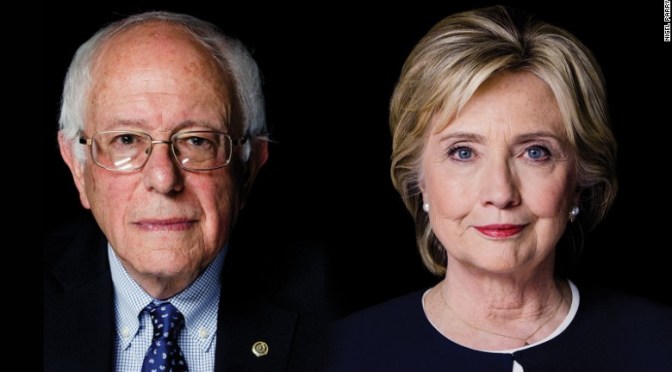
Few things make me angrier than being condescended to or patronized. Arguments and disagreements don’t bother me because I enjoy debating and I always try (though I admit that I do not always succeed) to keep an open mind; being patronized is different, and is sure to get under my skin. I have encountered a LOT of condescension this election cycle – more than I can ever remember experiencing before – and almost all of it has come from one side: the supporters of former Secretary of State Hillary Clinton. From Rolling Stone Magazine’s official endorsement of the Secretary last month to New York Times columnist and Liberal icon Paul Krugman, and to many others both within and outside of the Clinton Campaign, Bernie Sanders supporters, such as myself, are being branded as naïve idealists who don’t know what we’re doing. At best they treat us as unrealistic dreamers with good intentions, and at worst as either rampant sexists or unwitting dupes of some anti-Clinton conspiracy. But regardless of which insulting way these Hillary supporters are branding our support for Senator Sanders, the message is consistent: Hillary supporters ‘admire’ our idealism, but we are blind and must listen to them and support Hillary because they know what is best for us and for the nation.

I am a proud registered Democrat, and this November I will vote for the Democratic nominee regardless of whether it is my personal choice of Bernie, or if it is Hillary, but the arrogance of so many Hillary supporters towards Bernie’s supporters is making it harder and harder for me to have even a teaspoon’s worth of enthusiasm for her. Hillary does not seem to be running on an optimistic message, but instead on a cynical one, claiming that Bernie would be unelectable and, if/once she wins the Democratic nomination, that she is a far better choice than Republican frontrunner Donald Trump or his chief rival for the Grand Old Party’s nomination, Texas Senator Ted Cruz. That argument is logical, and Hillary is light years better than any Republican candidate, let alone the two clowns Trump and Cruz, but logic is not a great way to win elections, and it doesn’t bring people to the polls; we have a lot of evidence for that and we don’t need to look back very far.

In 2008 then Senator Barack Obama beat both Clinton and eventually Senator John McCain to win the presidency running on a message of hope and a change from the dreadful George W. Bush Administration. In the general election, Obama received 70 million popular votes (the most any candidate has received in US history), beating McCain by 10 million votes. In 2012, now President Obama had a lot of achievements that Liberals were excited about, but the only way to make sure that those achievements were not overturned was to help Obama win a second-term and defeat former Governor Mitt Romney. President Obama was reelected, but he received 5 million fewer votes than in 2008, winning 65 to 60 million. People want to vote for a candidate who they can get excited about, and while I believe that Hillary Clinton is amazingly intelligent, hardworking, and competent, none of that is very exciting for me.

The key example that Wenner and others like him consistently point to as the one that taught them the limits of idealism is the 1972 presidential election between incumbent President Richard Nixon, a Republican, and North Dakota Senator George McGovern for the Democrats. McGovern and his anti-Vietnam War platform excited many young Democrats, and because the 1968 election had been close, those young Democrats believed that they could beat Nixon with McGovern just four-years later. But those idealistic Democrats who believed that McGovern might win were proved shockingly wrong and were devastated when Nixon won reelection in one of the largest landslides in history, winning 49 of 50 states, getting 47 million popular votes to 29 million for McGovern (60.7% of the vote, and a victory of 18 million votes, which are both records that have not been equalled since, not even by Ronald Reagan in his own massive landslide over former VP Walter Mondale). Wenner, Krugman, and others like them believe that they learned a valuable lesson in 1972 about the kind of candidates that can win elections in America; I believe that they learned the wrong lesson.

It seems obvious to point this out, but 2016 is not 1972 and Bernie Sanders is not McGovern. Our country has seen different realignments and dealignments of political Parties from the 1790s to today, and 1972 was a huge realigning election. Most southern states had been staunchly Democratic from before the Civil War through the midpoint of the 20th century, but things had begun to change with Civil Rights. The Democratic Party expanded beyond just the South with Woodrow Wilson, and then when the New Deal Coalition formed around Franklin D. Roosevelt, it brought large amounts of northern Liberals and Blacks into the Party, and led to an uncomfortable alliance between the new arrivals and the old south. Racist whites had been able to keep the Democratic Party from getting too invested in Civil Rights, but the coalition began to fray as the Party naturally moved in that direction anyway, and when Lyndon B. Johnson signed the Voting Rights Act of 1965, he figured it would be the final nail in the coffin of the ‘Solid South,’ being a large part of the Democratic Party. After signing the bill, he said ‘We just lost the south for a generation,’ and he was correct. But leaving the Democratic Party did not mean instantly joining the Republican Party, which many southerners still viewed with deep suspicion, so in 1968 the Solid South ran its own pro-segregation candidate in Alabama Governor George Wallace. Nixon won that close ’68 election against Wallace and Democratic Vice President Hubert H. Humphrey, and had the south not defected from the Democratic Party, it is likely that Nixon would have lost. By 1972 the Solid South had indeed found a new home in the Republican Party, and their addition en masse greatly strengthened the Republican Party and weakened the Democrats, and while from 1932-1964 the Democrats had won every presidential election except for the popular war hero Dwight Eisenhower’s wins in 1952 and ’56, the Republican Party would win every presidential election from 1968-1988 except for Jimmy Carter’s win in 1976 (which was only possible due to voter anger over Watergate, Nixon’s resignation, and Ford’s pardon of Nixon, and even with all of that, the election was still close), with almost all the victories coming in gigantic landslides.

The south giving the Republican Party an era of dominance of the White House makes 1972 a poor comparison to 2016 as there is little evidence right now for an ongoing realignment. Bernie’s also a far better candidate today than McGovern was in ‘72. New technology and a well-run organization have gotten Bernie’s message and platform out to people who were either ignored or marginalized in 1972. Bernie’s also not running against an (oddly in retrospect) a popular incumbent, and if he wins the nomination, he would be running against either Trump or Cruz, neither of whom is as strong a candidate as Nixon in ‘72. These comparisons constitute a false choice designed to justify opposition to Bernie, and while I am a Bernie supporter I will readily admit there are legitimate reasons for someone to have doubts about him or to support someone else, but making an inaccurate connection between Bernie and McGovern, and 2016 and 1972 shouldn’t really qualify.

The condescension of the Clinton Campaign and its attempts to casually paint Bernie as a risky choice for either the Party or the nation should be beneath it. Providing weak and inaccurate analogies in order to marginalize Bernie and his supporters is hurting the Party, since it is unlikely to gain any votes for the Secretary or weaken Bernie’s Campaign, while it simultaneously engenders bitterness between supporters of the candidates who are going to have to coalesce in order to defeat the Republicans in November. Patronizing Bernie’s voters reeks of the kind of cynicism that turns people away from politics, and makes it harder to accomplish the kind of things that Liberals and Democrats both want to get done. Pushing people to throw up their hands in disgust and tune out the entire political process is a bad strategy for those who want to show that government can be useful and can do good; it is a victory for those who want to discredit government and democracy in general. Condescension feeds cynicism and leads to feelings of hopelessness, and good things are not accomplished by withdrawing into anger and despair: it is optimism and a sense of the possible that produces positive results. So stop talking down to us and telling us why we’re wrong or foolish to support Bernie, stop using ‘idealism,’ as a synonym for naïve, and tell us why you believe we should support Hillary, and we’ll tell you why we feel that you should support Bernie. If you want to have a productive conversation with us as equals and not wayward children, you’ll find us ready partners.

Together We Will Beat Trump

I must admit, I was rooting hard for Donald Trump to win the Republican Primaries and become the Party’s presidential nominee. I’m a Liberal Democrat, and I thought that anything that might make it more likely for the Democratic Party’s nominee to win the presidency was worth cheering on. It was clear to me that Trump was (and is) a ridiculous candidate and completely unworthy of winning a major Party’s presidential nomination, let alone deserving of becoming Commander-in-Chief of the United States, but if the Grand Old Party was incapable of realizing the threat Trump posed to it, then I was happy to sit back and watch Trump do as much damage to the Republican Party as possible before it realized the danger it was in. I savored the schadenfreude of the Republican Party’s collapse until very recently, brushing aside Trump’s increasingly offensive and occasionally horrifying remarks because, in my view, each one made his defeat in November more likely; I scoffed at Trump/Adolf Hitler comparisons as alarmist and inaccurate. I viewed the man as a joke, but now that Trump has victory in sight, my eyes have finally been opened and I am not laughing anymore. In fact, I am begging forgiveness for my failure to see the man for how dangerous he truly is, and to properly appreciate the threat he poses to this country and even the world; Trump’s rise started out as a Republican Party problem, but it has now become an American problem. I am therefore asking all Americans, especially my fellow Liberals who have been silently applauding the moral disintegration of the GOP to realize what is at stake right now and come together to stop Trump, because together is the only way to beat him.

One might wonder how we came to this extremely dangerous place, with Trump – after another dominant performance this past Tuesday – on the cusp of winning the Republican nomination. Our country arrived at this cliff because the Republican National Committee, its chief donors, and its chairman Reince Priebus defended Trump even when it became readily apparent early on that Trump was a demagogue running a campaign dedicated to tearing the United States apart along race, class, gender, and religious lines. The Republican Party froze over an inability to decide what to do about Trump’s rise: should the RNC give the billionaire its full support? Should it marshall its considerable resources and use them to defeat him? Should it rally around another candidate and back him to the hilt? The RNC was either unwilling or unable to decide on any of those options, and instead of taking action, the Party seemed to hope that someone else would handle their ‘problem,’ for them. It hoped to rally around a candidate who could beat Trump, but it just never happened, and with the loss Marco Rubio, seemingly the Party’s last real hope against Trump, the Party has reluctantly realized its predicament. It means that, unless the Republican powers that be (if any remain) contrive to steal the nomination from Trump in Cleveland this July, he will be the nominee of a supposedly great national Party.

What can we do to check Trump’s rise and keep him from attaining the presidency? I believe that the first step requires the kind of hard self-analysis that Americans don’t necessarily love. Introspection is necessary – especially for Liberals – because it reveals that the anger driving Trump’s supporters is real, and that it is not some phantom movement that Trump has created. Trump has given voice to a deep anger that was already there among many people in this country; Trump is turning that anger towards the very worst human impulses and thereby enhancing it, but we as Liberals must acknowledge the validity of that anger to combat him going forward. Anger CAN be useful and can lead to positive ends if there is a mature and capable leader to harness it and wield it skillfully: a great example of such a leader is President Lyndon B. Johnson, who was finally able to use the accumulated righteous anger of Americans to end most vestiges of Jim Crow segregation in the South with the Civil Rights Act of 1964 and the Voting Rights Act of 1965. LBJ could easily have turned that anger against African Americans and other minorities by using coded language and saying things like, “We’re locked in a Cold War against the Soviet Union and Communism, which is now spreading like a weed in Vietnam, and nuclear war may be around the corner. Now is NOT the time to be distracted by a divisive issue on the home front, and those who are pushing for civil rights in such a dangerous time are both unpatriotic and selfish.” Instead, LBJ chose a different course and used that anger to make the greatest contributions to civil rights of any president since Abraham Lincoln, and he did it in spite of his conviction – which has proven correct – that his Democratic Party would lose the south, “for a generation.”

If Trump was a real leader like LBJ, he would say (based on some of his campaign’s themes), “I hear your anger and I share it too, because we have had too many hardworking Americans see their paychecks shrink, or their jobs move overseas, and they have watched opportunities for success disappear in front of their eyes. Let us focus that anger toward making changes and giving the average Americans a real chance to make American great again.” But Donald Trump has not only never said any such things, he does not appear to have even thought them. Instead of bending voter discontent and frustration toward useful goals, Trump is using them as an opportunity to gain power, stirring up the already present anger of his supporters through demagoguery. His message may go all over the place, and he changes his ‘positions,’ not only from day to day, but from speech to speech and even sometimes from sentence to sentence (here against free trade and there for it, etc). But Trump has been frighteningly consistent on who is to blame for our problems and for making America ‘great,’ no longer: illegal immigrants, minorities, and Muslims, are those primarily at fault.

It is Trump’s scapegoating some of the poorest and weakest among us that more than anything else led to me giving a second and third look to some of those Hitler comparisons that have been flying around almost from the moment Trump announced his campaign with a disgusting speech calling all illegal immigrants killers, rapists, and drug dealers – although he did allow that he assumed that ‘some’ were good people…something that I used to find funny but no longer do. The comparison to Hitler has taken on new meaning the last few weeks as the anger and violence at Trump’s rallies has been stirred to new heights, resulting in his audience violently assaulting protesters, the removal or ban of groups of African Americans from attending his events, and a level of fear and danger for the journalists who are covering him. I must confess that I did not initially look too closely at the ‘Trump is like Hitler,’ comments because I have seen so many people described as being like Hitler that the meaning of such criticisms began to fade into meaninglessness. I was also rooting for Trump to win the nomination and destroy the GOP, so I did not care too look too closely for what it might say about me. But I have forced myself to look closer, and I have been frightened by what I have seen.

Donald Trump is appealing to a dark and twisted part of the human psyche, and he is feeding on the hate and anger of his audiences and their resentment of whomever has upset Trump that day, the person he designates as the ‘dangerous other,’ to be hated in that moment. The ‘other,’ may be Black, like President Barack Obama, whom Trump has tried to delegitimize by casting doubt on whether the president was born in Hawaii – as the birth certificate says – or in Kenya, which is what the racist ‘Birther’ movement that Trump once connected himself to believes. The ‘other’ may be a Muslim, and Trump has declared that all members of the religion, which has 1.6 billion adherents worldwide, be banned from entering the USA. The ‘other,’ might be someone with a disability, like New York Times reporter Serge Kovaleski, who Trump openly mocked for having the congenital joint disease, Arthrogryposis (a disease that I was born with, and suffer from myself). It goes on and on, as there is literally no one, no group, and no thought that is too small for Trump to attack; he is the kind of person who would boo at the end of Charles Dickens’s A Christmas Carol because Ebenezer Scrooge shares his wealth with the impoverished Cratchit family instead of stealing Tiny Tim’s crutch, mocking him when he falls over, and leaving with the family’s meager meal.

Trump has been able to say and do almost anything without facing any consequences, but he is far from invincible. We must start with acknowledging that the people are angry, then on understanding the root of that anger, and moving to address its cause and not just control its symptoms. We need to resolve to accept the humanity in all other human beings and not to let Trump use superficial differences to tear us apart. In 1932 the German people chose Hitler and the hatred and fear of the Nazi Party to lead them out of the Great Depression, while in the United States of America we chose the hope and optimism of Franklin D. Roosevelt. There was a short time that it seemed that the American system of government could not survive the Depression and that we would eventually turn to Fascism just as Germany, Italy, and Spain had, but we rejected that choice. We chose FDR and hope, and when he died the USA was the most powerful nation on earth, our economy working at full capacity, and our troops came home to build a better world; we chose hope and we raised America to greatness. Trump is running on hatred and fear, and we have a lot of evidence to show that such a candidate would not, ‘make America great again,’ but would instead be like an alternate version of 1932 where we sided with hatred instead of optimism. We must loudly reject Trumpism with one voice – one voice made out of millions of people of different races, genders, religions, and creeds; in English our national motto is rendered, ‘Out of many, One.’ Splitting that one great American voice into many small and angry ones, with each one attacking the other, is not greatness – it is the cowardly action of a man desperate for power at any price. We have the ability to put our differences aside and work together to stop Donald Trump from ever gaining the presidency, and by rejecting that lying, angry, faithless, hateful, bullying, demagogue, we will prove that America was, will be, and still is great.

The Greatest Dynasties in Sports History Part II

Which Sports dynasty is the greatest of all-time? I listed the first half of the top 10 a few days ago, and now will list the five greatest of them all.

To refresh your memory, to be on this list a team must win at least four championships in a 10-year period. Also, one of the key tools used to rate the best seasons of these teams is the Simple Rating System (or SRS) used by Sports-Reference.com. If a basketball team has an SRS of six it means that they would beat the average team in the league that season by six points.

10-6 were:
10.) 1981-89 San Francisco 49ers

9.) 1980-88 Los Angeles Lakers

8.) 1984-90 Edmonton Oilers

7.) 1961-67 Green Bay Packers

6.) 1980-83 New York Islanders

And now, the top Five Dynasties in Pro Sports history:

5.) Chicago Bulls (1991-1998): Michael Jordan. If I just left Jordan’s name there next to the years of his Chicago Bulls’ dynasty, people would still get the idea. Jordan is the greatest player in NBA history, and his excellence propelled the Bulls to win six championships in eight-years between 1991 and 1998.Sure, Jordan had a Hall of Fame head coach in Phil Jackson, hall of fame teammate and fellow Dream Team member Scottie Pippen, and for three of the six championships, hall of famer Dennis Rodman, but it was absolutely MJ’s team. Before the 1990-91 season even began, Jordan had already won one regular season MVP (1988), had become the game’s best statistical player, and had quickly eclipsed Magic Johnson and Larry Bird as the game’s most popular star, but unlike Magic and Bird, Jordan’s team had not yet won the championship. Jordan and Pippen had been getting closer to achieving that goal with each succeeding season, and during the 1989-90 season, they pushed the defending champion Detroit Pistons to a seventh game in the Eastern Conference Final, but the Pistons won game seven in Detroit before winning their second consecutive championship. However all the Pistons had done was delay the Bulls by a year, and when Chicago entered training camp before the ’90-91 season, they started a run in which they would win the NBA championship EVERY year that Jordan was in camp with them. The Bulls cruised to 62 wins and the best record in the Eastern Conference as Jordan won his 2nd regular season MVP and in the playoffs the Bulls left absolutely no doubt about which team was the best when they eviscerated the two-time defending champion Pistons in a sweep in an Eastern Conference Finals rematch, and then they slammed the door shut on the Magic Johnson era for the Lakers in a convincing five-game Finals victory after which Jordan won his first Finals MVP. Jordan had finally accomplished his goal by winning the championship, so in 1992 he set his sights on making history and had arguably the single greatest year any athlete has ever had. MJ began the run by leading an all-time great Bulls team to the best record in the sport at 67-15 and winning his second straight MVP award. Returning to the Finals, a dominant MJ won his second consecutive Finals MVP in a six-game victory over the Portland Trail Blazers. Then in the 1992 Summer Olympics in Barcelona, Spain – the first in which professional athletes were allowed to compete instead of just amateurs – he led the 1992 U.S. Men’s Olympic basketball ‘Dream Team,’ to a gold medal (Scottie Pippen was also on the Dream Team and surprised many people, including the team’s Hall of Fame head coach Chuck Daly, with his incredible play. Because he was always overshadowed by MJ in Chicago, not everyone had realized how truly great Pippen was too, but they realized it in the summer of ‘92); Jordan ended the year with a regular season MVP, his Bulls having the best record in the sport and one of the best in NBA history, a second consecutive World Championship, a second consecutive Finals MVP, and a Gold Medal in the Olympics that was actually MJ’s SECOND Olympic Gold medal as he had been on the ’84 Men’s Team because he had not yet played in the NBA. In ‘93 the Bulls became the first team since the ’59-’66 Celtics to win at least three consecutive championships in a six-game series victory over the Phoenix Suns in which Jordan decisively outplayed fellow Dream Teamer Charles Barkley, who had won the regular season MVP in spite of Jordan’s far superior numbers, and MJ became the first player to win three straight Finals MVPs.

With Jordan on top of the entire sporting world, his life changed forever when his father James was murdered in a carjacking less than a month after the Bulls defeated the Suns for the title. Jordan soon after retired from the NBA, saying that his father’s favorite sport had always been baseball and that he had always wanted to see Michael play in the Majors. With MJ playing in the minors trying to make the Big Leagues for the Chicago White Sox – a team also owned by Bulls owner Jerry Reinsdorf, who kept paying MJ his basketball salary – Scottie Pippen and Phil Jackson kept the Bulls among the best teams in the NBA during the ’93-’94 season. While a deserving Hakeem Olajuwon would win the MVP that year, Pippen had an MVP-level campaign of his own, but the Bulls lost a controversial seven-game series to the New York Knicks (who were the Bulls’ chief rival in the Eastern Conference in ’92 and ‘93). Then in the summer of ’94, with Jordan starting to show significant progress in the minors, the MLB Players’ Association went on strike and Jordan – himself a member of the players’ union in the NBA – refused to break the strike. The uncertainty of the strike led MJ to return to the Bulls very late in the ’95 season – after sending out a fax that read simply ‘I’m back.’ With Jordan wearing the number 45, his body still in baseball shape, and the Bulls having lost some of their key players from the ’91-’93 three-peat including power forward Horace Grant, the Bulls fell to Shaquille O’Neal’s Magic (a team that also included Grant) in second round of the playoffs to Shaquille O’Neal’s Magic.

Angered by the loss, Jordan spent the offseason rebuilding his body for basketball while the Bulls added Dennis Rodman to the team to replace Grant while providing the interior defense, rebounding, and attitude that the Bulls needed. MJ, again the best player in the sport, put back on his world famous #23 jersey and, with Pippen and Rodman in their primes, the Bulls were primed for a special season in ’95-’96, but no one really knew how special it would be. In fact, the Bulls put together the greatest team in NBA history and one of the greatest in sports history, going a ridiculous 72-10 as MJ easily won his fourth regular season MVP award. The team romped through the playoffs to win the Finals in six games over the Seattle Super Sonics and MJ won a record fourth Finals MVP award in the process; in a coincidence the Bulls had won the championship on Father’s Day and Jordan was overwhelmed with emotion and sobbed on the floor of the victorious Bulls’ locker room. In ‘97 the Bulls were again the NBA’s best team, winning 69 games and taking the championship for the fifth time in seven-seasons, beating the Utah Jazz in six games. In game five, Jordan had what became known as the ‘flu game,’ and he played while violently ill and dehydrated Jordan scored 38 points and made the game-winning shot. Although the Bulls just kept on winning in ’98, it gradually became known that Chicago was going to be broken up after the year, mainly because Bulls GM Jerry Krause loathed Phil Jackson and refused to pay Scottie Pippen fair market value for his talent (the Bulls had been underpaying the excellent Pippen for his whole career, even insulting him by paying more money to the far less great and important Toni Kukoc).Jordan, who won his 5th and final MVP award during the season, had to shoulder even more of the burden than usual because Pippen badly injured his back late in the season and Rodman was well past his prime. All those issues did not stop the Bulls from making a Finals rematch with the Jazz, again winning in six games as Jordan won his sixth Finals MVP award and made the game-winning basket in game six to give the Bulls their second three-peat sixth title in eight seasons.

The Jordan/Pippen/Jackson Bulls were absolutely dominant and they not only never lost in the Finals, they never even faced a game seven, as if Jordan refused to allow it. Jordan’s six championships have also become the modern standard by which all great players across the Big Four measure themselves, and it is why Derek Jeter and Kobe Bryant, who have both won five championships, pushed themselves so hard in pursuit of a sixth. 17-years after he last put on number 23 for the Bulls, Jordan remains the gold standard not just in terms of his greatness on the court but for a brilliant ability to market himself that turned him arguably the biggest star on the planet. Even ignoring how successful he has been off the court, we need to realize that we will never witness another athlete that great again and, in that way, Jordan’s legacy may actually become more impressive with time.

Key figures:

Phil Jackson (HC)

Michael Jordan

Scottie Pippen

Dennis Rodman

Best season during the run: 1995-96 – Were you paying attention? Those Bulls went 72-10 and their SRS is 11.8 (the best of all-time). They lost only a single game in the playoffs before they made it to the Finals vs. the Sonics, quickly went up 3-0, and then after relaxing a bit in two losses, closed it out in game six for the first championship of the second three-peat.

Most Memorable Moment: There are almost too many to count, from Jordan’s famous shrug during his destruction of the Blazers in the 1992 Finals, his flu game in the 1997 Finals against the Jazz, and his final shot to beat the Jazz again in 1998. However, it was Jordan’s win in 1996 that stands out. With their game six, series-clinching victory coming on Father’s Day, Jordan, who until that moment had been able to celebrate every single sports championship with his father, broke down and cried on the locker room floor. It was a stunning display of emotion and humanity for a man who tried hard to never let us see him as vulnerable or human until that time.

4.) Pittsburgh Steelers (1974-79): When the 16-team National Football League merged with the upstart American Football League and its 10 franchises in 1970, the new entity kept the NFL’s name and history, but in order to be an even league with two conferences (the National and American Football Conferences, respectively), three teams were selected to leave the NFC for the AFC. The first and most desirable franchise was the perennial contender Baltimore Colts, who would win Super Bowl V, the first one played after the leagues had fully merged; the second team was the Cleveland Browns, who had won three NFL championships in the 1950s and another in 1964. By far the least desirable team to move into the AFC was the Pittsburgh Steelers, and if Pete Rozelle and the NFL had known what was coming, perhaps they’d have kept the Steelers and handed over the Detroit Lions.

The Steelers began play in the NFL in 1933, and in the 35-seasons they played before the merger, the team had won more games than it lost only six-times, only made the playoffs once, and never made it to the championship game; the next time the team made the postseason was 1972. Widely viewed as an irrelevant laughingstock, few took notice when the Steelers began accumulating good, young talent in the late 1960s and early 1970s, adding a cast of future Hall of Famers on both offense and defense who would be coached by another future Hall of Famer, Chuck Noll. In ’72 the Steelers finally returned to the playoffs and even won their first playoff game in history, defeating the Oakland Raiders with the help of one of the most famous plays in NFL history: “The Immaculate Reception.” The Steelers lost in the AFC Title game to the undefeated ’72 Miami Dolphins, but they had announced their arrival as serious contenders. By ’74 the Steelers defense, full of hall of famers like ‘Mean’ Joe Greene, Jack Ham, Jack Lambert, and Mel Blount, became known as the ‘Steel Curtain,’ and led the team to its first ever championship by winning Super Bowl IX over the Minnesota Vikings 16-6. In ’75 the Steel Curtain was even more dominant and the team finished with a 12-2 record and won Super Bowl X over the ‘America’s Team’ Dallas Cowboys of Tom Landry and Roger Staubach 21-17. In 1976 the Steelers’ defense was perhaps at its best, but the Raiders finally broke through and beat the Steelers in the AFC Title game. The Steelers would fall short again in ’77, but the league had decided that the Steel Curtain defense was bad for the game ecause there was too little scoring. They passed new rules to limit the defense, with one of them becoming known as the ‘Mel Blount rule’ after the Steelers’ hall of fame corner back. It was then that the Chuck Noll’s Steelers dynasty would do one of the most impressive things in sports history: it did not lament the rules made to weaken its legendary defense, it just switched the emphasis to its offense, which was ALSO filled with hall of famers from quarterback Terry Bradshaw to wide receivers Lynn Swan and John Stallworth, running back Franco Harris, and center Mike Webster. Bradshaw won the 1978 regular season MVP as the Steelers finished with a league best 14-2 record and advanced to Super Bowl XIII for a rematch with the now defending champion Cowboys. It was a huge matchup because whichever team won would have the most Super Bowl victories in NFL history; the Steelers took the prize again, winning 35-31 as Bradshaw added a Super Bowl MVP to his regular season one. In ’79 the Steelers returned to another Super Bowl, Bradshaw won his second straight SB MVP award, and Pittsburgh defeated the Los Angeles Rams 31-19 to win SB XIV for their fourth championship in six-seasons. A team that had started the ‘70s as a laughingstock ended the decade with more Super Bowl wins than any franchise in the league. The Steelers organization also earned a reputation for consistent excellence over the decades since, and with Super Bowl wins after the 2005 and 2008 seasons, the team again has the most Super Bowl championships of any team in the league with six.

Key Figures:

Chuck Noll (Head Coach)

Terry Bradshaw

Mean Joe Greene

Mike Webster

Jack Ham

Jack Lambert

Mel Blount

Franco Harris

Lynn Swann

Best season during the run: 1975 – the Steelers went 12-2, led the league with an SRS of 14.2 and won a 21-17 victory over the Cowboys in Super Bowl X for their second straight Super Bowl win.

Most Memorable Moment: Although it took place outside the six-year title run that featured many, many memorable moments (such as Lynn Swan’s acrobatic catch in SB X and Dallas tight end Jackie Smith dropping what would have been a game tying touchdown in SB XIII), the choice is obviously the Immaculate Reception. It is tough to top what just might be the most famous play in the history of the league.

3.) Montreal Canadiens (1976-79): The Montreal Canadiens have won the Stanley Cup an NHL record 24-times, and many of those 24 have been won in multiple periods of excellence, but it is harder to rank some of Montreal’s dynasties because the majority of those championships came in a league with only six teams. It was during that ‘Original Six’ era when the Habs (a nickname for the Canadiens) set the NHL record by winning five straight Stanley Cups from 1956 to ’60. But in 1967 the league began the first of several expansions, making sustained success far more difficult, however the Habs won Cups in 1968, ’69 with much of the core they had built during that Original Six era. In ’71, won again, this time pushed forward by the late season arrival of goaltender Ken Dryden (who may be the greatest goalie in NHL history). The team won again in ’73, but after that the Habs suddenly seemed like a team of the past in comparison the hard-hitting and physical Philadelphia Flyers team that became known as the ‘Broad Street Bullies,’ won back-to-back Cups in ’74-’75. In 1976 the Flyers had a better record than they had had in ’74 and ’75, earning 118 points and Bobby Clarke won the Hart Trophy as league MVP, and the Broad Street Bullies advanced to their third consecutive Stanley Cup Finals. However, the problem was that as great as they were, the Canadiens were better, leading the NHL with 127 points of their own, and when the two teams met in the Finals, the Habs swept the Bullies to win the Cup and the greatest dynasty in NHL history was off and running. With Hall of Fame head coach Scotty Bowman – probably the greatest HC in NHL history – calling the shots and a core built around future Hall of Famers Dryden, Guy LaFleur and the great defenseman Larry Robinson, the Habs followed up their terrific ’75-76 season with what is likely the greatest team in NHL history in ’76-77. Those Habs led the NHL with a remarkable 132 points and a record of 60-8-12, led by League MVP LaFleur, and going a combined 12-2 in the three rounds of the playoffs, culminating with a sweep over the Boston Bruins.  The Canadiens destroyed the league in 1978 as well, with LaFleur winning his second straight Hart Trophy, the team earning a league-leading 129 points, and beating the Bruins in a Stanley Cup Finals rematch four games to two. In 1979 the Canadiens failed to lead the league in points for the first time during their run, finishing with 115 points to the New York Islanders 116, and they were more vulnerable in the playoffs than in the previous years. They met the Bruins again in the playoffs, this time in the semi-finals, and beat them in a hard fought seven game series when, in game seven in Montreal, the Bruins got caught with too many men on the ice and the Habs scored on their ensuing power play to tie the game and bring it into overtime, where the Canadiens won to advance to their fourth consecutive Finals, this time defeating the New York Rangers (who in the previous round had knocked out the league-leading Isles, which would end up being the last playoff series the Islanders would lose until the 1984 Stanley Cup Finals against the Oilers) in five games.

The ’79 season had shown that the NHL had finally caught up to Montreal, but with Bowman and their legendary core, it was far from certain that their reign would come to an end, which is why it stunned the hockey world when Ken Dryden abruptly retired after the season at the age of 31 and after only nine seasons in the league (nine seasons in which Dryden’s Habs had won the Cup six times) in order to go to law school. Dryden became a successful lawyer and politician who eventually served in Canadian Parliament, but hockey fans interested in the game’s history were left wondering how things would have played out if Dryden had remained in net for the Canadiens. The dynasty might have been over regardless of Dryden’s decision as the Islanders outstanding club was ready to initiate a dynasty of their own, but Dryden’s retirement meant that hockey fans would never get to see one of those clashes of old and new the way there was when the Habs beat the Flyers in 1976 and would happen again when the Islanders dynasty ran into the rising Edmonton Oilers in both the 1983 and ’84 Stanley Cup Finals. The fourth championship would be the Canadiens’ 22nd Stanley Cup, but it was the end of their dominance of the league. Montreal would win the Cup again in 1986 and 1993 (led by another all-time goalie in Patrick Roy), but they have not returned to the Finals since then. However, none of that changes the fact that the ’76-’79 Canadiens had the most utterly dominant run in NHL history, and it is very unlikely we’ll ever see any teams that great ever again.

Key figures:

Scotty Bowman (head coach)

Guy Lafleur

Ken Dryden

Larry Robinson

Guy LaPointe

Steve Schutt

Best year of the run: 1976-77 – This was the team that went 60-8-12, wound up with 132 points, won the Cup in a sweep over the Boston Bruins, and finished with an SRS of 2.54. They are almost certainly the greatest team in NHL history.

Most Memorable Moment: How often does the hall of fame centerpiece of a dominant dynasty just walk (or skate) off at 31-years-old and in great health? But the most memorable moment may have come in the 1979 semi-finals against the Bruins. During the dynasty the Habs had defeated the Bruins in both the ’77 and ’78 Stanley Cup Finals and each time the Bruins had creeped a little closer to Montreal, losing in a sweep in ’77 and in six in ’78. In ’79 when they met in the semi-finals, the Bruins took them to game seven and even led late in the third period in the Montreal Forum when they were called for a ‘too many men on the ice’ penalty, and the Canadiens scored during their ensuing power play.

2.)  Boston Celtics (1957-69): In the autumn of 1956, rookie Bill Russell played the first game of a legendary career in which he played 13-seasons for the Boston Celtics and the Celtics won the NBA championship in 11 of those seasons, and Russell would earn his legacy as the greatest winner in the history of team sports. Along the way the Celtics would set the record among the Big Four sports leagues by winning eight-consecutive championships between 1959 and 1966.

It is hard to overstate just how incredible Russell’s Celtics were or how big an impact he and Hall of Fame head coach Red Auerbach had on the entire NBA. After winning consecutive NCAA championships in his last two-years at college, Russell joined a Celtics franchise that had never won anything in spite of already having future Hall of Fame players like Bill Sharman, Tommy Heinsohn, and the great Bob Cousy. Russell changed that in just his first season in the NBA, leading the team to its first championship in 1957 (in its first ever Finals appearance). When a late injury to Russell kept the Celtics from repeating in the ’58 Finals in a rematch from ’57, it would mark the last time a team other than the Celtics would win the NBA Championship until 1967. In 1959 the Celtics met the Minneapolis Lakers in the Finals and won in four games; in retrospect it was a historic meeting between the teams because it was the first time the Lakers ever lost in the Finals after five earlier championships, was their last Finals appearance before they moved to Los Angeles, and was the first of a record 12 NBA Finals between the Celtics and Lakers (the Celtics have won nine of those meetings). After beating the Hawks again in the Finals in both 1960 and ’61, the Celtics would have their best season of the Auerbach/Russell era by going 60-20 before beating the Philadelphia Warriors of Russell’s great rival, Wilt Chamberlain, in seven games in the Eastern Division Finals, Boston returned to the Finals for the sixth straight season before beating the now LA Lakers in seven games for their fourth-straight championship. The Celtics were so consistent that you could have set your calendar by them: if it was spring they’d be in the playoffs, advance to the finals (usually against the Lakers) and win the championship. In ’63 it played out that way, in ’64, with Chamberlain’s Warriors moving across the country to San Francisco, the Celtics took the opportunity to beat them in the Finals instead of in the semi-finals as they previously had. In ’65 Chamberlain was traded to Philadelphia’s new team, the 76ers, and the Celtics responded with their best season of the run, going 62-18 before meeting Wilt’s 76ers in the Eastern Finals and beating them in seven games before beating the Lakers (who, led by the incredible Elgin Baylor and Jerry West, became a sort of shadow dynasty of their own) again in five games. In ’66 they beat Chamberlain’s team and outlasted the Lakers in a classic seven-game series to win an almost inconceivable eighth straight championship.

After winning an eighth-straight title and the ninth in 10-seasons, Red Auerbach retired as the head coach of the Celtics and moved into the team’s front office and he promoted Russell to HC (he would be a player-coach), making him the first Black head coach in any of the Big Four sports leagues. In his first season as head coach, Russell’s Celtics (who during the run had been replacing retiring hall of famers like Cousy with future hall of famers like Sam Jones and John Havlicek) ran into the best team Wilt ever had with the Sixers, and they beat the Celtics in five games in the Eastern Finals and went on to win the NBA championship; it ended the Celtics’ streak at eight and stands as the only time in Russell’s career that Boston did not make the NBA Finals. Although the 76ers were great again in ’68 and built a large three games to one lead in the Eastern Finals, the Celtics came all the way back to knock off the defending champions before another matchup (and another victory) over the Lakers. By 1969 the NBA was changing and Lew Alcindor (soon to change his name to Kareem Abdul-Jabbar) was on the horizon, but the Celtics were not through winning. The Lakers had acquired Wilt during the season to give them a ridiculous roster featuring Chamberlain, West, and Baylor, and the Celtics again advanced to meet them in the Finals, although this time the Lakers had home court advantage. A closely contested series went to yet another game seven and Bill Russell, who never lost a game seven in his entire career, was not intimidated. He and Havlicek led the Celtics to another win over the Lakers; it was the seventh-time Boston had beaten the Lakers during the Russell era, his second championship as the team’s head coach, and the 11th in his remarkable 13-year career.

After the game, Russell retired, leaving the game as the greatest winner in its history and, along with Auerbach, turning the Celtics into NBA royalty (they still have the most NBA championships in history with 17 to the Lakers 16). To try and understand just how much of a winner Russell was during his career, just take a look at the other two NBA dynasties on this list and consider that if Michael Jordan (six championships) and Magic Johnson (five) put their rings together, they would still only equal the 11 of Russell. Yes: he is the greatest winner in the history of team sports.

Key figures of the dynasty:

Red Auerbach (Head coach)

Bill Russell (player during the whole dynasty, HC from 67-69)

Bob Cousy

John Havlicek

Sam Jones

Bill Sharman

Tommy Heinsohn

Best year of the run: 1964-65 – the Celts went 62-18, finished with a 7.46 SRS, defeated Wilt’s 76ers in a classic seven game series in the Eastern Finals, and beat the Lakers in five games to win their seventh consecutive championship.

Most Memorable Moment: Russell becoming the first Black head coach was a big moment, but because Russell was a silent, thoughtful person who was not very popular in his day in heavily segregated Boston, the best on court basketball moment might be a better choice, and John Havlicek’s steal during the 1965 Eastern Conference playoffs against the 76ers, as one of the most famous plays in NBA history, will serve nicely.

Note: There are three reasons that these Celtics are listed 2nd and not first in spite of winning more championships. Those reasons are that Boston won most of its championships in an NBA of only nine franchises, never had a single-season team that is considered to be one of the best ever (no single Russell team is even listed on top five all-time NBA teams, and rarely is one of the teams even listed among the top 10), and Boston never had a moment that equaled the one chosen for the top dynasty, which might have THE most famous and poignant moment in sports history.

1.)  New York Yankees (1936-41): The Yankees are the most successful franchise in the history of the Big Four, having won 27 World Championships from 1923 to today, more than any team in any sport. The Yanks won 20 of those 27 championships in a 40-year period between their first championship in 1923 and their 1962 victory over the San Francisco Giants. However, the Yankees did not have one, uniform 40-year dynasty, but several distinct periods of greatness. In terms of the most fruitful period of the dynasty, it was between 1947 – 1962, when the Yanks won 10 World Series in 16-seasons, highlighted by the ’49-’53 squad that set the MLB record with five-consecutive World Championships. However, as great as those teams were, the true heart of the Yankee dynasty was the 1936-41 bunch that won four-straight championships between ’36-’39 and won another in 1941 for five in six-years.

When Babe Ruth was traded by the Yankees after the 1934-season, critics could be forgiven for believing the Yankees would return to the bottom of the standings and the irrelevancy that had defined them before the arrival of the greatest player in baseball history. Sure, Lou Gehrig was the best player in the game, but the Yanks did poorly in 1934 and ’35 in spite of his excellence – he even won the triple crown for all of baseball in ’34 by leading in batting average, home runs, and runs batted in, but he didn’t even win the American League MVP that year and the Yanks didn’t win anything either. In 1936 Gehrig, already surrounded by future Hall of Famers like Bill Dickey, Red Ruffing, and Lefty Gomez, got some real help in the form of rookie centerfielder Joe DiMaggio. Managed by one of the all-time greats (Joseph McCarthy), the 1936 Yanks won 102 games (out of 154) and met their cross-river rivals the New York Giants in the World Series, beating the Giants in six-games. ’37 was the same story as Gehrig and DiMaggio drove the Yanks to another 102 wins and another World Series victory over the Giants, this time in five games. However, things started to look bad for the Yankees in ’38 when their captain and leader, Lou Gehrig, started struggling to produce – he was already suffering from the Amyotrophic Lateral Sclerosis that would force his retirement less than a month into the ’39 season and lead to his death by the summer of 1941 – but DiMaggio picked up the slack and the Yankees won their third straight AL Pennant by winning 99 games before sweeping the Chicago Cubs in the World Series for their third consecutive Championship, setting the MLB record in the process.

1939 would be a special season for the Yankees in many ways. Although Gehrig took himself out of the lineup only weeks into the season due to the progress of the ALS, he remained on the bench and inspiring his teammates. DiMaggio had also established himself as the best player in the game and was well on his way to his first MVP award. The Yankees would win 106-games and sweep a great Cincinnati Reds team to win their fourth-straight World Series championship (and that Reds team that would win the World Series the following season) and are today considered arguably the greatest team in the long history of Major League Baseball, but neither DiMaggio’s MVP, the all-time excellence of the team, or the fourth-straight championship is what stands out most in history from the 1939 season. Today what stands out most about the 1939 season is what happened on July 4th, 1939. The Yankees declared the day ‘Lou Gehrig Appreciation Day,’ and invited back Babe Ruth and the legendary roster of the 1927 ‘Murderer’s Row,’ of which Gehrig had been so large a part. Between the two games of a double-header, the Yankees had a ceremony to honor Gehrig, who was so emotional and nervous that he decided he would be unable to speak to the fans who had come to honor him. Pressed to speak, he gave the most famous speech in sports history as he spoke of how lucky he felt to be honored and respected by the fans, his teammates, the Yankees, and even opposing teams, and mentioned to the crowd, “Today I consider myself the luckiest man on the face of the earth.”

In 1940 the Yanks failed to win the AL Pennant for the first time in five-years, but they were not done. In ’41 as World War II raged across the globe (although America wouldn’t enter the war officially until the Japanese attacked Pearl Harbor on December 7th, several months after the baseball season ended), Joe DiMaggio captured the national attention and turned it away from war when he got at least one base hit in 56-consecutive games, setting a record that still stands today. During his hitting streak in the summer of ’41, Lou Gehrig succumbed to the disease which today carries his name, and the Yankees mourned but kept winning while DiMaggio kept hitting en route to a second AL MVP and leading the Yanks to 101 wins and their fifth Pennant in six-seasons. In the World Series the Yanks would meet the Brooklyn Dodgers for the first time in history (and between ’41 and ’56 the teams would meet in seven Fall Classics and the Yanks would win six of them). The Yanks would win the Pennant again in ’42 and ’43 and the World Series again in ’43, but by 1943 many of the Yankees’ biggest stars, including DiMaggio, had joined the military for WWII. The Yanks would continue winning after the War and bring in new legends like Yogi Berra, manager Casey Stengel, and the great Mickey Mantle, but the heart of their dynasty was the run from 1936 to ’41 that proved they were not going to fade after Babe Ruth was gone, but would go on to become the winningest franchise in the history of the Big Four.

Key Figures:

Joseph McCarthy (Manager)

Lou Gehrig

Joe DiMaggio

Bill Dickey

Red Ruffing

Lefty Gomez

Best year of the run: 1939 – The Yanks went 106 – 45 and swept the Cincinnati Reds in the World Series. The team is considered to be maybe the greatest in baseball history, and their 2.4 SRS (For reference, the 1927 Murderer’s Row Yanks, who are widely held to be the greatest baseball team in history, finished with an SRS of 2.1) is the best ever.

Most Memorable Moment: Under normal circumstances, DiMaggio’s 56-game hitting streak would be the choice due to how big it was for the Yanks and the entire country, but it could not come close to the power of Gehrig’s famous speech. That speech may indeed be the most iconic and heartbreaking moment in sports history.

Playing with Fire: Israeli PM Benjamin Netanyahu is Risking the Future of Israel and the Jewish People

Israeli Prime Minister Benjamin Netanyahu is playing with fire by imploring Jews all over the world to leave their homes and move to Israel. His recent statement that he speaks for ALL worldwide Jewry is not only arrogant, but absolutely untrue, and regardless of whether or not Netanyahu and Likud win re-election in two weeks, the fact that many Israelis – both Jewish and otherwise – will vote against Bibi (as Netanyahu is also known) shows that a good many Israeli Jews don’t want him to speak for them either. Anti-Semitism is nothing new, and it has existed as long as there has been a Jewish people, but the most dangerous threats to the Jewish people have mostly come about since the rise of the modern conception of the nation-state during the 19th century. The birth of nationalism (which, throughout the 19th century and into the 20th, became increasingly fanatical) led to dark questions about whether the Jewish people were truly loyal to the nations that they called home, or if they had extra-national ties to other Jews that trumped any true national devotion. Desperate and failing regimes had an easy scapegoat to explain any societal ills, and whether the populace was poor, starving, or angry about a corrupt government, the response was often the same: ‘Blame the Jews! Those dangerous and untrustworthy others are the cause of all of our problems!’ I believe there are three major historical examples where the loyalty of the Jews of different nations was questioned and where it led to dangerous consequences for the Jewish people: those are the Dreyfus Affair in France, the publication of the “Protocols of the Elders of Zion’ in Tsarist Russia, and perhaps worst of all, the ‘stabbed in the back’ legend that planted dark seeds in the soil of Germany after its loss in World War I that grew into the Holocaust under one of the infamous fallacy’s true believers: Adolf Hitler.

The Dreyfus Affair that would soon expose a deep, calcified anti-Semitism that lay at the heart of French society, began in France in 1894 when Jewish French Army Captain Alfred Dreyfus was arrested (and rapidly tried and convicted by a military court and sentenced to life in prison) on the charge of treason for selling state secrets to Germany; the only problem was he was absolutely innocent of all the charges. The complete and utter lack of proof did not matter to the French officer corps that decided Dreyfus’s fate: it had simply decided that because Dreyfus was Jewish, his allegiance to France was tenuous and he must be guilty. The Officer Corps even refused to alter its opinion when it discovered in 1896 that Dreyfus was innocent and that the real traitor was Major Ferdinand Esterhazy; the resulting attempt by the army to cover up the exculpatory evidence exploded in the French press, as famous writers like Emile Zola lined up behind Dreyfus and accused the Officer Corps of blatant anti-Semitism for its attempt to hide the evidence which proved his innocence. France was split between liberals who rallied to defend Dreyfus and conservatives who either were members of the Catholic, traditional officer class or who sympathized with them, but the pressure grew to the point that the French President pardoned Dreyfus in 1899 even though it would take seven more years before the anti-Semitic officers would finally clear Dreyfus’s name and withdraw the conviction and all the charges. However in spite of Dreyfus’s vindication, the reflexive reaction of the elements of society who sought to bury him and tar his name laid bare the dark and powerful vein of anti-Semitism that lay in the heart of France and that has never truly disappeared even to the present day.

Published in Russia in 1903, “The Protocols of the Elders of Zion” may be the most infamous forgery in history. Purporting to reveal a secret meeting of powerful Jews in which they discussed plans for Jewish global domination, the book was popular among anti-Semitics all over the world, including among Americans like Henry Ford, who helped expose the book to a wider audience in the US. While the book was revealed as a forgery as early as 1921 – when it was proven to have plagiarized many of its passages directly from Maurice Joly’s “Dialogue in Hell between Machiavelli and Montesquieu,” – the fact that it was a lie did not lessen its popularity in anti-Semitic circles, and even today the translated book is still a bible of sorts for Jew haters everywhere. The lies put forward in “Protocols,” have remained fruitful into the present and whenever one hears comments (either serious or joking) that the Jews dominate the world through secret control of finance, the media, manufacturing, and more, he or she is feeling the continuing ripples of this century-old canard. In its day, “Protocols” helped spark many Russian pogroms in the final decade and a half of the Tsar’s rule and led  to violence, death, and destruction for Jews all over Eastern Europe; needless to say, it was also quite popular with Hitler and the Nazis

The ‘Stabbed in the Back’ legend in post-World War I Germany is perhaps the most deadly lie about Jewish disloyalty in history. Because of the brutal effects that Germany endured as a result of losing World War I and signing the Treaty of Versailles, many angry and ashamed Germans needed to come up with a reason to explain their hardships, and they found one in the lie that the ‘undefeated’ German Army was on the brink of winning the war in 1918 when Jewish traitors in Berlin betrayed Germany and sold it out to the Allies. Since the German army was still on French soil when the war ended and no Allied forces had set foot in Germany, the people chose to ignore the myriad causes of Germany’s loss and convinced themselves that the only reason that they lost the war was because they had been ‘stabbed in the back’ by traitors at home; specifically, they were betrayed by Germany’s Jews. For angry veterans like Corporal Hitler, it was far more convenient to blame the Jews than to look inwardly and admit the failures of the Kaiser, the generals, and themselves. Hitler bought into the ‘stabbed in the back’ lie without reservation and it confirmed for him the belief that Jews were not and never would be true Germans, but rather an internal enemy of the state itself, which caused Hitler to resolve to remove the Jews from all phases of German life.

Now we have Benjamin Netanyahu claiming to speak for all of the world’s Jews and calling for the Jews of Europe and elsewhere to undermine their home governments by recognizing his status as the true voice of the Jewish people and then moving to Israel. What reason could he possibly have for suggesting that non-Israeli Jews basically become the insurgent element that the anti-Semites of the recent past have vilified us as? I believe it is all for his immediate political survival and that he either does not notice or does not care that his short-sighted actions – and short-sighted actions have been a hallmark of Netanyahu’s rule – are bringing back many of those old lies about the lack of patriotism and loyalty of Jews. Bibi seems to be saying, “You Jews may live in the USA, Europe, or elsewhere, but in truth you’re all Israelis and your first loyalty must be to us,” which is untrue, subversive, and dangerous. He is pumping life into the old myths that were so catastrophic for the Jewish people, and forcing every Jew to make a choice by basically asking: “Are you an American Jew are a Jewish American?” The order of the words may not matter to some, but there is actually a difference between being an American (or European, or anywhere outside of Israel) Jew and a Jewish American. An American Jew is someone who is an American above all, in spite of his or her religious or cultural identification as Jewish, views Israel as a foreign country that takes a backseat to the United States; he or she may support Israel, but the USA comes first. A Jewish American is someone who is Jewish first and, and while he or she may not necessarily support Israel over the USA (or at all), their loyalties might indeed be tested if the alliance between the United States and Israel was dissolved. A Jewish American may agree with Bibi and feel that a preemptive strike against Iran is preferable to peace talks, and that the USA must be involved in such a military action from the start. An American Jew is more likely to side with President Barack Obama than Bibi, and to feel that going to war as a first option against a nation with almost 80 million people in order to aid the war-mongering Administration of a nation of just over 8 million people (not all of them Jewish) is a terrible idea.

If the peace talks with Iran fail – which, based on his speech to Congress last Tuesday and all his past statements and deeds, is what Bibi is aiming for – it would mean that a military ‘solution’ to dealing with Iran’s nuclear program would become far more likely, and Israel simply cannot fight that battle alone and win. Due to that fact, it means peace is by far the best option here, because the only way Israel even might win a war with Iran without active U.S. involvement would be to use nuclear weapons against Iran, and if Israel were to launch first strike nuclear warheads against Iran, it would completely end American support of Israel while simultaneously turning it into a universally despised rogue state trailing even North Korea in the eyes of the international community. However, as long as Bibi believes that all Jews are in favor of every action that his regime takes, he will continue to act as if there will be no negative repercussions to trying to destroy any legitimate chance at peace, undermining President Obama’s attempt to negotiate a peaceful settlement, and encouraging Jews to leave their homes for Israel. Netanyahu seems to believe that his political future, the future of Israel, and the fate of the Jewish people as a whole are the same thing and that only his victory can secure them.

I am Jewish, I support Israel, and I have many friends there; I believe its survival is as vital today as it was in 1948, but I am an American, my brothers serve in the American military, and regardless of how much I care for Israel, I believe that heading into war with a nation of 80 million on Israel’s behalf would be catastrophic. I think the best course for the USA is to make it absolutely clear to Netanyahu that we are not giving him a blank check of support and that if he chooses to initiate a war with Iran, he’ll be on his own; maybe if we make that clear to him, he might think twice before pursuing aggressively pro-war policies. Israel cannot go to war with a nation as large as Iran without U.S. help and, unless Iran strikes first, we must deny Bibi that help if we are to have a legitimate chance for peace. If Iran strikes first then Israel should be able to count on vigorous U.S. support, but not only would a U.S.-Iranian war be a disaster for Americans, such a war would be far worse for Israel because it would devastate the nation in the short-term and threaten the long-term U.S.-Israeli alliance since, once the bodies start to pile up, how long will it be before Americans turn against the war and then against Israel entirely? How long after that will it be before Americans start looking for a scapegoat and find one in the millions of Jewish people who live here? Bibi is playing a very dangerous game here, and if he’s not careful it will be the Jewish people, whether Israeli or not, who are going to get hurt.

Starting the Conversation

Much of American history, with more than a few setbacks, has been about expanding the scope of the Declaration of Independence’s bold statement that  ‘All men are created equal’ to include more and more people. Today we basically hold it to mean, ‘All human beings are equal regardless of skin-color, gender, religion, sexual preference, economic situation, and more.’ However it was not easy getting to this place of greater equality for all Americans and we cannot take anything for granted as we dream of a still more equitable and just USA where each child is born with a legitimate chance at success regardless of where he or she comes from.

There has always been a push against such an America by those who hold wealth and power in the present, but history shows that while those reactionaries are often able to hold out and delay the forward movement of society for a time, the recalcitrant minority almost always loses. The reactionaries lost the Civil War and the fight over women’s suffrage, but even though they’re still losing these fights – as seen in their battle over gay rights – the victory of progress is far from assured and we cannot rest easily until we can truthfully claim to have done all that we possibly can to insure that our children have a legitimate chance at long, successful, and fulfilling lives.

So let’s use this platform to have an honest conversation with each other and filter out any preconceived notions; let’s hold nothing as sacred and speak truth to power regardless of who holds that power. Let’s use evidence to back up any claims we make, refrain from name-calling and trolling, while at the same time passionately (yet civilly) discussing what we can do to make our nation better and improve the lives of as many people as possible. Let’s stand up for what we believe in and refuse to be mere spectators of the events that take place in our neighborhoods, cities, states, our nation, and even the world

Above all, let’s be fearless in the face of the truth and beholden to no interest either from the Right or the Left. Future generations will know whether or not we succeeded in our attempts to better the world around us, so let us always be ready to hazard all that we have and all we are for the noble goal of leaving our posterity a legacy that they can be proud of.

– Heath David Lenoble