Category Archives: Poverty

The Shallow State

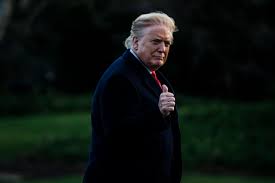
There has been a lot of consternation amongst the conspiracy-theory-obsessed Trump world that their hero is standing against an unseen and unknown ‘Deep State,’ conspiracy. This fear turns non-partisan civil servants into the boogeymen foot soldiers of a national or even global conspiracy headed either by wealthy Jews (like George Soros and the Rothschilds), educated elites like Bill Gates, or Democratic politicians like Hillary Clinton. Trump thrives on this fear, and everything he does, from throwing human beings in concentration camps to fighting to take away millions of Americans’ health care during a pandemic is seen through that lens. Regardless of how short-sighted, cruel, racist, or idiotic Trump is, it is always declared to be justified after the fact, and even science is perverted to make him look good. Yet, while Trump’s followers dissect the footage of old Clinton speeches searching for secret handshakes and nods, and examine their Xboxes for proof that Gates wants to microchip them, Trump has shown that the power of the Shallow State is real and dangerous. And if you take the man at his word (usually a losing proposition), he may be sending that Shallow State – in the form of his un-identified, armed, and armored private Department of Homeland Security/Justice Department Army – to your hometown very soon.

The real Shallow State is far scarier than the fake ‘deep’ one. The Shallow State sizes someone up by their appearance, and the farther away from a Caucasian a person is, the less ‘American’ they are judged to be. The Shallow State is concerned with how and where you pray, and who you sleep with. The Shallow State wants to protect statues and monuments because it is terrified of change, and monuments and statues don’t change. The Shallow State doesn’t look beyond the surface, which is why Don is unable to comprehend that forts named after Confederate officers like Fort Bragg and Fort Hood would still have played the roles that they did in American history – like in winning World War II, which he often brings up, and just called a ‘beautiful World War,’ – regardless of what they were named. We didn’t defeat the Nazis and the Japanese Empire because we named our forts after traitors and murderers: it’s just a coincidence that dishonors the Black, Indigenous and People of Color who fought and died fighting in America’s wars.

A lot more damage has been done in world history by those who vowed to unmask alleged conspiracies than by the groups alleged to be conspiring. And many of the supposed unmaskers were cowards too frightened to act without a mask themselves. They are people who are too afraid to admit mistakes, because their entire claim to power is based on appearing strong and infallible. Imagine if Hitler took power in Germany in 1933, had a few days to ‘look over the books,’ and declared that actually Jews and Communists weren’t responsible for Germany’s defeat in World War I? Or if Joseph McCarthy admitted that there wasn’t a Communist conspiracy in the US government? Or if Trump admitted that there is no ‘Deep State,’ that global warming is not a hoax, or even simply acknowledged that he altered the map of Hurricane Dorian’s projected path? But even getting Trump to admit that he was wrong in not wearing a mask or asking other Americans to wear them took several months during which countless more people were exposed to Covid-19 than otherwise would have been. Don is currently not doing things – like calling on the Defense Production Act – that experts have been begging him to do for months because if he does them now it will look like he’s admitting to having made a mistake in NOT doing them sooner. People are literally dying because Trump believes his chance at re-election in November would be hurt more by admitting he made a mistake and using every tool at his disposal to fight the pandemic than by letting people get sick and die.

The notion of the ‘Deep State,’ may animate Trump’s followers and has led to a purge of civil servants from throughout the government who are viewed as insufficiently loyal to Don. But the Shallow State is scarier, and it has no time for subtlety. People thrown into unmarked vans or terrorized with tear gas and violence so that Don could have a photo-op in front of a church are the victims of the Shallow State. The Shallow State doesn’t exist in fever dreams as a way to defend Trump from being attacked as the worst president in American history. It is very real, and we need to fight against it. This Shallow State and its tainted pool of hateful, racist, conspiracy-minded fascists is the swamp we need to drain in November.  
Bernie the Revolutionary?

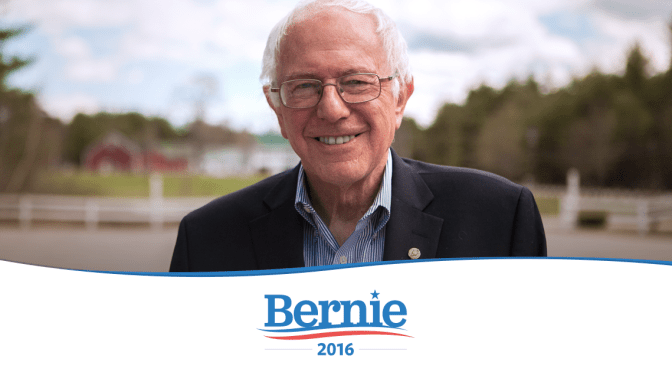
I think it is time for Bernie Sanders to stop speaking of a ‘political revolution.’ I have encountered both fear and cynicism – even by some Liberals – in response to Bernie’s call. But none need fear, for when Senator Sanders speaks of a political revolution, what he really means is simply increased participation and engagement in our political system.

The hard truth is that we the people are largely responsible for the widespread anger that led to the rise of a neo-Fascist demagogue like Donald Trump – our failure to participate in the political system made Trump possible. The presidential election of 2008 is considered a high-turnout election, as it saw a popular candidate in Barack Obama combined with the deeply unpopular George W. Bush Administration, and Obama received almost 70 million popular votes to around 60 million for Republican candidate John McCain, but in reality only 63% of eligible voters cast a ballot. In 2012, now President Obama won reelection by defeating Republican Mitt Romney 65 million to 60 million, but turnout declined to just under 58%. Voter turnout in mid-term elections, like those in 2010 and 2014, see even less engagement. Many Republican controlled states (many of which only turned Republican due to the small turnouts of those 2010 and 2014 elections) have engineered highly sophisticated voter-suppression efforts to keep turnout down – and they were aided when the Supreme Court undid much of the Voting Rights Act of 1965 that had been the definitive end to Jim Crow segregation and disenfranchisement of Black voters – but no anti-democratic attempt can fully explain the fact that about 40% of eligible voters stay home every November.

Polls and data have consistently proven that increased voter participation almost always benefits Democratic candidates, and poll after poll has shown that the vast majority of Americans already support most of Bernie’s platform. Americans are with him on getting money out of politics, free public college, universal health care, addressing income inequality, climate change, and a whole host of other issues, and if we can simply get more political participation/engagement, we’ll be able to make the kinds of changes that most of us want to see. Those who stay home are at best passive witnesses of the theft of our democratic republic and at worst accomplices in that theft by a small group of wealthy individuals and corporations who have transformed us into a plutocratic oligarchy. It is perhaps cliché to say that all the people who are fully able to vote and choose not to do so are insulting the Americans who came before us and often died to protect that precious right, but whether the non-voters realize it or not, they are also insulting those who come next, because those future generations must live in the nation and world that we leave them.

When Bernie is talking about a political revolution, he is not speaking of something bloody or new, he is speaking of greater engagement with and participation in the political process of our country. He wants to get as many people involved in our democracy as possible, and any who might say that Bernie’s just being cynical because he knows he would do better if more people were involved should stop to realize what they’re admitting by saying that: that Bernie and his policies are preferred by a majority of Americans, and that the closer to 100% turnout we get, the better Bernie would do.

The real revolution here is to stop thinking of voting as a right and instead view it as our duty as Americans: perhaps the least we can do to show our appreciation for our nation and its past, present, and future.

Free From Neither Want nor Fear

John Adams said some brilliant things in his long and celebrated career of public service, but my personal favorite is the following quote (which comes from one of the many letters he wrote to his incredible wife Abigail, and which I’ll just paraphrase here): “I must study politics and war so that our sons can have the liberty to study mathematics and philosophy. Our sons must study those things as well as geography, science, business, and agriculture so that their sons can have the freedom to study painting, poetry, music, and architecture.”

One reason I love that particular quote so much is that it is the simplest way to describe what our society is risking by having far too many children in poverty and worrying over whether or not they are going to get to eat today and each day after this one. The most conservative estimates on childhood hunger pegged one-in-six American children as not knowing where their next meal is coming from, while some other sources had as high a figure as one-in-four. I personally never had to worry about if I was going to get enough food, as I grew up in a comfortable middle/upper-middle class family with four younger brothers, and yet in spite of our numbers, we never needed to worry about food – it just wasn’t a concern for us. My parents provided me and my brothers with a safe, warm, and supportive environment that allowed us the freedom ponder the great questions in life – or to just enjoy watching and playing sports and video games – instead of stressing about hunger. It seems today however that far too many children are not growing up in a similar environment to that in which I was raised.

Politicians love to talk about how much they care for our children because it makes them more relatable, but when it comes to actually doing things to improve the lives of those children, too many politicians seem to follow the cynical wisdom of one of the political hacks from the amazing HBO show, “The Wire,” and feel that children should be ignored when it comes to actual policy because “kids don’t vote.” One of the main features of our broken political system has been the almost unbelievable levels of short-term thinking, and it is this kind of thinking that has marginalized the public school system and created a version of ‘separate and unequal,’ for the 21st century. In a good number of cases the rich have abandoned the public school system, and left many schools filled only with children too poor to go anywhere else. And even if the students DO somehow rise above a system seemingly designed to marginalize them and limit their chances to succeed (and more often than not, if those children succeed it is in large part due not only to their parents, but to the heroic actions of teachers) it will be in spite of having to contend with hunger and the fear of hunger on a daily basis. If any children somehow make it through that gauntlet, they often still can’t go to college unless they can get government grants or a scholarship.

How can someone who is legitimately terrified of starvation study mathematics, geography, and science, let alone philosophy, art, poetry, literature, and music? How can someone battling with hunger give as much time or thought to less pressing matters (for what is more pressing than the fear of starvation?) like whether “Hamlet,” or “Richard III” is a better play or how things might have played out if Hitler had been stopped at Munich as his or her fellow classmates? We need to seriously address this problem in our country, from President Obama on down, and the only way to find a real solution is to look at our nation for what it really is and not just what we wish it was; we have the power to make it into the nation we want it to be, but the only way to move towards such a lofty goal is to first address the basic necessities of life. Franklin D. Roosevelt once said that there were four essential freedoms that all human beings on earth should enjoy, and that they are: freedom from fear, freedom of worship, freedom of speech, and freedom from want, and I imagine that those who contend with true want and hunger must also deal with fear.

So can we really expect someone who is staring fear and want in the face every day to compete for grades, scholarships, and eventually jobs with those who have known only comfort and have never once dealt with desperate hunger and fear? I don’t really have the answers on how to fix a fundamental problem that threatens the entire world and not just the United States, but the only way to address hunger both worldwide and here at home is to face it head on and not be afraid to improvise and try new things, and the scary thing is that if we don’t improvise and fix things, we may soon wind up with a generation incapable of addressing such needs and tackling such a tremendous issue.