Tag Archives: George W. Bush

Can the USA Survive Trump?

The United States is facing the largest threat to its continued existence as one nation-state since the Civil War. This is not hyperbole or exaggeration: I have extensively studied the Civil War and American history as a whole, and we are in dangerous waters. As I see it, the threat is a massive leadership vacuum coming from the Washington and Donald Trump.

The problem with the vacuum is that far too many states, cities, and people are not content to just twist in the wind regarding health care, global warming, and immigration. The American people and their state and city representatives are going to step up and fill that vacuum, leading to a potential clash between state and national power the likes of which have not been seen for well over a century.

Even some Liberals are skeptical of the Trump-Russia connection, but if Vladimir Putin made a wish for the United States when he blew out his birthday candles last October, he’s already gotten most of what he wanted. There has been a massive erosion of faith in the American government, the media and even factual, objective reality as a whole; the USA has largely relinquished the leadership role it has held since the end of World War II and is more isolated than any time since just before the War. Now, with the recent G-20 Summit and Trump’s decision to quit the Paris Climate Accords, the rest of the free world openly mocks us. And most troubling of all going forward, our nation is splitting at the seams as the political, cultural, ideological, and economic ties that have bound our nation together for so long are ripped apart.

And the end of our nation may be coming sooner than later. Donald Trump has less legitimacy and political capital than any president in American history, and it isn’t even that close. We already see individuals, states, and cities rising to fill the leadership vacuum, but I believe the real problem will come to a head soon as a result of 2 potential sequences of events, both involving Trump’s role as Commander-in-chief.

1.) Trump grows angrier and angrier over the increased resistance to his rule and to approval ratings lower than intestinal parasites and he and his advisers decide that military action will cause the American people to line up behind him out of patriotic duty. Now, recent history (Iraq) should show him and his advisers that this approach is flawed in the extreme, but Trump neither knows nor cares about recent history. In 2002, President George W. Bush labeled Iraq, North Korea, and Iran an ‘axis of evil,’ and Iraq, the ‘easiest’ target of the 3 is no longer on the list. That leaves the nuclear-armed North Koreans, and Iran, a nation of 80 million people (for comparison, Iraq had 26 million when we attacked in 2003) that will achieve nuclear arms pretty quickly once we tear up the deal that we – along with the UK, France, China, Russia, and Germany – made with them in 2015. Not only will any pre-emptive US attack on those nations devastate our allies and further isolate us more than Trump already has, but there will be many in our armed forces who will not risk their lives for an aggressive war that will be transparently political. For maybe the first time in American history, those who protest the war at the start or who refuse to fight will be those celebrated as patriots.

2.) The more likely scenario as I see it. Trump grows angrier and angrier over the increased resistance to his rule and to approval ratings lower than genital warts, and he finally decides he can’t ‘allow’ protests anymore (First Amendment be damned), and he orders either the National Guard or regular military to disperse the most high-profile and disruptive protests; he does not order them to use deadly force but to use all force short of lethal. It is again easy to see many refusing to follow such orders, which is the very type of situation at the start of many revolutions throughout history.

When the US faced the greatest crisis in our history, we had an almost perfectly designed leader to handle it in Abraham Lincoln. When the Great Depression threatened to end our democratic republic, we had an almost perfectly designed leader to handle it in Franklin D. Roosevelt. We are now at the precipice of national disaster just as we were in 1860 and 1932, but instead of having Lincoln or FDR, we have an erratic, petty, angry, ignorant, short-sighted, dishonest, and probably mentally ill man standing where those two giants once stood. There is no easy answer for this type of situation in the Constitution: we have to find it our selves, and we must identify, elect, and follow leaders in our states, cities, and towns, because there is a vacuum in Washington right now, and we have to recognize it, and decide whether or not it is fatal to the United States as we know and understand it.

Trump’s Moral Price

I was speaking to my cousin John about the most recent New York Giants game the other day when their kicker, Josh Brown, missed a 53-yard field goal attempt. Brown had just returned from serving a one-game suspension for domestic violence charges against his wife, and I expressed dismay when he missed the field goal. John correctly pointed out that 53-yards is far away for any kicker, and that Brown’s miss was understandable. However, while I acknowledged that kicking from such a distance is difficult, I explained that the Giants are paying a high moral price to employ someone as ethically questionable as Brown is, and that because of that cost, Brown does not have the luxury to be held to the same standards as the average kicker. For the Giants to justify Brown’s spot on the roster, he has to be a great kicker, and great kickers make 53-yard field goals, and while I personally do not believe that any performance, no matter how great, excuses domestic violence or other crimes, professional sports teams obviously disagree with me. The Giants are keeping Brown because he is good at what he does, the Pittsburgh Steelers have kept quarterback Ben Roethlisberger in spite of being accused of multiple rapes, and the Los Angeles Lakers kept building their team around now-retired superstar Kobe Bryant for a decade despite rape charges of his own. It seems that there are few crimes and moral outrages that will compel a sports team or a business to cut ties with its best players/employees as long as those players produce at a high level or make their businesses lots of money.

After the conversation, it occurred to me that such a standard could be applied to other aspects of life, and I immediately thought of Republican presidential candidate Donald Trump. Trump has spent 70-years as an ignorant, lying, bullying, xenophobic, sexist, bigoted, racist, narcissistic, anti-semitic, buffoon, and has amply demonstrated his utter unfitness to become the President of the United States of America. For someone to cast his or her ballot for Trump in November, he or she must love other things about Trump so much that he or she is willing to shrug off all those other horrible things about the man. So I am asking Trump supporters (literally, this is not a rhetorical exercise): what is it that you like about Trump so much that you can suppor him in spite of all the frightening things he has done, said, stands for, and plans to do in the future? Is it Trump’s proposed economic plans? How about his stated environmental plans? Do you believe that his ‘wall,’ between the United States and Mexico will make things so much better here in America that his other flaws do not matter to you? Are you willing to put up with his past attitudes towards women, minorities, and people with disabilities (and pretty much everyone else on earth who does not share his last name, or is not Vladimir Putin) because you feel that he will make America stronger and more respected abroad?  What about him personally do you like so much that you want to vote for him in spite of all I mentioned before?

Trump on Economics

When President Ronald Reagan was elected in 1980, he made America’s rapidly growing national debt a major campaign issue, but even at the time economists and critics, including his leading opponent for the Republican nomination in ’80, George H. W. Bush, (who would be Reagan’s Vice President, and eventually his successor as president) who famously called Reagan’s supply-side economic theory, ‘voodoo economics,’ during the campaign, correctly protected it would greatly expand the national debt. Of course, Reagan’s policies did explode the debt at unprecedented rates  due to the not-so-shocking problem that if you take in $10 and spend  $15, you wind up deeply in debt, and his policies devastated American manufacturing by making it easier than ever before to outsource jobs overseas. We have now had over 35-years of evidence to suggest that former President George H. W. Bush and other critics were correct: ‘trickle down’, ‘Reaganomics,’ were horrendous for all but the ultra rich.

As a whole, the American public has been paying atention to the real cost of trickle down, which is part of the reason that the Democratic Party’s nominee for president has defeated the Republican candidate in the popular vote in five of the last six presidential elections. Trump seems to understand the widespread distrust of the efficacy of huge tax cuts for the rich benefitting the middle class and the poorest Americans, and he has responded by speaking like a populist who is for bringing back American manufacturing jobs and undoing the free trade policies that have been supported by every president from Reagan through George H. W. Bush , Bill Clinton, George W. Bush, and up to Barack Obama. But in spite of the language he used, the economic plan that Trump has proposed is just Reaganomics repacked in populist language, and not only is the core of his plan a new massive tax cut for the wealthiest American, but according to CBS, his economic plan would add $5.8 trillion to the national debt over the next decade, while former Secretary of State Hillary Clinton’s plan would add $200 billion. And while I happen to share the belief of economists like Nobel Prize-winning New York Times columnist Paul Krugman that neither a budget deficit nor national debt is necessarily a bad thing, many of those who today worship at the Cult of Reagan, and who take it on faith that  ‘trickle down’ economics always works and profess to care so deeply about the national debt that they support a Constitutional Amendment mandating a balanced federal budget, intend to vote for Trump even though the economic policies he has announced publicly and on his own official campaign website lay out an economic policy that will further explode the debt and continue the pace of outsourcing more American jobs. So, if you truly care about the deficit and you are against free trade agreements like NAFTA or the TPP, then why are you voting for Trump? Trump may attempt to cloak his re-packaged trickle down economic plans in populist language, but what about his entire life history has convinced you that he would govern by populist policies? Why do you believe his populist talk when the plans on his own website prove what his actual intentions are? Can you really trust him on the economy?

Trump on the Environment

Once upon a time, environmental conservation was a non-partisan issue, with the Environmental Protection Agency and the Clean Air Act created and signed, respectively, by Republican President Richard Nixon, but those days ended long ago. Today the Republican Party is largely united by, at best, severe skepticism about climate change – especially man-made climate change – and at worst a total hostility to climate change and the very ideas of conservation and environmental protection. Trump’s environmental plan places him firmly in the ‘hostile,’ wing of the Republican Party, and he has declared an intention to abolish the EPA and dramatically weaken or totally abandon all environmental regulation in the United States. Combatting climate change is perhaps the most important issue to Millennial voters, and Trump is on what most of those voters consider to be the wrong side of it.

If protecting the environment matters to you, then why would you vote for Trump in November? Hillary Clinton’s policy is far easier to nail down, and is the most progressive environmental position ever staked out by a major Party nominee, and commits both Secretary Clinton and the United States as a whole to fighting to minimize the rapidly unfolding catastrophe (environmental, human, and economic) that has already begun. The Republican Party, many of its largest donors, and even some on the Democratic side of the aisle have tried to muddy the water – and compared to what some of the corporations on the anti-climate change side of the issue do to water every day, mud would actually be an improvement – on this issue by acting as if there is widespread disagreement within the scientific community about climate change. In reality, there is no real disagreement among scientists, who are in almost universal agreement about the threat that our nation – and our world – faces. If you care about this issue, then why would you vote for Donald Trump?

Trump on National Security

Our nation faces many threats, and simply having the most powerful military in world history does not eliminate all dangers to our nation. In today’s world, the idea of conventional warfare, with one nation-state at war with another, seems almost quaint. We have made ourselves so powerful that no nation has the ability to wage a conventional war with the United States, but that does not mean that we do not have committed enemies. The Islamic State in Syria, or ISIS, is one of these threats, and while under President Obama we have degraded and punished the group to near annihilation, but ISIS, like al Qaeda, is more about an idea, and as such simply killing their leaders (and we have) or taking their territory and weaponry (and we have) does not insure our safety. That we face such threats and others, including the cyber threats we are currently facing from Russia, makes the Presidency as important now as it has ever been. Not only has Donald Trump shown himself to be unworthy of the massive charge of being Commander in Chief, with his lack of temperament and tendency to fire off and attack all of those who criticize him for even the most trivial things, he has shown himself to be unwilling to criticize or stand up to Vladimir Putin, Russia’s strongman dictator.

If that does not raise any red flags with intended Trump voters, what about the fact that the man is actually running on a pro War Crimes platform! He has declared his intention to violate the Geneva Convention not only by torturing human beings, but he has proposed capturing the civilian families of terrorist suspects and either imprisoning, torturing, or killing them in an absolutely despicable attempt to keep their family members from attacking the USA. All the things that Trump admires about Putin are the things Trump wants to project about himself, but he has an inability to realize that just projecting strength does not make one strong. Putin grandstands and invades neighboring nations, and tramples democracy, but nothing that he has done has restored Russia to the superpower status once held by the Soviet Union. Trump sees Putin as his role model, his exemplar of strong leadership, while he continually attacks President Obama for perceived weakness. And yet, Obama has been the one to degrade ISIS and to kill Osama bin Laden, and Obama has killed more terrorists than any other president in American history. And while Russia’s economy has gotten weaker under Putin because his bullying invasions have led to economic sanctions, when Obama came into office in January 2009, he inherited the worst economic crisis since the Great Depression, and has pulled us out of that fire. Yet Trump admires Putin, not Obama; is that not a red flag in and of itself?

I can understand why some people don’t like Hillary Clinton, but for me there are more than enough things that I can find in her readily accessible and detailed policy positions on the environment, minimum wage, foreign policy, and more that I whole-heartedly agree with, which allows me to support the former Secretary of State even though I feel that she often acts entitled (as if rules do not appy to her), is seemingly allergic to transparency, and is too closely aligned with the financial powers that reside on Wall Street. Of course when she is compared to Trump, with his flat refusal to either release his income tax returns or any legitimate health records, the notoriously guarded Clinton might as well be running her campaign from within a glass house under an electron microscope. But to support Trump, one must truly love something about his positions, since it is hard for me to understand how any non-racist, non-hateful/fearful person can tolerate Trump’s racism, bigotry, sexism, dishonesty, xenophobia, attacks on people with disabilities, homophobia, Islamaphobia, bullying, narcissism, megalomania, and ignorance just because he or she hates Hillary Clinton. If someone does not love Trump’s stated positions, and trust that he will hold to them if he is elected, then how can he or she give him the benefit of the doubt that he’s not really an anti-semite in spite of having Alt-Right, Breitbart hero Steve Bannon, as his campaign manager or flirting with David Duke (who has made no secret of the fact that he believes his chance has come again because of Trump)? That he’s not really a racist in spite of his nakedly racist championing of Birtherism? That he’s not really a bigot when he calls all Latino immigrants rapists and drug dealers? That he’s not really a sexist when he calls women dogs and pigs? That he’s not really a bully when he mocks a journalist for having a physical disability? That he’s not a liar when he claims that he saw hundreds or thousands of Muslims across the Hudson River in New Jersey celebrating as the Twin Towers collapsed on September 11th, 2001? That he’s not classless and temperamentally unfit to be the President of the United States when he questions the impartiality, loyalty, and even citizenship of an American judge, Gonzalo Curiel, because he ruled against Trump’s bogus university, or attacks the Khan family because they were critical of him? That he’s not a demagogue trying to turn Americans against each other when his initial response to the deadliest mass shooting in American history was to brag about his plan to ban all Muslims from traveling to the United States?

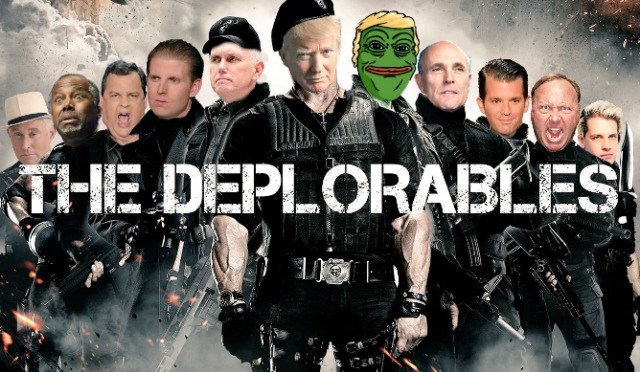
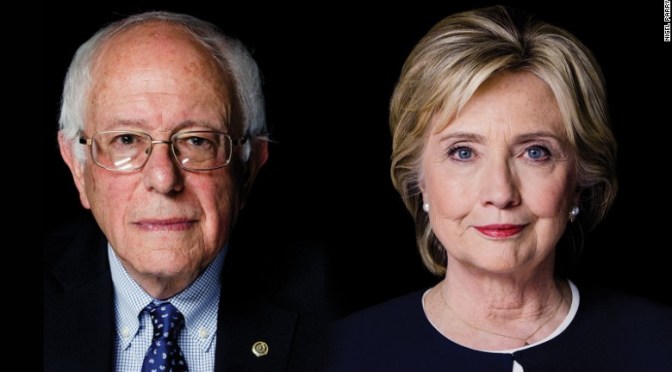
It is cliché to say it, but neither this election nor any other has ever taken place in a vacuum. Hillary Clinton is not running against a perfect candidate who will be the best possible choice and with whom one can agree on every single policy position: she is not even running against Senator Bernie Sanders, her opponent for the Democratic nomination. Instead, former Secretary Clinton is running against Donald Trump, and regardless of whether or not one decides to support either Libertarian candidate, former Governor Gary Johnson, or Green Party candidate Dr. Jill Stein, neither of them is going to be president on January 20th, 2017, and if anyone says otherwise, and concocts a scenario where either Third Party candidate, or someone else entirely, will be the 45th president of the United States, then that person is not telling the truth. It will either be Hillary Clinton who, warts and all, has shown the intelligence, skill, capacity for hard work, and temperament to do the job, or it will be Donald Trump, a dangerous demagogue who has shown ignorance, hatred, bigotry, an unpredictable temperament, displayed extreme narcissism and megalomania, has a notoriously short attention span, and has lied more often and more easily than any major Party candidate in history. If you love Trump’s stance on immigration, crime, the environment, the economy, and foreign policy so much that you are willing to live with endless stream of offenses he has committed just since he entered the race in June of 2015 (not to mention all the horrible actions and statements he’s made in the 69-years he lived before last June), then perhaps voting for him makes sense to you, but remember also that there are plenty of people in this nation – people who deserve to be called ‘deplorables,’ as former Secretary Clinton recently called them – who are voting for Trump because he is a racist, a sexist, a xenophobe, insults the disabled, is a bigot, a liar, a bully, a narcissist, and has surrounded himself by anti-Semities and White Nationalists who believe Eugenics is a real science and that ‘less desirable,’ people should not be allowed to reproduce so that they do not ‘pollute,’ or ‘contaminate,’ our bloodstream. Perhaps you love his policy proposals so much that you honestly don’t care about any of this, but you would have to have chosen willful ignorance to pretend that there are not plenty of people voting for him because of his most vile views and the despicable Nazi-wannabes like Bannon who now have his ear.

And if you really do abhor the grotesque things that Trump has said and done, but you are going to vote for him anyway because you hate Clinton and hope and expect that a President Trump’s most dangerous and vile tendencies would be kept in check either by the job itself, the other branches of government, social norms, his top advisers, or some other mitigating factor, please remember that such logic was precisely the reason that many educated, intelligent Germans elevated Adolf Hitler to power in 1932/33. I despise comparing anyone or anything to Hitler and the Nazis because some people tune out as soon as the comparison is made as it is over-used, so I do not do it lightly, but it fits here scarily well because the things those Germans knew better, and were personally disgusted by Hitler’s views on Jews, Communists, eugenics, and more, but they supported him anyway because they felt his most harmful, hateful, and deadly tendencies could be contained. If one cuts out all the noise and analysis and just reads everything Trump has said and done in this campaign concerning Blacks, Hispanics, Muslims, women, people with disabilities, soldiers, war heroes, Jews, and more, and simply decided to take him at his words, it should be impossible to support the man with a clear conscience. Put another way: unless Trump starts kicking field goals from 99 yards away and makes 30 of them each game, he shouldn’t have a place on our national team, and I would honestly feel dirty if, outside the election, he simply  purchased any of my four favorite pro sports teams, but there is not enough soap in the universe for me to feel clean with Donald Trump as my president.


Bernie, Hillary, and the False Choice

Few things make me angrier than being condescended to or patronized. Arguments and disagreements don’t bother me because I enjoy debating and I always try (though I admit that I do not always succeed) to keep an open mind; being patronized is different, and is sure to get under my skin. I have encountered a LOT of condescension this election cycle – more than I can ever remember experiencing before – and almost all of it has come from one side: the supporters of former Secretary of State Hillary Clinton. From Rolling Stone Magazine’s official endorsement of the Secretary last month to New York Times columnist and Liberal icon Paul Krugman, and to many others both within and outside of the Clinton Campaign, Bernie Sanders supporters, such as myself, are being branded as naïve idealists who don’t know what we’re doing. At best they treat us as unrealistic dreamers with good intentions, and at worst as either rampant sexists or unwitting dupes of some anti-Clinton conspiracy. But regardless of which insulting way these Hillary supporters are branding our support for Senator Sanders, the message is consistent: Hillary supporters ‘admire’ our idealism, but we are blind and must listen to them and support Hillary because they know what is best for us and for the nation.

I am a proud registered Democrat, and this November I will vote for the Democratic nominee regardless of whether it is my personal choice of Bernie, or if it is Hillary, but the arrogance of so many Hillary supporters towards Bernie’s supporters is making it harder and harder for me to have even a teaspoon’s worth of enthusiasm for her. Hillary does not seem to be running on an optimistic message, but instead on a cynical one, claiming that Bernie would be unelectable and, if/once she wins the Democratic nomination, that she is a far better choice than Republican frontrunner Donald Trump or his chief rival for the Grand Old Party’s nomination, Texas Senator Ted Cruz. That argument is logical, and Hillary is light years better than any Republican candidate, let alone the two clowns Trump and Cruz, but logic is not a great way to win elections, and it doesn’t bring people to the polls; we have a lot of evidence for that and we don’t need to look back very far.

In 2008 then Senator Barack Obama beat both Clinton and eventually Senator John McCain to win the presidency running on a message of hope and a change from the dreadful George W. Bush Administration. In the general election, Obama received 70 million popular votes (the most any candidate has received in US history), beating McCain by 10 million votes. In 2012, now President Obama had a lot of achievements that Liberals were excited about, but the only way to make sure that those achievements were not overturned was to help Obama win a second-term and defeat former Governor Mitt Romney. President Obama was reelected, but he received 5 million fewer votes than in 2008, winning 65 to 60 million. People want to vote for a candidate who they can get excited about, and while I believe that Hillary Clinton is amazingly intelligent, hardworking, and competent, none of that is very exciting for me.

The key example that Wenner and others like him consistently point to as the one that taught them the limits of idealism is the 1972 presidential election between incumbent President Richard Nixon, a Republican, and North Dakota Senator George McGovern for the Democrats. McGovern and his anti-Vietnam War platform excited many young Democrats, and because the 1968 election had been close, those young Democrats believed that they could beat Nixon with McGovern just four-years later. But those idealistic Democrats who believed that McGovern might win were proved shockingly wrong and were devastated when Nixon won reelection in one of the largest landslides in history, winning 49 of 50 states, getting 47 million popular votes to 29 million for McGovern (60.7% of the vote, and a victory of 18 million votes, which are both records that have not been equalled since, not even by Ronald Reagan in his own massive landslide over former VP Walter Mondale). Wenner, Krugman, and others like them believe that they learned a valuable lesson in 1972 about the kind of candidates that can win elections in America; I believe that they learned the wrong lesson.

It seems obvious to point this out, but 2016 is not 1972 and Bernie Sanders is not McGovern. Our country has seen different realignments and dealignments of political Parties from the 1790s to today, and 1972 was a huge realigning election. Most southern states had been staunchly Democratic from before the Civil War through the midpoint of the 20th century, but things had begun to change with Civil Rights. The Democratic Party expanded beyond just the South with Woodrow Wilson, and then when the New Deal Coalition formed around Franklin D. Roosevelt, it brought large amounts of northern Liberals and Blacks into the Party, and led to an uncomfortable alliance between the new arrivals and the old south. Racist whites had been able to keep the Democratic Party from getting too invested in Civil Rights, but the coalition began to fray as the Party naturally moved in that direction anyway, and when Lyndon B. Johnson signed the Voting Rights Act of 1965, he figured it would be the final nail in the coffin of the ‘Solid South,’ being a large part of the Democratic Party. After signing the bill, he said ‘We just lost the south for a generation,’ and he was correct. But leaving the Democratic Party did not mean instantly joining the Republican Party, which many southerners still viewed with deep suspicion, so in 1968 the Solid South ran its own pro-segregation candidate in Alabama Governor George Wallace. Nixon won that close ’68 election against Wallace and Democratic Vice President Hubert H. Humphrey, and had the south not defected from the Democratic Party, it is likely that Nixon would have lost. By 1972 the Solid South had indeed found a new home in the Republican Party, and their addition en masse greatly strengthened the Republican Party and weakened the Democrats, and while from 1932-1964 the Democrats had won every presidential election except for the popular war hero Dwight Eisenhower’s wins in 1952 and ’56, the Republican Party would win every presidential election from 1968-1988 except for Jimmy Carter’s win in 1976 (which was only possible due to voter anger over Watergate, Nixon’s resignation, and Ford’s pardon of Nixon, and even with all of that, the election was still close), with almost all the victories coming in gigantic landslides.

The south giving the Republican Party an era of dominance of the White House makes 1972 a poor comparison to 2016 as there is little evidence right now for an ongoing realignment. Bernie’s also a far better candidate today than McGovern was in ‘72. New technology and a well-run organization have gotten Bernie’s message and platform out to people who were either ignored or marginalized in 1972. Bernie’s also not running against an (oddly in retrospect) a popular incumbent, and if he wins the nomination, he would be running against either Trump or Cruz, neither of whom is as strong a candidate as Nixon in ‘72. These comparisons constitute a false choice designed to justify opposition to Bernie, and while I am a Bernie supporter I will readily admit there are legitimate reasons for someone to have doubts about him or to support someone else, but making an inaccurate connection between Bernie and McGovern, and 2016 and 1972 shouldn’t really qualify.

The condescension of the Clinton Campaign and its attempts to casually paint Bernie as a risky choice for either the Party or the nation should be beneath it. Providing weak and inaccurate analogies in order to marginalize Bernie and his supporters is hurting the Party, since it is unlikely to gain any votes for the Secretary or weaken Bernie’s Campaign, while it simultaneously engenders bitterness between supporters of the candidates who are going to have to coalesce in order to defeat the Republicans in November. Patronizing Bernie’s voters reeks of the kind of cynicism that turns people away from politics, and makes it harder to accomplish the kind of things that Liberals and Democrats both want to get done. Pushing people to throw up their hands in disgust and tune out the entire political process is a bad strategy for those who want to show that government can be useful and can do good; it is a victory for those who want to discredit government and democracy in general. Condescension feeds cynicism and leads to feelings of hopelessness, and good things are not accomplished by withdrawing into anger and despair: it is optimism and a sense of the possible that produces positive results. So stop talking down to us and telling us why we’re wrong or foolish to support Bernie, stop using ‘idealism,’ as a synonym for naïve, and tell us why you believe we should support Hillary, and we’ll tell you why we feel that you should support Bernie. If you want to have a productive conversation with us as equals and not wayward children, you’ll find us ready partners.

Bernie the Revolutionary?

I think it is time for Bernie Sanders to stop speaking of a ‘political revolution.’ I have encountered both fear and cynicism – even by some Liberals – in response to Bernie’s call. But none need fear, for when Senator Sanders speaks of a political revolution, what he really means is simply increased participation and engagement in our political system.

The hard truth is that we the people are largely responsible for the widespread anger that led to the rise of a neo-Fascist demagogue like Donald Trump – our failure to participate in the political system made Trump possible. The presidential election of 2008 is considered a high-turnout election, as it saw a popular candidate in Barack Obama combined with the deeply unpopular George W. Bush Administration, and Obama received almost 70 million popular votes to around 60 million for Republican candidate John McCain, but in reality only 63% of eligible voters cast a ballot. In 2012, now President Obama won reelection by defeating Republican Mitt Romney 65 million to 60 million, but turnout declined to just under 58%. Voter turnout in mid-term elections, like those in 2010 and 2014, see even less engagement. Many Republican controlled states (many of which only turned Republican due to the small turnouts of those 2010 and 2014 elections) have engineered highly sophisticated voter-suppression efforts to keep turnout down – and they were aided when the Supreme Court undid much of the Voting Rights Act of 1965 that had been the definitive end to Jim Crow segregation and disenfranchisement of Black voters – but no anti-democratic attempt can fully explain the fact that about 40% of eligible voters stay home every November.

Polls and data have consistently proven that increased voter participation almost always benefits Democratic candidates, and poll after poll has shown that the vast majority of Americans already support most of Bernie’s platform. Americans are with him on getting money out of politics, free public college, universal health care, addressing income inequality, climate change, and a whole host of other issues, and if we can simply get more political participation/engagement, we’ll be able to make the kinds of changes that most of us want to see. Those who stay home are at best passive witnesses of the theft of our democratic republic and at worst accomplices in that theft by a small group of wealthy individuals and corporations who have transformed us into a plutocratic oligarchy. It is perhaps cliché to say that all the people who are fully able to vote and choose not to do so are insulting the Americans who came before us and often died to protect that precious right, but whether the non-voters realize it or not, they are also insulting those who come next, because those future generations must live in the nation and world that we leave them.

When Bernie is talking about a political revolution, he is not speaking of something bloody or new, he is speaking of greater engagement with and participation in the political process of our country. He wants to get as many people involved in our democracy as possible, and any who might say that Bernie’s just being cynical because he knows he would do better if more people were involved should stop to realize what they’re admitting by saying that: that Bernie and his policies are preferred by a majority of Americans, and that the closer to 100% turnout we get, the better Bernie would do.

The real revolution here is to stop thinking of voting as a right and instead view it as our duty as Americans: perhaps the least we can do to show our appreciation for our nation and its past, present, and future.

Ranking the Greatness of Barack Obama

I disagree with President Obama on many issues, from the Trans Pacific Partnership and the overreach of the NSA and CIA to his vigorous prosecution of whistle blowers. I have no idea why our military is still in Afghanistan and keeps trying to get involved in a centuries-old civil war in the Muslim world between Sunni and Shia Muslims, and at the beginning of his Administration I thought the President was too quick to attempt to find bipartisan agreement between the Democratic and Republican Parties when the Republicans in congress had declared that their top priority was to guarantee that Barack Obama would be a one-term president, and set about trying to deny him at every turn out of fear that any sort of victory for the Obama would make him more popular and more likely to be re-elected in 2012. He made a big mistake and set a dangerous precedent by allowing the Grand Old Party to effectively hold the full faith and credit of the USA hostage by threatening to default on our national debt; while President Obama has learned from his mistake – when the GOP tried the same tactics in 2013, he called their bluff, and, by daring the Republican Party to shoot their hostage, he forced the Party’s eventual capitulation of the Republicans in congress – his initial mistake has left us with the Sequester that has resulted in lots of pain for the Americans who already have the least. But in spite of all my disagreements with the President, I think it is becoming more apparent by the day that we’re looking at one of the ten greatest presidents in the history of the United States, and the best in at least half a century.

I love to rank things, and as someone who is sort of an amateur historian, one of the many things I try to quantify is the greatness of the 43 men who have served as POTUS. The way I try to gauge our Commanders-in-Chief is to look at the condition of the USA when the president enters office and compare it to the situation on the day the president leaves office, and I primarily use the foreign, economic, and domestic states of affairs to judge the president’s success or failure. It is much harder to do this sort of thing today than it was even in the recent past, because politics has become so divisive that statistics that prove one’s argument are willingly ignored by one who feels differently. That makes it much easier to rank a historical president like Abraham Lincoln (my pick for best ever, by the way) because almost no one is arguing the basic facts that stand in his favor in the categories I mentioned before: only one month into his Administration, there were 11 states in open rebellion against the federal government, yet when he was assassinated one month into his second-term, the rebellion was over, Reconstruction had begun, slavery (its primary cause) had been extinguished first with his Emancipation Proclamation and then for good by Constitutional Amendment. Meanwhile the US economy had increased exponentially to deal with the war, most northern cities/population centers saw their economies and populations skyrocket and the US had decisively shown itself to be one of the world’s Great Powers. The contrast of the state of the United States when Lincoln took office and when he died is proof of how incredible he was.

If we use those same standards and compare the state of American foreign, economic, and domestic affairs on January 20th, 2009, the day that Barack Obama was inaugurated as the 44th president of the United States, and compare it to today, with a year and a half still to go, the result is stunning. When President Obama succeeded President George W. Bush, the USA and the world were mired in the Great Recession (the worst global economic downturn since the Great Depression); the US was stuck in the two longest wars in American history with one of them, the Iraq War, being a completely unnecessary war based on a lie; Osama bin Laden – the mastermind of the terror attacks of 9/11/2001 that had in many ways to come to define Bush’s Presidency –  was still commanding Al Qaeda, having evaded Bush for 7 ½ years;  we had engaged in a torture program under Bush that, exemplified by the Abu Ghraib scandal and the detention center at Guantanamo Bay, badly tarnished America’s global reputation; Bush had driven up a huge deficits by slashing taxes for the rich in spite of the fact that when he succeeded President Bill Clinton in 2001 the government was actually running a surplus; the integrity and legitimacy of our democracy was greatly threatened by the controversial presidential election of 2000; and many things, from the ineptitude of the Bush Administration’s response to Hurricane Katrina to its inability to stop or slow down the recession had discredited government as a whole in the eyes of many Americans.

A lot of those issues are simply due to the fact that George W. Bush was one of the worst presidents of all-time (I have him 3rd worst, and at the bottom for all two-term presidents), but the wreckage W. left behind makes it easier to view the successful Administration of his successor. In January 2009 the unemployment rate was at 7.8 and it quickly grew to 10 % before the 2009 Stimulus fully kicked in, and today it sits at 5.3 %. When President Obama took office we still had 150,000 American troops fighting the unnecessary Iraq War, and when the last US troops left the nation in 2011, over 4,000 Americans had died fighting in that war with tens of thousands more wounded either physically or emotionally, and that does not even touch on the hundreds of thousands of Iraqis killed or wounded or the millions who lost their homes. And it was President Obama who gave the order to kill Osama bin Laden in 2011, doing in under 2 ½ years what Bush could not do in the 7 ½ years he was in office after 9/11. President Obama’s bailout of the American automotive industry was also a huge success, with GM and Chrysler paying back their loans way ahead of expectations. There has been a great leap forward in LGBT rights, which is all the more impressive when one remembers that part of the reason Bush won the 2004 election over John Kerry was by campaigning against gay marriage, with many states across the nation putting gay marriage bans on the ballot that same day, and seeing those bans pass with huge margins. And yet today, only 11-years after that contentious 2004 election, gay marriage is now legal in all 50-states and Don’t Ask, Don’t Tell was repealed, allowing homosexuals to serve openly in the military for the first time.

One of the most amazing features of his Presidency has been that Barack Obama accomplished all the things I mentioned before with a dedicated Republican opposition to him that is one of the most sustained and vehement in US history. The Republicans have even abandoned their own bills when those bills were supported by President Obama, and they have ground Congress to a halt, leaving it incapable of doing almost anything. None of this has been an accident, as it has been the part of an almost nihilistic effort to deprive Obama of anything that might have been perceived as a victory for him, and while this was just as despicable early in Obama’s Administration as it is today, at least then the GOP was doing it as part of a plan to keep Obama from being re-elected in 2012. However, even though President Obama won big in his 2012 re-election bid, the Republican resistance has not weakened at all. Even when the President has gotten strong bi-partisan support for a bill, as he received with is proposal for comprehensive immigration reform (it received 67 votes in Congress), it failed in the House because Speaker John Boehner refused to bring the bill up for a vote in spite of the fact that the vocal support of many Republicans in the House seemed to show that the bill would pass and become law. Congress also killed multiple proposals from the Obama Administration to raise the national minimum wage to at least $10.10 an hour, and left without the help of Congress, President Obama took Executive Action on both issues to try to save as many immigrants from deportation as possible, while raising the minimum wage for all government employees and contractors to $10.10.

Perhaps the most lasting achievement of President Obama will be the Affordable Care and Patient Protection Act, more commonly known as ‘Obamacare,’ a name Republicans had coined in an effort to kill health care reform, just as they had successfully been able to do in 1993-94 when they labeled the Clinton Administration’s proposal ‘Hillarycare,’ and made it so unpopular, it fell apart before it even got a vote. However this time the GOP was unable to kill Obamacare (though it is not for lack of trying), and it is now the law of the land, expanding health care coverage to millions of Americans and ending pre-existing conditions. While many liberals (including myself) were upset that Obama tried to compromise with Republicans by not aiming for single-payer health care or at least propose a public insurance option, especially because his alterations to the plan – which actually made the plan almost identical to the health care reforms the Republican Party had championed in the fight against ‘Hillarycare’ as being the free market solution to universal health care – refused to get a single Republican vote in either House of Congress anyway. The Republicans in Congress desperately tried to kill Obamacare, but were unable to do so and so brought the law to the Supreme Court, which in a surprise 5-4 ruling (a surprise because the Court is currently divided 5-4 in favor of conservative, Republican-appointed justices) declared that the law was constitutional, and they made it a huge focus of the 2012 presidential election, but President Obama won re-election by 5 million votes over Republican nominee and former Massachusetts governor Mitt Romney. And while Healthcare.gov got off to a rocky start and many states with Republican legislatures and governors have actively worked to sabotage the law at the expense of their own people, so far the law has been a huge success, has expanded health care to people who have never before been able to afford it, and has led to the smallest rise in health care costs in decades. However, the obvious success of the law has not led to any more Republican-controlled states expanding Medicaid to make sure that some of their poorest citizens can still get health care, purposefully hurting many of their own citizens, and Republicans tried again to kill the law at the Supreme Court based on a ludicrous technicality, but were again rebuffed, this time 6-3. All of it means that Obamacare is here to stay, and it is likely to be the crowning achievement of the Obama Presidency.

However, it is President Obama’s recent impact on the world stage that led me to write this article, and while his recent climate change agreement with China, and his starting to normalize relations with Cuba – something that a majority of Americans have been in favor since at least the end of the Cold War in 1991 – have been very impressive, the major story has been the initial agreement that his Administration has reached with Iran concerning its nuclear program. There is a lot to the tentative Iran deal, and it still has to make it through congress and past the hardliners in Iran, if the agreement works out, it will cement Obama’s legacy as the greatest president of at least the last half century and one of the best ever. The plain logic of the deal with Iran is hard to ignore, as it acknowledges that American, Israeli, and other leading nation state’s regimes are in nearly entire agreement that Iran possessing nuclear weapons is a threat that we can’t really live with. Once it is accepted as a truth that we will not allow Iran to attain nuclear weapons, the question then is how we stop that from happening, and the only realistic options are diplomacy (such as the deal the Obama Administration just worked out) or war. It is that simple, and the fact of the matter is that it has been true at least since the Bush Administration that we cannot just wipe out Iran’s nuclear capability in one blow, which means they would still retain the knowledge of how to build a bomb and have enough centrifuges and enough enriched uranium to build a bomb. We would then have the choice of either using our own nuclear weapons against Iran OR of waging a conventional war against the country, which would entail fighting a nation with around 80 million people who live in a nation the size of Alaska – which is contrasted to an Iraq we invaded in 2003 that had around 25 million people in a nation the size of California, and that war did NOT go well. There is almost no American support for a war with such a huge nation, as it would entail years and would result in the deaths of tens to hundreds of thousands and maybe even more in a war we would largely be fighting for the benefit of our ally Israel, a nation which has under 7 million people, meaning that if we do not choose to try to wipe the nation of the face of the earth with an instant nuclear strike, we would be doing most of the fighting and the dying in that war. I find it hard to imagine that the American people, upon learning the true size, scope, and difficulty of a war with Iran, would not swiftly turn on both the war and on Israel itself, for how many lives are we willing to sacrifice to support such a small nation? Anyone who peddles a potential third option outside of diplomacy or war is being dishonest, and it is easy to see how serious the opposition to this agreement is by seeing what the opponents are selling; most of them understand that there is no support for a huge war against Iran, so they are instead selling some nebulous ‘better deal,’ without any specifics except that if not for the ‘weak’ Obama Administration, we could get Iran to give up ALL of its nuclear program instead of dismantling almost all of it, agreeing to constant inspections, and making it so that the soonest they can produce a bomb is 10-15 years from now. The options are peace or war and there is no support for war, which means that the Obama Administration just got the best deal we could get, and if it makes it through Congress, it really will be a crowning historical achievement for Barack Obama.

There is still a year and a half to go in President Obama’s term, and anything can happen in that time, but he is on the cusp of locking up the position as the greatest US president of the last half-century, and with all that time left, he has a real chance to even pass Eisenhower and become the best President since Truman. With how divisive our politics are today, I know that there are many conservatives who earnestly believe that Barack Obama has been a horrible president (and some think he is actively working to hurt America, which is ridiculous, but no less of a real belief for being so) and who believe that Ronald Reagan is the single greatest president in American history, but I am not really writing this for them, as they mostly had their minds made up on the Obama Presidency before he even took office. I am not writing it for the person who asked me (with absolute sincerity) if I was ‘ready to admit’ that Obama was the ‘worst president since Jimmy Carter,’ and potentially the worst ever, less than six months into his first term in 2009. Instead, I am writing this for those who did not have their mind made up already, and who can appreciate the historical significance of a national health care plan, a saved economy, the expansion of LGBT rights, and the potential for a real and lasting peace. I am writing this for those who still have faith that government can have a positive role in making peoples’ lives better, and can see that President Obama has done a lot to restore that faith, which is a hell of an achievement when one remembers how little trust in our public institutions was left after a Bush Administration that lied us into a seemingly endless war, could do nothing to help the people devastated by Hurricane Katrina, and left amidst the greatest world-wide recession since the Great Depression. Neither government, nor a president, can do everything, and both governments and presidents can do bad things, but once in a while, when the right person comes along, he or she can restore your faith and make you remember why you had that faith to begin with. Barack Obama has done that, and his legacy will only grow because of it. He truly is one of the greatest of all-time.

VOTE! Seriously, VOTE!

Cynicism and apathy in American elections is like a disease. Americans look at congress and are disgusted (if the 8% approval rating is any guide), but too often it seems the response – especially among younger would-be voters – is not to work hard to ‘throw the bums out’ but instead to throw up one’s hands and walk away from elections entirely. Voting is one of the issues that I am most passionate about as, with my knowledge of history, I see it as a long battle to expand the franchise to as many people as possible, with a rearguard action always fighting to restrict access to the polls in order to hold onto power without actually serving the interests of the people. For those who want to restrict voting access, apathy and cynicism are their most deadly weapons and, no matter how many people I encourage to vote, and no matter how intelligent those people are, I often hear, “Why should I even vote, it doesn’t matter anyway!” Well, here are some reasons your vote does matter!

90,682,968 Americans voted in the last midterm elections in 2010. That’s out of an estimated 235 + million eligible American voters, or just under 38% of the eligible population. To contrast that, 53% of American voters cast a ballot in the 2012 presidential elections. The 2010 election cycle may not be a good guide as to what will happen tomorrow, but it is a good baseline because no midterm elections ever come close to matching the slice of the populace that votes in presidential elections. 2010 is also valuable as it was the first election after the Citizens United decision, and it is estimated that over $3.6 billion was spent on campaigns in that cycle, and it’s hard to believe that less has been spent in 2014 than in 2010 (numbers won’t come out until after the elections), and just in using the 2010 numbers, it means that even if YOU don’t value your vote, enough money was spent on the 2010 elections to equal over $40 for each vote cast. You may think your vote is meaningless, but obviously there are people and corporations with a LOT of money who believe otherwise and if they are so willing to part with at least $40 per voter, then they certainly think it has value.

Besides the congressional elections, there are also referendums, governorships, and state legislatures that will be decided tomorrow. Washington D.C, Oregon, and Alaska will all vote on whether to legalize and tax marijuana; Alaska, Arkansas, Nebraska, and South Dakota all have a raise in the state minimum wage on the ballot. Colorado and North Dakota have extremely strict anti-abortion “personhood” laws on the ballot, while here in California medical reform and prisoner reform will be voted on. And if you don’t think your governor matters, consider that in Texas, Rick Perry (for purely political reasons) chose not to expand Medicaid as part of Obamacare and therefore around 1 million Texans who would qualify for Medicaid have been left without any health care. It is very unlikely that Democrat Wendy Davis is going to win tomorrow, meaning that those 1 million Texans living in poverty will continue to struggle without the health care that is available to them, but in your state you might be able to make the difference because you never know how close the election will be. This brings me to another number you should consider when deciding whether to vote or not: 537. That’s the amount of votes that separated George W. Bush and Al Gore in Florida in the 2000 presidential election. Avoiding all conspiracy theories and comments about the election result being stolen for the moment, the fact remains that in an election that saw 105 million Americans cast a ballot, it was less than 550 votes that meant we had President Bush and not President Gore

You really need to go and vote tomorrow, and make sure everyone you know who is eligible votes too! Voting is too precious a right to waste when so many states around the country are making it harder for people to vote, and when so many nations around the world go even further than that. Voting doesn’t solve every problem and your vote tomorrow won’t change everything, but in a nation where Blacks once risked (and often lost) their lives to vote and where it took women over 130-years of struggle to get the franchise, it is not just cynical not to vote, it is cowardly. So get out there and vote, honor our proud democratic tradition, and make the choice to be an active participant in our society and not a spectator

Playing Dumb and Blocking Votes

The United States midterm elections are this upcoming Tuesday, November 4th. Every single eligible voter in the USA has the opportunity (and, in my opinion, civic obligation) to vote for their Representative in Congress and for other local or state elections and referendums on their ballots. However, there are those who do not believe every American should vote, and that voting should become more difficult, not less. One group that has come out in favor of limiting voting is in fact the US Supreme Court under Chief Justice John Roberts. The Court has played dumb by pretending that its decisions will not have precisely the impact that critics say the decisions will have, but it is not an accident that gutting the Voting Rights Act of 1965 last year has resulted in making it harder for Americans to vote.

Last year in another of the contentious 5-4 decisions with the Republican appointed Justices (Chief Justice John Roberts and Samuel Alito by George W. Bush, Antonin Scalia and Anthony Kennedy by Ronald Reagan, and Clarance Thomas by George H. W. Bush) on one side and the Democratic appointed Justices (Stephen Breyer and Ruth Bader-Ginsburg having been appointed by Bill Clinton and Sonia Sotomayor and Elena Kagan by President Obama) on the other that have become the new normal, Chief Justice Roberts declared that racism in America was over. Roberts declared that there was no longer any need for the title of the Voting Rights Act of 1965 that gave the federal government power to police the former segregationist states to keep them from enacting – as they had in the past from the end of the post-Civil War period of Reconstruction in 1877 to the passage of the landmark 1965 law– blatantly racist legislation in order to make it harder for Blacks, Latinos, and other minorities to vote. We have two ways we can look at decisions like this one and like in Citizens United when the Roberts Court approved a new, narrow definition of what constitutes corruption in politics; we can either believe that a majority of Justices on the Supreme Court are utterly oblivious fools who honestly don’t recognize racist and discriminatory voting laws or corruption in politics, OR we can believe that the Justices know precisely what their decisions are doing, who the decisions are harming, and who they are helping.

Surprising no one, once freed of the restraints of the Voting Rights Act, many of the former Confederate states (and some others with Republican legislatures that were not in the Confederacy) began the most aggressive and coordinated assault on voting rights that we have seen in this country since the days of Jim Crow. And we’re supposed to pretend that this was all an unintended consequence of the Roberts Court’s decisions and that the state legislatures enacting these onerous anti-voting laws are really serious about fighting in-person voter fraud and ‘shocked’ that the laws are going to deprive thousands of eligible registered voters from being able to cast their ballots.

Even forgetting the lack of in-person voter fraud, how can any supposedly honest and democracy-loving American justify the actions of states like North Carolina and Ohio and their moves to drastically cut early voting days and eliminate many polling places? These measures can’t possibly be considered necessary to combat voter fraud, so if they’re not to purposefully keep turnout down, what are they being enacted for? Can honest Republicans truly convince themselves that cutting early voting days and eliminating same-day registration is a way to police the almost non-existent threat of in-person voter fraud? Must we pretend that the drive to stop in-person voter fraud – which is the only kind of fraud that voter ID laws can stop – is the real impetus behind states requiring forms of ID that not everyone has, when such fraud is almost non-existent, and lie to ourselves that these new laws are not attempts at keeping certain voters from being able to cast their ballots?

I have seen otherwise intelligent (and in most other things honest) Republicans confronted with the fact that in-person voter fraud is almost non-existent and then reply with the weak argument that “We need IDs to own a gun or drive a car, why SHOULDN’T we mandate IDs to vote?” Even if, “Why not?” was not a lazy argument in favor of voter ID laws, the answer of “because there’s almost none of the voter fraud that voter ID laws are supposed to address, and thousands of eligible voters are being robbed of the sacred right to vote,” is almost irrefutable. Any person who is OK with thousands and thousands of his or her fellow Americans being disenfranchised in order to pursue fraud that he or she will often admit doesn’t exist is lying (maybe even to themselves) if he or she claims to support democracy. In reality the person only likes other people voting if those voters cast their ballots for the ‘right’ candidate. Even if the Republican position of “Why not voter ID?” wasn’t so easily addressed, the position amounts to the prosecution in a major trial saying to the defendant “Prove you DIDN’T commit this crime we’re accusing you of!” The burden of proof is on those who want to pass new laws and change the way we’ve run elections for generations, so once the fig leaf of ‘stopping voter fraud’ is blown away by the sheer weight of facts, the Republicans need to do a LOT better than to merely say, “Why not?” and then walk away before their lazy answer is addressed.

As I write this, Republican-led states are changing election laws all over the United States of America that are statistically guaranteed to keep thousands of eligible American voters from being able to exercise their franchise. The laws are also so specific as to be transparent regarding their real intention, which is blocking the votes of people who are likely to vote Democratic. This is obvious when we consider that states like North Carolina have refused to allow the government-provided IDs of public employees and IDs given to college students whether they attend a state school or not because both groups are likely to vote Democratic. We can’t just assume that all elected officials actually want us to be able to vote anymore, and that all the things that they have done to make voting more difficult are just unintended consequences of an honest attempt to purge elections of voter-fraud. We can’t pretend that Chief Justice Roberts didn’t know exactly what would happen when he gutted the Voting Rights Act of 1965 because “racism (was) over.” This attack on voting rights is not an accident or a side-effect, it was the plan all along.

Therefore every single eligible American must vote on Tuesday, and if you know you’re an eligible voter, make sure you don’t leave your polling place without at the very least writing your vote down on a piece of paper and signing it; if you don’t vote before Tuesday it won’t count, so make sure you leave some record of your intentions so that you can at the very least go to court and defend your right to vote. If you’re cynical and don’t feel like your vote matters for much, I’ll be addressing that too in the next few days, but I am entirely sincere when I say that I don’t care who you vote for as long as you do in fact vote; I may disagree with your choice and try to convince you to vote for a different candidate, but your vote is just as important as mine and I’ll fight for every single one. Mark it down in your calendars and this Tuesday, November 4th, make sure you go vote – it is arguably the most important thing you’ll do in 2014.